In hospital again

Changing Medications – What Can You Expect?

This article is to illustrate the challenges any patient MAY experience when changing medications. I am describing my personal situation: please take into account while reading ALL situations are unique to the individual. My aim is to help patients be aware that changing medications MAY not be smooth sailing. I also ask friends, family and colleagues, especially those managing staff, to be aware changing medications is not as smooth as simply opening a new bottle of tablets. Be supportive and understanding of the patient.

2022 seemed to be a year of gradual deterioration. I ended up in the emergency department (ED) a few times and was hospitalised late January 2023, I had an infected tooth extracted, I just wasn’t feeling good at all. In late December I suddenly realised it was almost the holidays and I was likely to have doctors taking holidays. I felt bad enough that I decided I needed to talk to my rheumatologist before Christmas. My rheumatologist squeezed me in on his last consulting day prior to the holiday season, December 22, 2022. His assessment was that my old medication (let’s call this Med O) had ceased working for me. I stress the “for me” – this is one of the individual aspects – it may keep working very well for millions of other patients!

He started me on a new medication that day. We’ll call this Med N (“N” for New). I was advised it is not good to take Med O and Med N together, I was to stop Med O. I was to start (more like continue, as I had already started) Prednisolone and Celebrex to manage the pain. With hindsight, I think Med O may have still been partially working, guesstimate here, at 40% or 50% efficacy. Because once I stopped it, I got worse!

Med O was a daily tablet medication. The mean terminal elimination half-life ranges from 9 to 14 hours, so the web tells me. So once I stopped taking it, there was no longer any lingering protection from Med O.

Most fellow patients reading this will be aware many medications do NOT start working straight away. I talk about this in Movement As Medicine, written five days after I changed medications. By that stage I had read the documentation and worst case scenario was I could expect improvement in six months! Best case scenario was maybe “some” improvement in about four weeks. That’s a big difference in timeframes. Both “some” and “improvement” are very open to interpretation, too.

Between Christmas and New Year I had a case of De Quervain’s tenosynovitis in my left hand, requiring an ultrasound-guided steroid shot as soon as my rheumatologist was back in the consulting rooms! Not strictly PsA related, but I’m sure there is always a connection with these things, like the hole drilled in my big toe bone!

By that stage I had only had the initial Med N injection. This medication’s schedule is first injection at Week 0, second injection at Week 4, third injection at Week 12 and every eight weeks after that. I certainly wasn’t expecting it to be doing anything much at the three week mark.

On January 20th I yet again presented myself to ED because just about everything was hurting, I’d loss strength in my hands (could not even wring out the dishcloth). I was not a happy adventurer. I ended up having three infusions of methylprednisolone over three days to try to knock on its head the inflammation raging through my body. For a few days afterwards I did feel better, but then started to slide downhill again. Called rheumatologist. His advice was to increase the Prednisolone to 50 mg per day, then taper off at a 10 mg reduction per week down to 10 mg, then stay at 10 mg per day. I’d never been on such a dose! Especially after three infusions! I had noticed breathlessness was an issue after I’d been discharged from hospital and once I increased the Prednisolone dose I noticed sweating and (the worst bit) palpitations at night. Every night. It was like my heart was beating in my ears. Very unsettling experience.

I have a nocturnal AV block. This means my heart skips beats every now and then. Let me tell you, when you have palpitations the missed beats are accentuated. My heart was pounding then dead silence. While it is only a few seconds, I still found myself anxiously awaiting the next beat.

I woke up on March 1st feeling decidedly unwell. Doctor time! GP Clinic squeezed me in with a different than my usual doctor. She listened to my symptoms explanation then looked at my rather elevated blood pressure and heart rate.

Blood Pressure

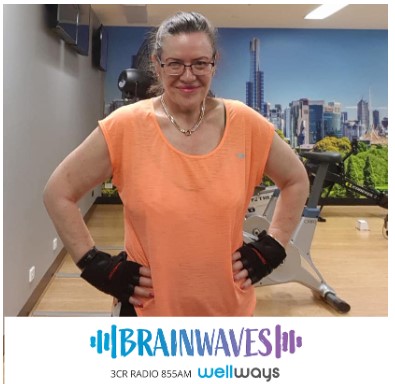
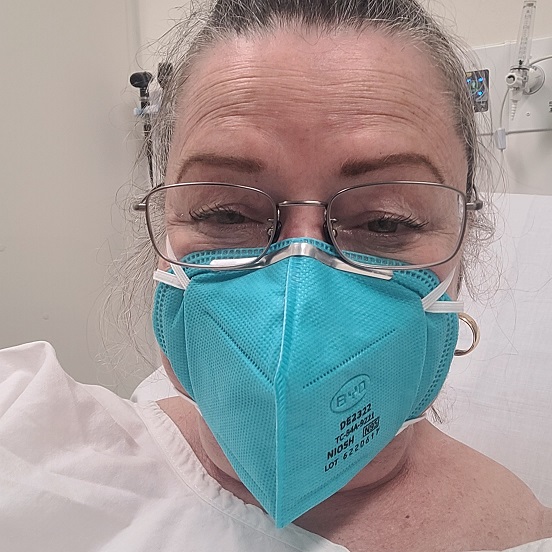
She wrote a letter to ED and told me to go home, pack a bag and head to ED. “Here we go again”, I thought. This was to be my sixth (I think, I may be missing one, I’ve lost track) trip to ED since October! While we both felt I was reacting to the Prednisolone, the obs were enough to need checking out. Bloods and a CT scan later I was sent home. I was not about to have a heart attack, so there was not much they could do. Yes, the picture above is me in ED on that day.

On February 28th I had reduced my Prednisolone to 20 mg a few days early because I was over the palpitations. While that had no effect (a bit early for the reduction to be reflected in my body’s behaviour) on the Tuesday night, Wednesday night I had no palpitations. I haven’t had any since that night either. Very happy about that!

Consider where I was at that point: Med N was still not being effective, and I was reducing the Prednisolone so the inflammation was increasing. Increased inflammation means higher pain levels. I was in a no-win situation at that point.

It isn’t all about the pain either. With my routines I can generally be pain-free by around 10:30 am, depending on when I get up, medication or no medication. It is the nature of the disease. The lack of energy and general feeling of unwellness was overpowering and that I can’t fix by 10:30 am. The effort required to do ANYTHING seemed too much. Having a shower? Tomorrow will do. Cooking? Toast was easier. Writing? The brain would not co-operate. I had to talk myself into walking, something I never have to do. Hydro pool? The effort required to get into bathers, drive there, get home and then shower just seemed all too much.

On March 9th I had my third Med N injection. Yes, technically a week early, but that is because somehow (do not ask) I stuffed up Week 4 timing. That’s OK, by the way, there is a window either side – I’d just confused myself. Cognitive impairment is worse at this time, naturally. I was still annoyed with myself.

FINALLY, March 11th (yesterday) I woke up and the malaise had lifted. All the sore bits weren’t sore. I could actually wring out the dishcloth – strength in my hands is returning. I am writing. I had been noticing gradual improvement over the preceding few days, but not wanting to count my chickens before they hatched, I’d been cautious. That cited six month timeframe was still floating before my eyes!

I still have swelling in various spots I can see and no doubt in spots I can’t see. I can’t see inside my shoulders, for example. I can see swelling in my hands still and there is fluid pooled under the skin on the top of my feet (like a bubble on both feet). The ankles are still swollen, but better than they were. I hope I’m safe to say we now have improvement: long may it continue!

So there you have it: just ONE example of how changing medications may not be as simple as just opening a new bottle of pills. If you or someone in your life is changing medications, please be gentle. Be understanding. Be aware it may NOT be smooth sailing. This has been an eleven week journey to just get SOME improvement from Med N. How fast improvement will continue, I cannot say.
Please note I have NOT addressed the question of adverse reactions to a new medication in this article, which is something to be aware of, of course. I’ve stuck to the topic of the process of change without adverse reactions. I have had an adverse event in the past, “When Medication Messes With Your Mind“.

* Med N was showing it was working on skin and nails though – so something was happening.

A Dark Day

Trigger warning: this article covers issues that some people may find confronting.

Please be aware as you read this, I am fine. I debated about sharing this experience as I don’t want to worry anyone, but on the other hand the purpose of this site is to help people like me living with challenging health conditions. Yes, the primary emphasis is on exercise and Movement As Medicine, but so much of “life” impacts our struggle on a daily basis, I do venture off on non-movement tangents. This is one of them.

I feel if I do not share this experience, I am not being fair to my readers. One of my objectives is to illustrate we are not alone in our battles. The challenges might be different for each of us, but there are threads of similarity.

As we know, I was recently hospitalised. While there I had three methylprednisolone infusions. Shortly after coming out of hospital my prednisolone (by tablet) dosage was upped to 50 mg per day due to my ongoing psoriatic arthritis (PsA) inflammation. For me, that is a LOT of corticosteroid. It may not clinically be a lot, but I do not know that – I am the patient here, not the clinician.

Most of my life, I avoided anything “cortisone” sounding like the plague. Why? Well, the answer to that can be found in my recently published family history trilogy, starting with “The Background“. In case of “too long; did not read” reactions, short version is my mother committed suicide, I suspect as the result of psychosis – a possible adverse reaction to cortisone use. She had been on cortisone most of her adult life. Probably at higher doses that we now use. Consequently I have always been wary of carrying a possible genetic predisposition to an adverse reaction to the medication.

Over the years since my diagnosis of PsA, I’ve taken prednisolone periodically at generally small doses with no major issues. Sure, for me, it makes me as hungry as a lion, causes fluid retention, weight gain, disrupts sleep (OH, does it disrupt sleep) and my ability to control emotions is reduced. If I am angry, you will hear it in my voice and see it in my eyes.

Today is Wednesday. Yesterday started with absolutely no sleep Monday night. I had slept like a baby Sunday night, which may have been part of the problem – I wasn’t tired Monday night. And yes, Movement As Medicine does come into this because on Monday I did very little movement because I had been to see my GP, driving around, my ankles were sore etc: the very reason I was taking prednisolone in the first place, after all. So I went to bed not physically tired. I couldn’t fall asleep, even with melatonin on board. I did not sleep. All night. May have snagged an hour between 6 am and 7 am, but I’m not even sure of that.

So Tuesday was a pretty shit day, to be honest. It got worse as the day went on. I did not get dressed. There was no lipstick. I felt really, really flat. If anything, a bit like I had felt when I had a reaction to methotrexate. I think that prior experience may have been concerning me a little as well.

Please note: both the medications I talk about in this article work brilliantly for a great many people! I am NOT against the medications themselves in any way.

Now, I’m not sure how to make this next bit clear: if it is unclear, please ask for clarification. The doctor will ask (as she did when I rang) are you having any thoughts of self-harm or suicide. And my answer is “No, not for ME, but I am always aware BOTH my parents did commit suicide and am VERY clear to myself that is NOT where I want to go. HOWEVER, I’m very ignorant (Note to self – fix this ignorance) about what or how “it” could happen. Therefore I think about it in terms of the history and the fact I am on a related medication.”

Now, I have no clinical evidence of my mother’s suspected adverse reaction. However, neither am I going to ignore the possibility. Sadly, I can’t get clinical evidence. It is too long ago, I was provided no medical records at the time. It wasn’t deemed necessary to give kids their parents’ medical records.

At 6:30 pm last night I rang my wonderful GP clinic. I do love them so much! My GP was not available but I did speak to another GP. I explained the situation and said my biggest concern, I realised, was I had NO IDEA what to watch out for IF I was having or going to have a adverse reaction. I also pointed out it could just be the absolutely no sleep, I was aware of that. At this point I hadn’t slept for 36 hours.

The GP pointed out psychosis was considered a very slight risk adverse reaction: I said I understand that, but my family history sort of counteracts that statistic in my mind. I prefer to be cautious!

The GP gave me some contact numbers specific to my location (hence I’m not publishing them as not much use to people in Queensland, for example) should I feel worse at (say) midnight.

Because I was SO exhausted by bedtime I slept like a log and woke up this morning feeling normal. Well, normal for a sick person on ten prescription medications and a few non-prescription ones like melatonin and Panadol Osteo plus Coloxyl to counteract the effects of the pain medications. At no time in my previous eight years of this journey have I been on TEN prescription medications at once and hope very shortly we get that down to three and then two (one for the thyroid, one for the PsA – that’s enough). Do I worry about possible interactions of so many meds all at once? Yes, I do. I just hope if there was a problem it would have been discovered before now.

My message here is don’t be afraid to reach out to your medical team. I could have called my psychologist, my rheumatologist or my GP. I chose my GP because she is who I feel knows me best and would most easily understand where I was coming from. I feel really concerned for chronically ill patients who do not have continuity of provider, it is SO important in managing our conditions. Critical, in my view. But what would I know – I’m just a patient. That comment is made with a very cheeky grin – none of us are “just a patient”. I can’t emphasise strongly enough the benefit it was to me to be able to talk my concerns through with the GP last night on a telehealth. I was able to go to bed not worrying, which I feel contributed to my good night’s sleep.

I’m back to this version of me today!

Mental Health Contacts:

Lifeline: https://www.lifeline.org.au/ Ph: 13 11 14

Beyond Blue https://www.beyondblue.org.au/ Ph: 1300 224 636

I have written about the need for mental health support previously: We Need Mental Health as well as Physical Health

leg press

Variety can be the Spice of Life

#MovementAsMedicine does require some variety (i.e. adaptability) at times. When we consult remedial exercise professionals, they invariably provide us with a program of exercises to follow. For those of us who are pedantic people, we then set about following that program to the letter and can get quite frustrated if we can’t. This frustration can lead to us not doing what we can, when we can, even if we can’t do the whole program.

We need to be adaptable. As regular readers or fellow psoriatic arthritis (PsA) patients will know, PsA is notoriously unpredictable. It isn’t the only condition to be unpredictable, many are.

Let’s assume for the moment I (or you) have a program. But I wake up today and my wrists are borked. I have a choice. I can feel frustrated about the situation and throw the baby out with the bathwater and not do my program at all because I don’t want to leave blank spaces. Or I can simply accept the upper body is not getting done today, but I can do lower body.

Because I am my own trainer, my program is in my head. I adjust what I do in any given resistance (weight) training session based on how various bits of my body are feeling on that day. So I never leave blank spaces on a page – there is no page! Over the last eight years, I haven’t had to be as adapatable as I have had to be during the last six months or so. These have been a trying few months. As I write this article I’m not doing any weight training at all, much to my disgust, but the inflammation is just too high. Until we (“we” being mostly at this point my rheumatologist) get it under control, I’m resorting to water based activity.

Under normal circumstances, current predicament aside, I will leave out what may be problematic on any given day. Borked wrists? I’ll do lower body and core, I can catch up on upper body next time (or the time after). Thankfully my lower limbs don’t usually flare, so I rarely have to skip lower body although I would if necessary. There have been rare times when my piriformis muscle will be grumpy for a day or two and I do steer away from lower body work on those days.

Although yes, it does take us some time to learn to read our bodies, ultimately we, the patient, know our bodies best. I can now tell what is PsA related pain and what is not. For example, stiffness from lack of use! When I say it takes time to learn, I do mean quite some time. A couple of years at least. Even then, it is going to depend how your condition behaves during your learning and how well controlled it is by the medications. It is impossible to learn fine points of differentiation if your inflammation is raging at 100 miles an hour.

Yes, it is a bit of a Catch-22. On the one hand, movement is the very thing that helps resolve inflammation – lifting weights is a little bit more than just movement though and I don’t need to injure myself inadvertently. It does become a judgement call – is the inflammation just normal “typical morning stuff, move to get rid of it” or is it a bit more serious? Swelling plays a big part in my decision making too. If I have swollen hands, they’ll get movement, such as the warm water movement for my hands, but I won’t load the wrists or hands with weights. As an example, on Thursday last week I couldn’t even use my wonderful ergonomic mouse. Now, while we are here, that linked article talks about consistency and in some ways I may appear to be contradicting myself in this article, but that article is about maintenance under a relatively stable situation. Here I am talking about major condition discombobulation! Yes, I mention shoulder pain disappearing after a few reps and normally that is what happens. Right now though, I am in a different situation. I do think resistance training would help my anterior deltoids at the moment, but I need my hands to achieve that and so it isn’t happening right now.

Annoyingly, we need our hands for so many upper body exercises. In fact, just about all of them! So my biceps and lats (and delts) are getting off very lightly at the moment.

Don’t be afraid to be adaptable. Leave out bits of any program on days that a body part is problematic. Catch up later when that body part feels better. Talk to your remedial exercise professional, they will help you determine that line between being in a place where rest is required or where you should persevere. Sometimes it may be a case of reducing the range of motion or using a lighter weight for a few sessions. More reps, lower weight.

Just don’t throw the baby out with the bathwater. Variety can be our strength, just as important as Consistency. And don’t forget to PACE!

Wellways

Interview by Brainwaves

I was recently Interviewed by Brainwaves of Wellways.

The podcast can be listened to at https://www.3cr.org.au/brainwaves/episode/robyn%E2%80%99s-story-chronic-illness

Suzie (@saysgrumpysuzie) drew this tweet below to my attention this morning, an aspect we touched on in my interview.

Self Portrait

Unexpected Hospitalisation

As some will know, I was recently in hospital. I thought the situation a good practical example of the unpredictability of some conditions, including mine.

Here is the mentioned link to What Is Psoriatic Arthritis?

This article on Invisible Illness is one readers may also be interested in.

And yes, for those curious, I DID indeed get clearance from my rheumatologist before exercising!

1973

The Impact

    This is Part III (and final) of a series. Parts I & II should be read before reading this article.

    In 1971 there was not a lot of no psychological support for myself and my siblings. I think we were just supposed to get on with life. My siblings were placed in a foster home together in a different town. As I was employed, I was placed in a foster home in Timaru. I don’t know if my siblings were offered any counselling, I certainly wasn’t. We were left in the house alone for a week until my mother’s body was found, after all.

    Momentary digression here. My foster home didn’t work out so well. One weekend I asked my foster father to cash a cheque for me (no ATMs in those days). He said if I came and sat on the bed with him, he’s give me the money and I didn’t need to give him the cheque. Ah, no way, mate, that ain’t happening. Not today, not ever. I saw the lawyer on Monday to seek permission to move. He assumed I was making it up (after all the guy was a “respected” member of the community while I was the daughter of two suicides) and sent me to see a psychiatrist. I was furious. Not sure of the psychiatrist’s “diagnosis”, but I did move out. Into a share house with three other young women.

    I don’t remember Mum’s funeral at all. I know I went, but I have no memory of it. I have little memory of my father’s funeral either, although I know what I wore and that The Last Post was played.

    I struggled with feeling guilty. If I hadn’t left home when I did, would Dad have survived? Was my leaving the straw that broke the camel’s back? I felt guilt over my siblings. Mum and Dad were genetically my parents, not a lot I could do about that. But they had sought out adoptees and then just deserted them too?

    Yes, I pushed such thoughts aside, to survive, but they were there. The fear and/or sadness of somehow being responsible. After all, I hadn’t been a golden child. I’d had febrile convulsions as a baby, tonsillectomy at four, meningitis at boarding school, appendectomy, measles, mumps, chickenpox, I’d run away from boarding school…..

    To lose one parent could be deemed careless: to lose both, the child must have been really unloveable, even evil.

    “To lose one parent may be regarded as a misfortune; to lose both looks like carelessness.” Oscar Wilde

    There was the sense of abandonment. I wasn’t good enough, my parents hadn’t loved me enough to stay. Obviously this contradicted my feeling of guilt about leaving home but I was 15. None of it made sense. I also went through, and still go through, phases of blaming my mother for my father’s death. Yet I know she wasn’t well, so I shouldn’t blame her.

    Maybe I’d just been too much trouble…It is only now, now I know about PTSD and the risk of cortisone psychosis, that I can truly comprehend a) it isn’t genetic (a GP assured me of that once I’d “survived” past 50) and b) there were situational factors in their lives over which I had no control. But that is logic. Emotions linger even when facts are known.

    If my own parents couldn’t love me enough to stay, how would anyone else love me? As an adult I know that is not rational given the circumstances, but at 15 it was very much a real emotion. My life would be loveless.

    The risk of suicidal tendencies being genetic worried me for many years. This was consolidated in my mind when a life insurance company loaded my premium because my parents had committed suicide. I’ve never touched gin as an alcohol. For many years I had a fear of taking valium – until a GP convinced me to use it as a muscle relaxant when I had awful back spasms. Have to say it worked brilliantly for that.

    In February 1974 I came to Australia on holiday simply to “see where Mum came from”. I had contact details of Mum’s oldest friend in Sydney. I couldn’t get a direct flight to Sydney so I arrived in Melbourne. I’m still here. I did go to Sydney and met Mum’s friend, but I don’t remember much of that trip at all.

    Why did I stay in Australia? I think it was because in Australia I had no past haunting me. In Timaru, everyone knew who I was – that teenager whose parents knocked themselves. I felt I was expected to either do the same or end up pregnant. Here in Melbourne I was just another person. I was judged on my own merits, if you like. There was a freedom to that. So I decided to stay here. I didn’t have to tell anyone anything and generally, people didn’t ask. I was just a young adult migrant.

    Hopefully my children have broken the generational cycle. As I look back I am proud of the fact I’m still here. I got an education. I did try to study medicine as an adult. The dream was still there. I went back to school here in Australia, did my HSC part-time while working full-time and raising two young children. I missed medical school entry by two marks. Started a science degree in the hope of doing well enough to transfer. Both kids got chicken pox in the first semester (not vaccines back then). Husband complained about me studying, wanted me to get a job. I gave up. In the end I did a business degree part-time while working full-time: it was easy, I’d been working in that field for years.

    I’m unhappy about the four divorces and the disruption to my children’s lives but I suspect that family history has a lot to do with how my life “panned out”. As mentioned in the first of this series, psychologists will tell you two people from dysfunctional backgrounds are not an ideal match for a stable, long-term relationship. My partners were also from disrupted childhoods of one sort of another. Different situations in each case, but no white picket fence childhoods either. Of course, I did not know about these studies until it was too late.

    When I was young, I just got on with life as best I could. I pushed the deaths to the back of my mind. There was nothing I could do about it, I couldn’t bring them back, it had been their decisions. All I could do was build a life for myself. It is only now, in these later, health-challenged years, I look back and wonder what trauma did I “inherit”? What trauma have I passed on? Would I be a chronic illness patient today if I had grown up in a stable home? I will never know. Hopefully, in time, science will determine if there is a link for people like me. My GP once said to me she felt I’d been misdiagnosed as a teenager. Misdiagnosed? I’d not been to a doctor as a teenager, there were too many funerals happening.

    I did the best I could. I tried. To all those out there with traumatic histories, I salute you. It isn’t easy.

    The picture is me in 1973.

    Other related articles readers may be interested in:

    What is Psoriatic Arthritis?

    We Don’t All Look Sick – Invisible Illness

    Feeding Felicity

    My Childhood

    This is Part II – continuing on from The Background. This details parts of the journey, it is not comprehensive. Partly because it was traumatic, but also because my memory was impacted by the trauma of the suicides. I remember catching eels with my father. Spraying gorse bushes. Helping in the woolshed. Dipping sheep. Giving mouth to nose resuscitation to a calf we pulled out using a tractor. Birthing lambs because my hands were smaller than Dad’s. Fleeting snippets of my life.

    The lamb in the above photo is Felicity. The dog is Cloud.

    My understanding is my parents had difficulty conceiving. My mother underwent a procedure to “clear” her fallopian tubes. I am not sure what that entailed in 1954. For whatever reason, after successfully producing me, they decided or were unable to conceive again and adopted my brother and sister.

    My mother was really not very suited to country life. I think she thought the idea of life in the country frightfully romantic. Thinking the ferns and the waterfalls are beautiful is one thing: the practicalities of farm life are a little different. For example, although Mum had been a licenced driver in Sydney, she refused to get an NZ licence and drive on the gravel country roads.

    One memory I have is Mum and Dad going to collect my sister. I was left with friends for several nights. I remember crying my heart out at being left. I didn’t understand why I wasn’t enough, they needed to go and find another child. I was four at the time. Of course as soon as my sister arrived, I loved her dearly, but the suddenly being deserted for reasons I didn’t understand was confusing to a four year-old. I loved her dearly and still do, despite the fact when she was about five she hit me on the head with an axe.

    Another memory I have is the little puppy I saved. A rat or a possum or something had bitten one of his front paws almost in two down the middle. Dad said he would never be a working dog and needed to be put down. I pleaded to be allowed to try and repair the paw. I didn’t have sutures, I could only disinfect and bandage the paw. The puppy survived and we found a home for him on a dairy farm, where the dogs did not have to be as agile as on our farm. That was when I decided to be a doctor.

    Mum and Dad spent a fair amount of time arguing. Mum would throw china and shatter things and slam doors. Every Christmas Day was a battlefield. Mum would want to be driven 22 miles to church and Dad would refuse. It was his one day off a year. One Christmas, Mum set off to walk the 22 miles. I think she got as far as the neighboring farm. Heels are not great footwear on gravel roads. I have very little memory of Mum ever being outside helping Dad – for example steering the tractor while he fed the hay to the cattle. I have one memory of her on a tractor. I started steering the tractor at about eight. I realise now Mum was never happy about having the Māori shearers in her home for meals.

    When I stuck a pitchfork through my foot, of course it was my father who took me to receive medical care.

    I studied by Correspondence School. Once my sister was approaching school age my mother decided she could not supervise two students. There was also, by now, my adopted brother. He is seven years younger than I. So at 10.5 years old I was sent to boarding school in Christchurch. Consequently, I missed a lot of what went on at home in the five years from then until the deaths – I wasn’t there.

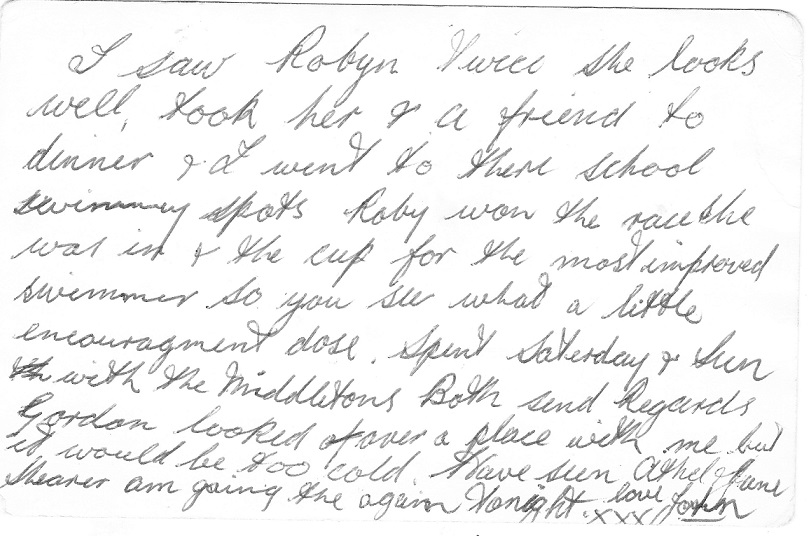
    When I was hospitalised with meningitis, it was my father who came to collect me when I was discharged. Here is a note my father wrote to my mother another time he visited me at boarding school. The sentence “So you see what a little encouragement does” strikes me in the heart.

    Dad Note

    On April 10, 1968 the Wahine sank. The students hadn’t been told this and I was laughing about something as I walked down the school corridor. The headmistress sent me back to the boarding house in disgrace for being disrespectful. I was not impressed and ran away from school. How could I be disrespectful if I didn’t know the ferry had sunk? It was, of course, my father who came to find me. I’d managed to get myself to two elderly spinsters in the Cashmere Hills. I have no idea how they were related to us, but I believe they were.

    At one point the Anglican priest came to see me. My mother had been hospitalised for exploratory surgery as the doctors had suspected cancer. I was not to be concerned, as Mum did not have cancer. When I was home on the next holidays, Mum gave me this great long medical name for something and told me if I ever got sick as an adult to tell the doctors my mother had whatever this big long name was. I remember saying, “Mum, I’ll never remember that!” She thought for a moment then said, “OK. Remember the wolf”. The only thing I can think of is lupus. Lupus is Latin for wolf. I don’t have lupus, but did my mother? We will never know.

    My mother spent many years urging (insisting?) my father sell the farm and move closer to civilisation. He did it, but I think it broke his heart. The farm was the first thing that was really his and he’d built a great farm and a good reputation. But he sold it. The family moved to Greymouth while Dad searched high and low for a new farm to buy. Eventually he bought a farm in Washdyke, near Timaru.

    I had won a scholarship to St Margaret’s in Christchurch, but I wanted to live at home. The headmistress of my primary school was horrified. She told me to tell my parents they were wrong to decline the scholarship. I stuck to my guns. As we had not yet taken possession of the Washdyke farm when I started high school, I boarded for the first term. Thereafter I was a day pupil.

    Here we were, a few miles from Timaru on sealed roads. Two-way roads, even. Mum still did not get her licence.

    When I collapsed on the floor in agony my mother told me there was nothing wrong with me, to stop being a drama queen and making a fuss. Thankfully my father took me to hospital – I had my appendix out a couple of hours later. I remember being absolutely horrified with the emergency department doctor asked if there was anyway I could be pregnant Standard question, I realise as an adult, I didn’t know that then!

    My mother attempted suicide and was hospitalised. I don’t remember the year, I only remember standing in the hospital corridor with Dad. I do not know, but I suspect this may not have been the first time. I had been at boarding school for three years: I was possibly not told of previous attempts. People didn’t tell kids things in those days and my siblings were too young to remember.

    Even though Dad had sold the farm, there were still horrific arguments. I remember my mother drinking an awful lot of gin. Consequently, I’ve never touched the stuff. As well as the cortisone, she seemed to have an endless supply of valium and sleep medication.

    Towards the end of 1970 I just couldn’t take it any more. I moved in with the local minister and his family for a break. It was school holidays and I had a holiday job at a Timaru retailer. One day in late December I received a call from my mother asking had I seen my father. He was missing.

    The neighbouring farmer found his body in the car in a back paddock. He had connected the exhaust. He’d also written a suicide note, but I don’t have that. I keep meaning to ask Timaru Police if they can dig it out of the old files. For years I carried guilt about leaving home. Would he still be alive if I had stayed?

    My siblings were not allowed to attend the funeral and my mother attempted suicide the night before the funeral so was in hospital. I was the only immediate family member there. Dad had traced his mother’s family when he returned from WWII and some cousins and an uncle did come to the funeral.

    The farm was sold and the some of the proceeds used to buy a house in Timaru. I left school at this point. I started a full-time junior position in a chartered accountants office. Mum, who had not worked since 1953, looked for work. There was another suicide attempt and she was hospitalised again. I tried to have her committed, but I was only 15 – my pleading carried no weight. However, when she ran away from hospital it was me they called to try to find her.

    I remember her being completely hysterical one night and I slapped her as that is what I had read could shock a hysterical person out of the episode. It sort of did, but I was so traumatised by the whole thing.

    One afternoon in April 1971 I came home from work to find my siblings playing in the cul-de-sac. It was after 5 pm, why where they not inside? They couldn’t get inside because Mum wasn’t home. I knew immediately what was happening, but again, no-one would listen. I rang the police but they couldn’t or wouldn’t do anything for 48 hours, despite her medical history. My boyfriend of the time and his friends tried searching but to no avail.

    A week later a local resident was waiting for the bus at a nearby bus stop and smelt a suspicious smell. Called the police. It was the body of my decomposing mother.

    Three generations of trauma.

    As I mentioned in the preceding article, I suspect my father had a degree of PTSD from WWII. I think he and my mother were an unfortunate pairing. Had she been a strong and supportive partner, he may have survived. If, as we suspect, my mother did have the disease I have, I can understand that facing the prospect of raising three children alone could have been more than she could face, especially given her previous suicide attempts. We will never know, we can only hypothesise.

    Read on in Part III – The Impact. How did I deal, or not deal, with all of this?

    I have deliberately not spoken much of my siblings. It is not my place to tell their stories.

    Wedding Colour

    The Background

    On June 12, 2021 I wrote a thread on Twitter outlining what had happened in my earlier years. It was my birthday and the year that marked the 50th anniversary of my parents’ suicides. More recently I stated (perhaps unwisely) I’d write a more comprehensive account. This is Part I – The Background.

    In writing this, I’m not looking for condolences or sympathy and some readers may even consider some of my phrasing rather harsh or too clinical. What is done, is done. Nothing can reverse the passage of time or the events of the past for me personally. I’m interested in the scientific aspects of my journey in the context of my chronic illness. Can my experience add to a pool of knowledge that might help others?

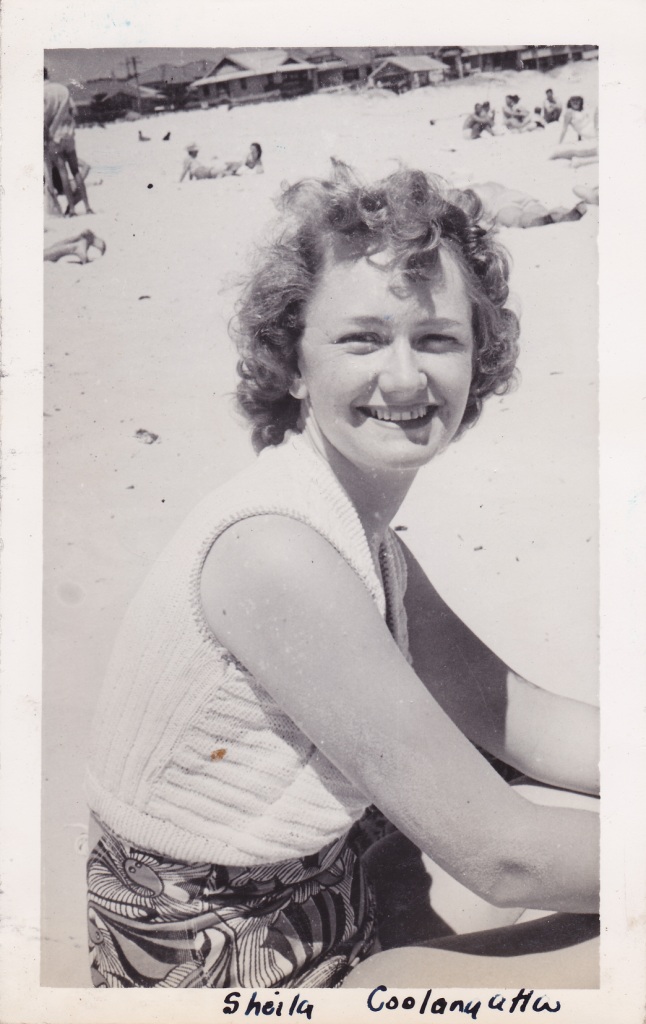
    Turning 66 seemed significant in some way that I couldn’t quite quantify at the time. I then realised it had something to do with family history. While many readers know my parents both suicided four months apart when I was 15 (so the 50th anniversary fell in early 2021) I’d never shared much of the rest of the story. Notice my mother’s name is Sheila. The spelling below is wrong.

    Gravestone

    Let’s take a look at Dad’s side of the family. Dad was an illegitimate child. In 1920 this was not socially acceptable at all. His mother, Irene Mary Dunphy, refused to put him up for adoption, placing him in an orphanage with the intention of bringing him home when she could. in 1920 this must have been quite a stand for Irene to make, but she stood her ground.

    Bear in mind we are talking the 1920s. WWI had barely finished, The Great Depression was looming. I have very little factual information from that time, but I do have a letter from Irene to the orphanage, dated February 1923.

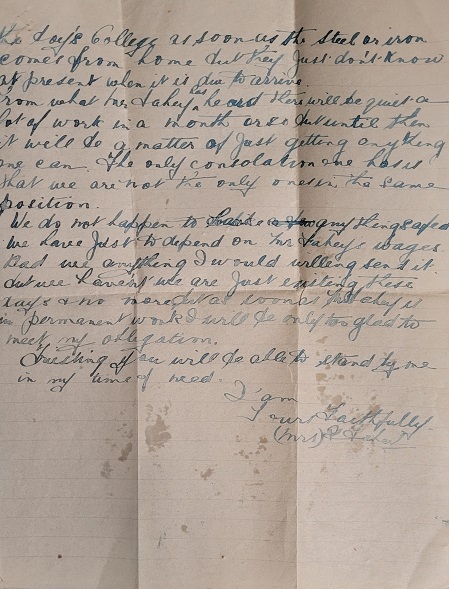
    The letter ends with “love and kisses to my wee pet”. By this time Irene had married and was Mrs Fahey. The letter seems to imply Irene may have been paying for my father to be cared for, but I have no confirmation of that. The cheque she mentions may have been a contribution, rather than payment of a fee.

    The next communication I have is dated 1930. My father was born in Dunedin, the 1923 letter was sent from a Christchurch address, yet the 1930 letter is stamped as being received in Wellington. It was sent from Nelson. For those not familiar with New Zealand geography, Dunedin is in the south of the South Island, Christchurch is mid-South Island, Nelson is in the north of the South Island and Wellington is in the North Island. Did my father move around? Had he been home at some stage and returned to an orphanage due to the depression? I have no idea.

    In the late 1990s, one of Dad’s half-brothers tracked down my brother, so clearly Dad had not been a secret. The children Irene had later were well aware of his existence.

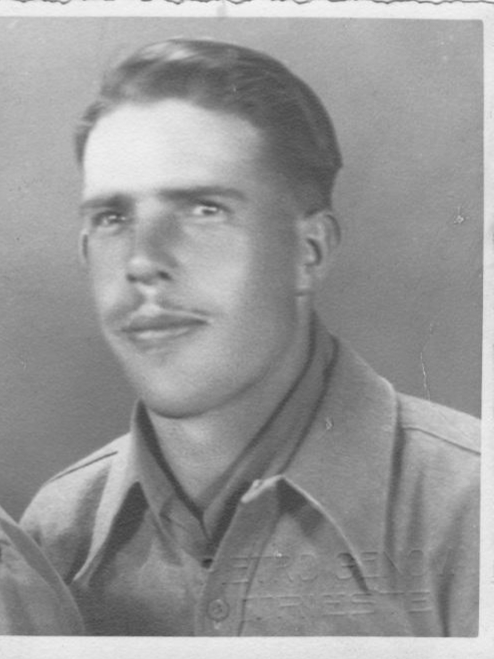
    Irene died in a later childbirth so Dad stayed in the orphanage until he was 15, then went to work as a farm hand. Then off to WWII. He drove a tank.

    John Dunphy

    Mum’s history is unclear. Her mother, Constance Eva Beck, was one of 13 children. Constance moved from New Zealand to Australia and married an Englishman, Charles Henry Lacey. The marriage took place in 1919.

    Constance was 38 when Mum was born. Mum was their second child.

    Birth Certificate

    The first child, a son, was stillborn (noted on the above birth certificate). There were no more children born after my mother.

    As a child, I was always told Charles died when my mother was 12. Despite much seeking, I have never found a death certificate for Charles in Australia or England. I was searching for a death certificate because at the time I had discovered being the granddaughter of an Englishman meant I was entitled to a four year visa to live and work in England. I thought that might be quite an adventure, but I needed his death certificate to apply for the visa. In 1935 an English passport got a person into so many countries: if he did do a runner, he could have died anywhere. I had no intention of doing a global search! I did try Canada as an option, but it was at that point I decided I could be searching for years and never find anything.

    Update: Since publishing yesterday, a death record has been found in NSW for Charles Henry Lacey.

    Death Notice
    Search NSW

    This paragraph is now effectively obsolete, given the above update, however I am retaining it as it is part of the history I lived with: the unknown. I have no memory of my mother and grandmother ever referring to Charles in affectionate terms, he just “died”. Of course, back in circa 1935 if men deserted the family, it was more socially acceptable to say they died than to admit they had run away. Whether Charles died or ran is still an unsolved mystery. It does not seem as if my mother and grandmother were poor, but that may have been all smoke and mirrors. One day I might get around to trying to solve the mystery again, but at this time there is quite enough going on: not only my own health, but the health of other family members.

    Despite Constance being one of 13 children, my siblings and I NEVER knew any of those relatives. That strikes me as odd. What happened? Why did she move from New Zealand to Australia? Circa 1918/19 that would have been quite an independent thing for a single woman to do. Constance and Charles married in 1919 but when and where did they meet? During the war? So much is unknown about their history.

    Constance later returned to New Zealand to live. Mum stayed in Sydney, but did go back to New Zealand to visit Constance. That is how she met Dad.

    Sheila Constance Lacey

    As can be seen, neither of my parents had a “white picket fence” childhood themselves. I have been told by psychologists that studies show two people from dysfunctional backgrounds are not an ideal match for a stable and successful relationship.

    There are two health factors I believe are critically important. The first is my father’s service in WWII. Dad was likely suffering PTSD. There was not much support offered in those days, as we know.

    Mum was on cortisone for most of her adult life. This was supposedly for eczema and asthma, but my doctors and I strongly suspect she had psoriasis, not eczema. We can’t now prove this. Psychosis is a known adverse event of cortisone use.

    Steroid-induced psychosis is a well-documented phenomenon. It usually occurs with oral systemic steroid treatment and is more common at higher doses

    https://www.ncbi.nlm.nih.gov/pmc/articles/PMC6793974/

    Against these backgrounds my parents married. Not only did they marry, they lived in total isolation. Our home and farm sheds are the lower group of buildings in the image below.

    Kopara Falls

    This was a returned soldiers’ settlement farm.

    There were conditions for eligibility for farms, including previous farming experience and how much personal money the applicant had available to put into the farm. On qualifying to apply for a farm, the applicant could choose which farm settlement(s) he would prefer and, if there were more than the required number of applicants (which was usual) for that settlement, a ballot was held which participants could attend and know the results immediately.

    https://www.theprow.org.nz/yourstory/farm-settlements-for-returned-soldiers/#.Y79YcnZBzrc

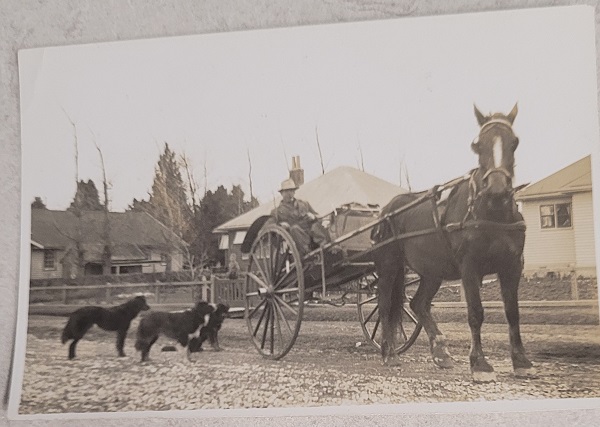
    When I say isolation I do mean isolation: no phone, no electricity, no car. This photo is my father in his allowed form of transport in the early days: horse and buggy.

    Horse and Cart

    Once I was born, my parents were allowed a car, phone arrived about then too. I stole this phone image from the internet: it is an exact replica of the phone we had. We were on a party line and our ring was a long and two shorts. “D” in morse code.

    Phone

    Electricity took many years longer, but we did get a generator before the power lines arrived!

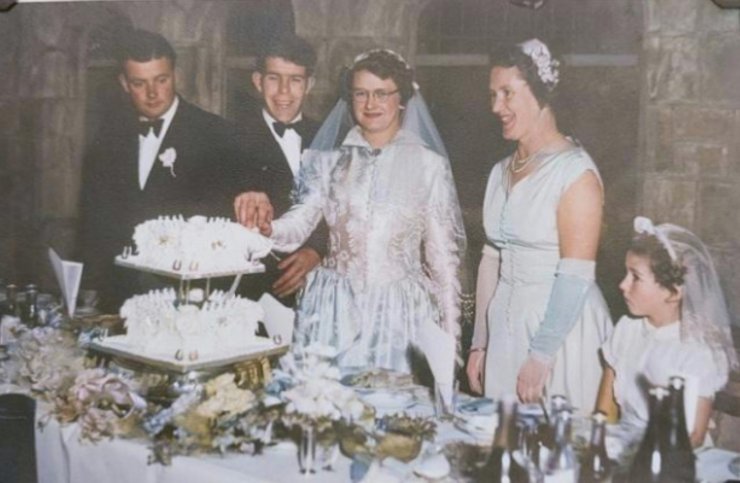
    My parents were married on June 6, 1953. The main photo, above, coloured by a very kind Twitter contact.

    We’ve reached the point in the story where my parents are married: I’m two years and six days away from making an appearance.

    Stay tuned for Part II – My Childhood.

    Watch

    I LOVE a Mystery!

    I do! I love a mystery. Be forewarned: this article is outside my qualifications or skill set – I just want to share the mystery. My interest in this mystery is, IF (and this is a big “if” at this point) wearables can detect increases in inflammation from monitoring various physiological metrics, how useful could that be to so many of us with inflammatory conditions?

    As regular readers know, this has not been the best health year for me – not actually major bad things, but not exactly climbing Mount Everest either. To catch up a little for context, check out The Tangled Web of Chronic Illness.

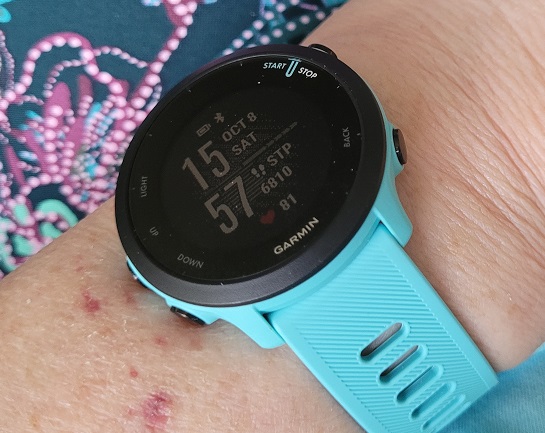
    Earlier this year, I bought a Garmin Forerunner 55 sports watch. I got it on special, just for the record. Now, I was rather upset to discover they’d stolen MY idea of an internal battery, just renamed it Body Battery. (No, I don’t really think they stole my idea).

    It was interesting indeed. Here was I not feeling too crash hot and my watch was telling me my body was very physically stressed even when I lying in bed asleep. Here is December 14 as an example of the type of day I was seeing.

    Body Battery

    The orange bars are physical stress (draining), the blue are rest (recharging). Out of a max of 100, my battery reached a high of 33 that day and dropped to a low of 13.

    What, I wondered, was this trying to tell me? My doctors weren’t very interested. It’s not a medical device, after all. Well, they may not be interested, but I am.

    The watch is very accurate with other measurements: kilometres walked, GPS, step count. But was it perhaps faulty in this respect?

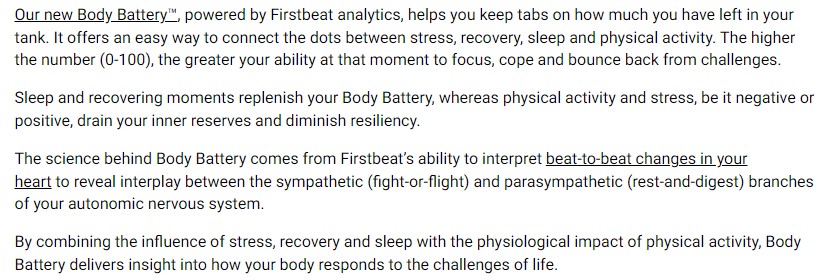
    The first question I had was how is Garmin calculating this? Click the pic to read the full article

    Calculation

    I read several of the related publications, just chose the above to share here.

    I was convinced my watch was telling me something. I even logged a support ticket with Garmin (still in progress as I write) but I have now decided the watch is onto something. That something MAY be inflammation.

    Let’s move forward to the end of December, when I was having quite a bit of pain. After two rheumatologist visits and two GP visits between December 22 and January 3 and a steroid shot in one wrist AND (this is the kicker I think) starting on anti-inflammatory medication on Wednesday January 3, all of a sudden my body battery looks much more like I would expect it to look. Here is yesterday’s report! Compare the pair!

    Yesterday I did stuff aside from walking. I did a big grocery shop, put all the groceries away, I worked in the afternoon and before lunch. I can match those orange periods on the graph with what I was doing during the day. I could not do that in December. Not only that, I reached a high of 85! 85! The low of 8 was at midnight.

    Stunned I was! The only explanation I can come up with at this point is the anti-inflammatories. Started on Wednesday, took a couple of days to kick in. Plus, of course, I have started my new PsA medication and it will be hopefully starting to work behind the scenes as well.

    This morning is looking very similar. By the time I woke up my battery was charged to 93!

    Body Battery This Morning

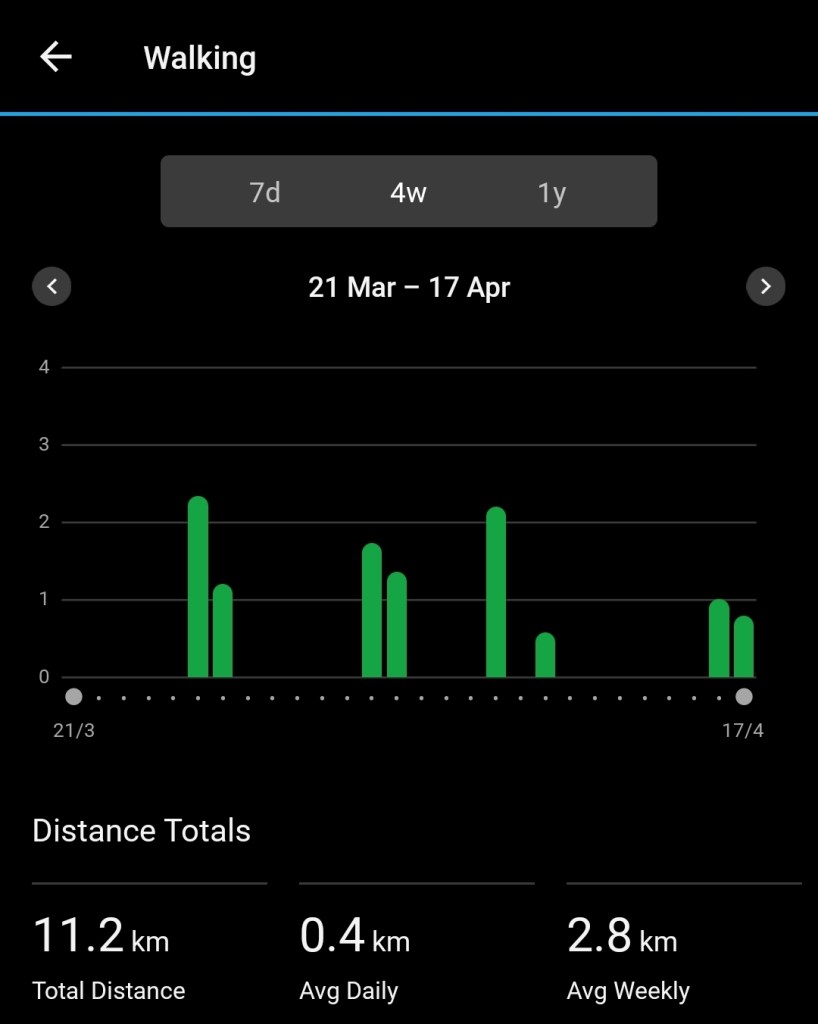
    Now, as I type this, I have used up some energy. I was out walking at 7:30 am this morning. I haven’t felt like doing THAT at 7:30 am for months. 2.5 kilometres, for anyone keeping tabs. As we know, over Christmas it was taking me until about 10 am to desolidify enough to walk.

    Now, two days does not solve a mystery. I might be 100% incorrect in my deliberations. However, I’m sure you’ll agree it is very interesting. Is it not? I will be monitoring progress to see what happens from here on in.

    Yes, I have updated my Garmin support ticket with this new information. I’m finding this quite intriguing!

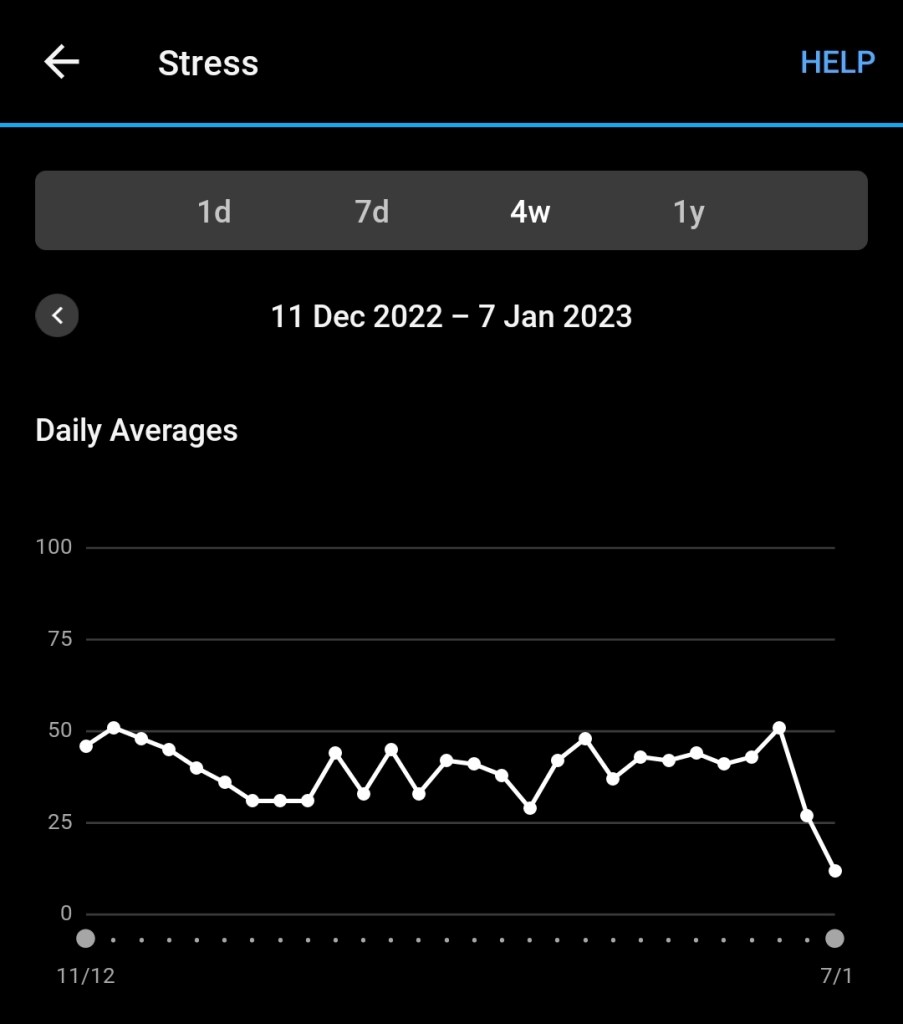
    One more graph. Garmin also provide a graph of your average physical stress over the days. Look what has happened.

    Stress Graph
    Wrist

    Resilience and Pain

    What comes first? The chicken or the egg?

    PLEASE NOTE: There is MUCH more to the question of pain than I cover is this very short video. Here I am looking at ONE small incident to highlight how it can be contentious, even with relatively small (wrist) body parts (which may be being disproportionately painful).

    In the above video I compared my wrist pain to my post-op total knee replacement pain. Please hear that in context: with the knee I was in hospital, a myriad of medical staff ensuring the pain was WELL MANAGED. The net result is yes, the wrist was worse.

    I’m using video a bit at the moment to protect my wrist as it heals. I’m new at this video game, so please bear with me!

    I wrote in a bit more detail about my current health challenges at Movement As Medicine for anyone catching up: the wrist in question was already showing signs of being something different to the rest at that time.