A New Diagnosis: and Other New Stuff

My chronic Illness life has been a a bit hectic of late. Several changes. I was going to title this “New Stuff Coming Out of My Ears”, but thought readers might think I actually did have stuff coming out of my ears – I can assure I don’t. Not yet anyway!

I honestly didn’t quite know how to write about it all. I want to help other patients understand what may happen during their journeys and yet I wasn’t quite sure what was happening to me! So I kept quiet for a while until I could wrap my own head around the whole situation. Plus I wanted to be able to have a positive outcome to talk about. My main message to other patients is do not be afraid to ask the hard questions of your medical team if necessary. Some conditions/diseases are clear, others not so much. Medicine is not an exact science. My thyroid diagnosis was always clear: bloods and imagining are well established. Other conditions are not so easy to be accurate about, especially perhaps in the early days of the condition.

As some readers will know, earlier this year I moved to a different rheumatologist. We will call her Dr IV (Dr Four). I don’t exactly remember why now, but one of the things Dr IV did was send me for a brain MRI. That came back showing while the brain was actually pretty darn good, thank you very much, there is a small brain aneurysm. By small I mean somewhere between 4.5 and 5 mm, depending on who is measuring it, it seems. I am assured we don’t worry unless it is 7 mm. Now, to a doctor dealing with these things, 2.5 mm might seem like the size of the Grand Canyon. To the patient 2.5 mm is a pretty small difference! However, I’ll take the neurosurgeon’s word for it! The medical advice is to monitor. He did send me off for a CT scan as well, but at the time of writing I do not have the results – it was being done more as a baseline for future comparisons. This was, yes, a bit of a shock! (See update 1 below)

Around the same time I was referred by my previous sleep specialist to a colleague of his. Now this was interesting. His colleague, let’s call her Dr S2 (for Sleep Specialist Two), read my sleep study results from two years ago rather differently and recommended a CPAP machine. So this was a whole new adventure too. I will write about the CPAP experience in a later article.

After the above issues, and already on my THIRD PsA medication for the year, I asked both my GP and Dr IV, “Do we have the right diagnosis?”. My GP said, “Fair question!’. Dr IV kinda went “Hmmm” and wrote out a pathology request including tests I had not had for years.

Those tests came back as a bit of a shock! I have rheumatoid arthritis (RA) – the tests were pretty conclusive and my Rheumatoid Factor (RF) was, shall we just say, quite high. There was another test as well that when considered together with the RF is about as conclusive as you can get. My medication was changed that day. So medication number four for 2024.

By now my head was spinning a bit. Brain aneurysm, CPAP machine and a new arthritis diagnosis all in the space of a few weeks. Actually, it is an old diagnosis revisited, as I was first diagnosed with RA in 2014. Then in late 2018 that was changed to PsA. Now in 2024 I’m back to RA.

Or – do I actually have both? Dr IV and I are keeping an open mind on that question. Well, Dr IV more than me – after all she makes the call, not me! Let’s just say I would not be surprised to have both. It is considered rare, but not unknown.

Having both would also explain, I suspect, why I was getting worse – the PsA may have been being relatively well controlled, but in the background the RA was ramping up. I want to be VERY clear – that is MY thought at this time, it has not been suggested to me by my doctors, who are still investigating.

Since all of that, Dr IV has also ordered more blood tests, some of which are new to me. I do not know what the outcome of those will be, I had them done on Friday. (See update 2 below)

How did I feel during all of this? My emotions included anger, fear, relief, gratitude: each of which would come and go. Gratitude Dr IV was going all out to get to the bottom of the problem. Anger that the increase in RF hadn’t been picked up before, fear re the brain aneurysm before I knew the size, less fear (but a little) re the high RF which can be related to many things, not just arthritis. Relief there was an explanation for why I was so sore everywhere! At the time of the new/(additional) diagnosis, I had painful arm muscles, shoulders, wrists, elbows, neck, fingers. Even my wonderful replaced knees were sore. Worth noting when knees are replaced, the muscles, ligaments, tendons etc remain and they can still get inflamed by inflammatory conditions. It was comforting that during this time I coincidentally also had my twelve month final post-operative check with my knee surgeon and both knees looked perfect from a mechanical perspective on x-ray. So the knee pain had to be inflammation related.

As most of us know, some of these medications can take months to work. I was really surprised with my new medication this time. I’m not perfect yet (probably never will be), but I’m so much better than I was on the day I took the first injection! I am off Celebrex totally and only on 7.5 mg of prednisolone per day. Hope to get off that entirely, of course. My blood pressure has improved too (Celebrex may increase some people’s blood pressure and I may be one of those people).

Today for the first time in ages I walked 3 km in one hit. I always walk 4 km a day, but lately 2 km has been my maximum distance in any single walk. Not only that, I did it at a pace of 11:51 minutes per km. I was very happy with that!

Thankfully, irrespective of whether I have RA, PsA or both, Movement As Medicine still applies. I don’t have to change my regime. In fact, Dr IV said to me she sees my dedication to Movement As Medicine as being what has got me through the years so far. That also made me happy.

This story isn’t over yet. There are more tests to come back, I still need to follow-up with the neurosurgeon for my own peace of mind and there is still the question of do I have both RA & PsA. The medication I am currently on treats both, which is comforting.

I have no sore bits anywhere. The capometacarpal joint areas of the index fingers are still both swollen, as are the areas around the ulnocarpal joints in both wrists. Dr IV tells me it can take a while for the swelling to go down. The heat of those swellings has gone. I am still limited with some finger mobility, but I’m working on the fingers and there are improvements. The top photo is my left hand today (can’t cross fingers), this photo is my right hand today (can cross fingers).

The video was captured last month. You can see on the left hand I can touch all my fingers to my thumb. On the right hand, not yet.

The best thing? No pain medications so I can hit the weights again (have done a few sessions already) and get those weights back up! Will I get back to 160 kg on the leg press? I don’t know, but I’m going to try!

Updates November 13, 2024

  1. I rang my neurosurgeon yesterday, just for peace of mind, for the CT results. That is when I discovered I forgot to tell his PA when I had the CT done. Where I had it done, they don’t send the results automatically. I burst into tears on the phone out of frustration at myself and embarrassment. The memory AGAIN. In fact, during that call, I could not even remember having the CT done, but I knew I had. I checked my calendar for the appointment and just after I found it, I REMEMBERED! It was in one of the rear buildings and I’d been trying to remember going to the main building. Nothing urgent about the results, but I will see neurosurgeon later this month to go through both the results and the plan for the future.
  2. I received a message yesterday that the blood tests done on Friday are not concerning, so THAT is a major relief!

A calming scene

The Joys of Deciphering Health Bureaucracy

This article applies to Australia specifically, although there may be other countries with similar ridiculous rules, so watch out.

Let’s set the scene:

  • I am an Age Pensioner, this means I have a Concession Card
  • I have already hit the PBS threshold for the year
  • Therefore my prescription refill today should have been zero cost to me

So what happened? Unusual for me, as I do most of this electronically, this particular prescription I had in paper form. The original prescription was dispensed on July 22, 2024. The dosage prescribed was three tablets per day. I was given two bottles by the pharmacist, each containing 60 tablets: a total of 120 tablets. Now, I am sure even a primary school child can calculate 120 divided by 3 equals 40. At the prescribed dosage, that two bottles would last 40 days.

There was a typed note on the repeat paperwork: “if needed before 11 Sept 2024 consult pharmacist”. By my calculations, that is 51 days. I really had no idea why the message was there – it made no sense to me.

Given the nature of my disease, I ensure I do not actually run out of important medication. Although this is not pain medication as such (it is a corticosteroid), pain medication is a good example of something NOT to run out of. Because the very time you need it, it is likely to be midnight on a Friday night.

The quick calculators amongst my readers will already be saying to themselves “Why didn’t she get the repeat on August, 31. Hadn’t she run out?” Good point. VERY good point. In my particular case, I am tapering off this medication, but the computer doesn’t know that, the PBS doesn’t know that, my pharmacist doesn’t know that. All they know is the dose prescribed. As I am tapering off, I am using less. As I type, I’m on one tablet a day. If all goes well, I’ll be able to stop taking this medication, but not everyone who is on it is in that situation.

I needed to go to the pharmacist for something else today and figured I may as well get this refill while I was there. I pointed out to the staff member who took my repeat paperwork that the mathematics seems rather wrong. She didn’t know. They were very busy, so I didn’t worry about it.

I collected the medication, headed to the payment counter and was charged $7.70. WHAT? No, I’ve reached the PBS threshold, this should be free for me.

I went back to the dispensary and sought clarification. Apparently, the PBS has a rule in place, irrespective of the prescribed dosage, that if you are dispensed two bottles you wait 51 days for the free repeat refill OR you pay. In other words, the fact you’ve hit the threshold is ignored. The dosage is ignored – i.e. the simple fact 120 tablets will only last 40 days at the prescribed dose.

I was stunned! For me personally, it doesn’t really matter because I could have waited until September 11 (or just paid, as I did). My immediate thought was for all the other patients out there with chronic illness being subjected to this rule. How many other medications does it apply to?

What if the patient does run out and then is too sick to actually go to the pharmacist and has no-one to go for them? That could well happen to me.

In my ten years of being a chronic illness patient this is the stupidest system glitch I’ve ever come across. Unbelievable.

I am prepared to bet there will be a lot of doctors out there who are unaware of this little rule too. Could my GP have prescribed under the new 60 day rule? I don’t know much about that. Looking at it quickly now, doubt I’ll ever qualify – one of the criteria is “live with a stable ongoing health condition”. Ongoing, yes. Stable? Very unlikely unless some magic medication is developed. Some patients are stable, a lot of us are not. Also, this is a medication we try to get off and stay off if at all possible, not something we want to take for life unless absolutely necessary.

The bottom line is, be aware there are things we do not know that can trap us, even after ten years of navigating the system.

If the patient does not have a Concession Card but had hit the threshold, they would have had to pay $20.55 to get the refill before the arbitrary date.

I have tried, as a patient, to find the actual rule. I can’t. And that is also annoying.

The photo I’ve used is just to be calming – any of the pictures I could post of the paperwork etc would be identifying. I’ll save them for my letters to the Health Minister.

Rattle Ya Bones Day!

Rattle Ya Bones Day is coming! What is Rattle Ya Bones Day, you ask? I’m so glad you asked, because that’s what I want to tell you about!

Rattle Ya Bones Day is a National Day of Awareness for all muscle, bone and joint conditions. It’s held every year on October 31.

Let’s look at some statistics around musculoskeletal conditions.

  • 1 in 3 people have one or more musculoskeletal conditions (That’s about 7 million of us, give or take)
  • Musculoskeletal conditions aren’t just conditions of old age. Babies, children, and young adults are affected as well
  • 93% of people told us that their lives were negatively impacted by their condition
  • 58% of people are of prime working age (25-64)
  • Musculoskeletal conditions are the most common cause of early retirement (yes, that includes me!)
  • Musculoskeletal conditions cost the economy $55 billion each year.

Given 1 in 3 people have one or more musculoskeletal conditions it is highly likely even if YOU do not, a member of your family, a friend or co-worker has a musculoskeletal condition. Regular readers know I do: psoriatic arthritis. I also have a bit of osteoarthritis and minor scoliosis of the spine. Rattle Ya Bones Day is very relevant to me!

Remember, quite often our conditions are invisible: I’ve written about that particular challenge before, in “We Don’t All Look Sick! Invisible Illness“. This is a photo of me I used in that article – I don’t (I hope) LOOK sick, but yes, I am.

Me! Looking not sick, I hope!

This year’s message is “Get informed and Get supported”.

Learn more about conditions like arthritis, back pain and others, to help you and those you love live well.

On the evening of October 31, MSK will present the Koadlow Community Lecture, Back Up: Why back pain treatments aren’t working and the new science offering hope.

The 2023 Koadlow Community Lecture will be presented by Liam Mannix, a multi-award-winning national science reporter for the The Age and the Sydney Morning Herald. Liam is one of the many who live with back pain, and he takes his own experience as a starting point for his recently published and highly praised book of the same title.

If you are interested, click here to find out more!

Support Musculoskeletal Australia’s work: Please donate today. Your support plays a crucial role in enabling MSK to provide free resources aimed at improving the quality of life for people impacted by muscle, bone, and joint conditions. By donating, you become an agent of change, ensuring that those facing these challenges receive the support and resources they deserve. Together, we can make a lasting impact and create a brighter future for everyone affected by muscle, bone, and joint conditions.

Together, we can raise awareness, share information, and foster a more compassionate and informed society regarding muscle, bone, and joint conditions. Join us on Rattle Ya Bones Day 31 October as we strive to make a positive impact and create a place where everyone has access to the support and resources they need.

Musculoskeletal Australia also has an on-line shop where you can buy items that may make your life or the life of a friend, family member or colleague just that little bit easier. Highly recommend visiting! The kitchen page is particularly useful for me, with dodgy hands.

Need More Information?

Perhaps your organisation may be interested in supporting Musculoskeletal Australia and/or Rattle Ya Bones Day? Your organisation’s support will help create awareness around the wide variety of musculoskeletal conditions and the impact they have on people’s lives. Contact us (that link is to MSK, not me personally 😊) to learn more.

Get informed. Get Supported. Rattle Ya Bones Day

Disclosure: I am a member of the Consumer Advisory Committee of Musculoskeletal Australia.

Brain Fog? Cognitive Impairment? Which Sounds More Serious?

As a chronic illness patient, I am over the term brain fog. Let’s be honest here, it is cognitive impairment. Two years ago when I wrote “Yes, Brain Fog IS a Thing“, I was more concerned with ways to deal with it on a day-to-day basis than investigating the neurological, physiological or immunological causes or possible relief.

Cognitive impairment is a symptom experienced by MANY people with chronic conditions, irrespective of age, yet the term is more commonly associated with older people. Google cognitive impairment and nearly every result will couple cognitive impairment with “the elderly” or “in aged care” and similar phrases.

All is not lost, however – there IS recognition! And hope!

Cognitive disturbances, mood disorders and fatigue are common in SLE patients with substantial adverse effects on function and quality of life. Attribution of these clinical findings to immune-mediated disturbances associated with SLE remains difficult and has compromised research efforts in these areas. Improved understanding of the role of the immune system in neurologic processes essential for cognition including synaptic plasticity, long term potentiation and adult neurogenesis suggests multiple potential mechanisms for altered central nervous system function associated with a chronic inflammatory illness such as SLE.

Source: Lupus brain fog: a biologic perspective on cognitive impairment, depression, and fatigue in systemic lupus erythematosus

“Cognitive disturbances”. Not quite enough in my view. The title does, however refer to cognitive impairment.

Although widely used, I find brain fog to be a somewhat dismissive term – it just does not sound as serious as cognitive impairment.

Because mine was relatively minor, only really noticeable to me, I asked other patients about their experiences. Here’s what they had to say. I am sorry I couldn’t use all the responses I received!

“To me it’s like trying to fight through treacle.” ~ A

“I cant cope with multiple processes. I need things written down.” ~ J

“One recent trip [overseas] hubby went on, the flight wasn’t direct and took more than twice the time to get there. I was hysterical, and had zero recollection of the change in flight timing.” ~ N (Note, this patient does have a Functional Neurological Disorder diagnosis)

“… impossible to do more than one thing at a time. I can’t cook and carry on a conversation. I can’t wash clothes and pay bills …” ~ T

“I just don’t trust myself with details anymore. When making med appts etc I check and double check and still get things wrong. My confidence is so low when doing paperwork etc” ~ J

“I sometimes think it is more debilitating than the pain as I have learnt to push through the pain but I can’t push through the fog.” ~ M

“When my brain fog is bad I cannot process people’s speech. I describe it as words floating past me like pretty butterflies – I hear them so know they are there, but they have no meaning.” ~ F

“I wish more people understood that it’s not just being forgetful.” ~ Hannah, who writes at Sunshine and Spoons and has ehlers danlos syndrome.

Language is important. The terms we use are important. Cognitive impairment is damn important.

In chatting to my gastroenterologist one day, I complained about cognitive impairment. I said to him, “If I were a doctor, I would have to give up practicing.” His eyes nearly popped out of his head. “Really?”, he asked. He and I have known each other quite some time now – he knows I am not the type to exaggerate. I knew from his reaction I had spoken in a language he understood.

The reality is I could do my accounting or IT roles in a wheelchair. True, my personal trainer hat would be more difficult in that case. I can’t do those jobs without my cognitive abilities. If I do make a mistake though, I am not risking anyone’s health outcomes. If I was a surgeon, in the middle of surgery and I forgot or could not decide where to cut next: that could be a problem. If I misread a blood test result, or prescribed the wrong dose of a medication (although pharmacists are a double check with prescribing) the impact on the patient could be negative.

Although my cognitive impairment has been very mild compared to other patients, I would still notice it. I knew it was there. In the early days of my illness, before we got things under control, it was worse. Even so, I was so ecstatic when this happened:

Remembering that number was so fantastic (to me) I emailed the clinical trial co-ordinator to tell her! I was in a meeting at the time and I was clearly excited. I was ecstatic! I have written before about brain fog – like fatigue, it is something many chronic illness patients battle with.

Source: A Clinical Trial – Patient Journey – Part III

Of course, fatigue and cognitive impairment go hand in hand in many situations. This is well known and why workers should not be driving home after very long hours. Yes, they could fall asleep at the wheel, but also their reaction times will be impaired.

The quotation above from the SLE study indicates how difficult research is into this area, as it is with fatigue. There can be SO MANY contributing factors: the underlying condition, medications, pain, fatigue, poor nutrition, lack of adequate hydration, lack of exercise, poor sleep, onset of menopause, age (MCI for example) – the list goes on. My objective is to highlight the seriousness of it. I would love to see the term brain fog done away with. When I mention it as a symptom, I want to see the reaction I got from my gastroenterologist – acknowledgement that this IS A SERIOUS ISSUE. Let’s have a serious name for it.

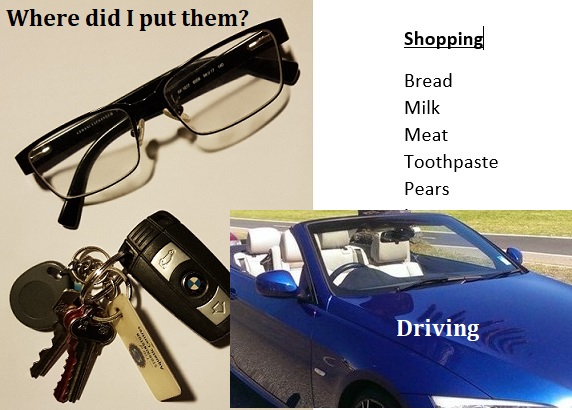
I have REALLY noticed the improvement, since the new medication kicked in. I feel my reaction times when driving are normal, I remember where I put my glasses, I’m writing (you can judge whether I’m writing well or poorly!), my concentration lasts well into the evening, I don’t need a shopping list.

This is great for me, but my thoughts are of the other chronic illness patients out there struggling to get their health providers to acknowledge the seriousness of this particular symptom on their quality of life – including employability. I’m also well aware that even if it IS acknowledged, we may be a long way from finding solutions – but if science don’t consider it a serious issue, science won’t look for solutions.

After I wrote the fatigue article (linked above), I had one patient say to me she has simply given up mentioning fatigue to her doctor. I understand why, but we can’t give up because then doctors don’t see it as being as important as it is. Unless, of course, they suffer one of these conditions themselves and have been through it.

In the five years I’ve had my conditions, I’ve been asked MANY times about my pain levels. About my mobility. I do not recall EVER being asked about fatigue or cognitive impairment. Now, to be fair, the generic “How are you feeling?” could be an all encompassing question, but I’ve never got the impression it was including either of these symptoms by default.

So – over to you, fellow patients!

  • Do you experience cognitive impairment/brain fog?
  • Do you prefer “cognitive impairment” (or some similar name) or “brain fog”?
  • Do you, as a chronic illness patient, feel cognitive impairment as a symptom of your underlying condition is seen as important by the medical profession?
  • What impact does cognitive impairment/brain fog have on your quality of life?
  • Do you feel in your case it results from pain, medications, fatigue or is it a separate symptom of your condition?
  • Do you think your family and friends understand your cognitive impairment/brain fog?
  • Has it impacted your career, work choices or employability?
  • If you are a family member of a chronic illness patient, do you feel you understand?
  • In your experience, is cognitive impairment/brain fog adequately recognised?
  • Anything else you would like to share?

PLEASE NOTE: Cognitive impairment can be caused by a great number of medical situations and can range from annoying to critically serious – this article is ONLY addressing where it is a symptom of an underlying condition, such as described in the SLE quotation provided above. If you are concerned about ANY change in your cognitive abilities, please consult your doctor.

When Was the Last Time You Yawned?

Fatigue, lethargy, exhaustion, lack of energy – call it what you will, many chronic condition patients will experience varying degrees of lack of get up and go. Are you fatigued without ever (or rarely) feeling actually sleepy?

The Royal Australian College of General Practitioners describe fatigue as:

Fatigue is ‘that state … characterised by a lessened capacity or motivation for work … usually accompanied by a feeling of weariness, sleepiness, irritability or loss of ambition’.1 It is derived from the Latin fatigare, to tire. For the purposes of this review article, we regard fatigue as synonymous with tiredness and malaise.

Source: Fatigue – a rational approach to investigation

Most chronic illness patients learn to pace. I’ve written Pacing for Beginners and Pacing UP, Pacing THROUGH, Pacing DOWN so I won’t go into detail again. Pacing is critical so we don’t boom and bust. Yet none of that answers the question of WHY are we lacking energy? Why do we burn out so easily?

At one stage I researched the research. I couldn’t find anything that gave me a concrete answer. Many theories and ideas, but no solutions or treatments. Many writers suggest the fatigue or lack of energy is caused by pain. Of course, the experience of pain can be worse if we are tired. What comes first, the chicken or the egg? While that is very valid in many cases, as pain is indeed tiring, it doesn’t explain those of us who have minimal pain. I can go for months without pain, but the lack of energy was always there.

In some cases it is suspected fatigue is a side effect of medications. This will be the case in some situations. But fatigue was one of my first symptoms, prior to any medications. Admittedly, in my specific case, I had a hyperactive thyroid which is known to cause fatigue, at least partly through disrupted sleep. I also had undetectable levels of Vitamin D back then. Comorbidity can indeed complicate troubleshooting!

I read also of pain leading to depression leading to fatigue. Again, possible in many cases. So it IS complicated. I hear SO MANY fellow patients complain of fatigue when it seems their primary condition is well managed – aside from the fatigue. Some conditions (mine is one) do list fatigue as a known symptom, while other conditions do not.

The focus was/is primarily on improving/maintaining mobility, and pain management, I could find little about improving or minimising the fatigue levels. Yet so many of my chronic illness contacts are vocal about the impact on their lives.

There has certainly been work done on measuring fatigue. Measuring fatigue is an important starting point, for how can we treat something if we can’t measure it? But any measuring is going to have a degree of patient subjectivity. A bit like the pain scale, which we are all familiar with. An allied health professional shared with me recently it is not unknown to have a patient cite a back pain of 8, only to easily bend over and pick up something they had dropped on the floor. How can we measure fatigue objectively? Would the medical profession take it more seriously if there was a blood test for that? Yes, there are blood tests that may isolate a cause for fatigue: Vitamin D, iron, thyroid function to name a few of the more common. Assuming all those are A-OK, there is no objective measure of my level of fatigue as a psoriatic or rheumatoid arthritis patient compared to any other patient with the same condition or any other condition.

I was discussing fatigue with a doctor recently. She said many patients across the range of arthritic conditions say they can manage the pain, but not the fatigue. The fatigue affects their quality of life far more than the pain. What can we do about it? Can anything be done about it?

One of the main improvements I am hoping for from the clinical trial I am on is an improvement in my fatigue levels AND to prevent it getting any worse. I totally recognise my fatigue is NOT too bad – I am aware it could be way worse. Even so, it is sufficient that yes, I have to pace, I have to avoid the boom/bust cycle. I have to be careful.

Recently a friend invited me to her birthday dinner. It was on a Monday night and a fair drive away. I knew if I worked Monday, drove and socialised Monday night, I would not cope as well as I should on Tuesday at work. I declined. Yet before I acquired my new life partner, psoriatic arthritis, that would not have been a problem at all. Fatigue is a far bigger problem for other patients than it is for me personally (at this time).

We need to exercise (where appropriate and recommended): that takes energy. We need to work (those who are able): that takes energy. We need to take care of our homes: that takes energy, especially if you own a cat – all that vacuuming. We need to shop for proper food and cook: that takes energy. When energy is limited, something gets dropped. Usually exercise is the first to be let go. That then means we don’t sleep as well, likely exacerbating the fatigue we already feel. Our bodies decondition, as a result we feel more pain, more pain makes us more fatigued. It becomes a vicious cycle.

About two weeks ago I was sitting in my lounge in the evening and yawned. I don’t think I’ve yawned for possibly five years. Yawning can be a signal we are ready to sleep (or hungry or bored). I’ve been sleeping better of late: now I’ve started yawning again. There may be more to yawning than we think. This article in The New Yorker from 2014 discusses yawning is a broader context – it isn’t only related to sleep hygiene. Even so, most of us can relate to yawning when we are tired.

I remember once being advised by a psychologist to go to bed/sleep “when you start yawning”. I recall thinking at the time,”That’s odd, I never yawn anymore”. I didn’t mention it though and promptly forgot about yawning. I was told if you delay, it will be 90 minutes before you feel sleepy again.

Yawning made me think about my experience of chronic illness related fatigue. I rarely felt sleepy (with or without yawns). There is a difference between feeling very, very tired and actually feeling sleepy. I’d forgotten what feeling sleepy actually feels like. Tired, yes – sleepy no. Am I alone in this? 

Where am I going with all this? To be perfectly honest, I’m not really sure. I am very interested in hearing of others’ experiences. What can we patients do to raise the profile of fatigue as an issue we want fixed if at all possible? Yes, it is recognised, but what is happening to develop strategies or medications to relieve this debilitating symptom?

Please share your thoughts and experiences.

  • Do you, as a chronic illness patient, feel fatigue is seen as important by the medical profession?
  • Do you experience being really tired, but not sleepy?
  • Am I the only one who stopped yawning?
  • What impact does fatigue have on your quality of life?
  • Do you think in your case it results from pain, medications or is it a symptom of your condition?
  • Do you think your family and friends understand your fatigue?
  • If you are a family member of a chronic illness patient, do you feel you understand?
  • Anything else you would like to share?

Let me tell you something – writing about yawning makes a person yawn. A lot!

PLEASE NOTE: Fatigue can be caused by a great number of medical situations and can range from annoying to critically serious – this article is ONLY addressing where it is a symptom of an underlying condition. If you are concerned about ANY change in your fatigue levels, please consult your doctor.

posture

Is Your Posture Exacerbating Your Pain?

What exactly IS posture? When I was a young girl we were taught “shoulders back, tummy in” and a lady NEVER looked down when descending stairs. We learnt to walk with a book on our heads. I am sure many of you remember similar lessons.

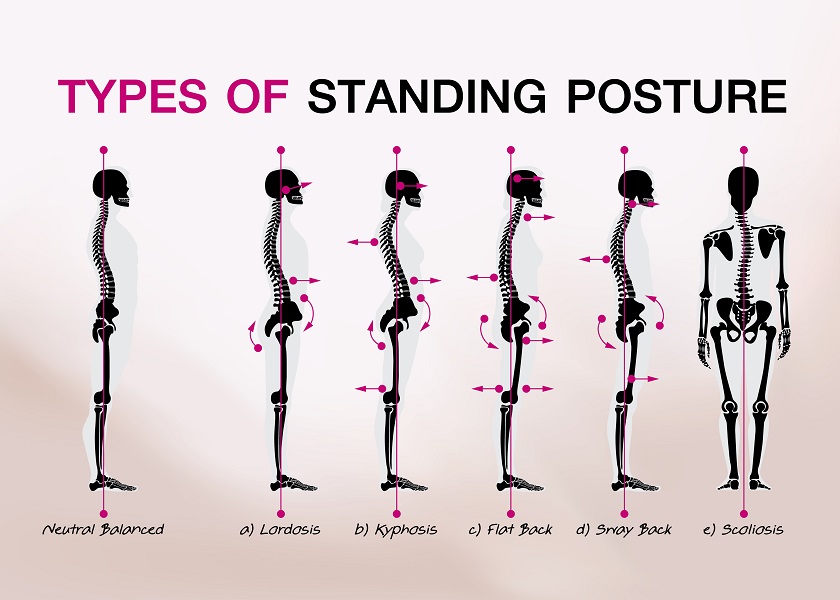
Good, or ideal, posture is when there is a state of muscular and skeletal balance which protects the body against injury AND/OR the progressive development of irregularities. More on that in a bit.

Faulty posture is when we sit or stand or move in such a way that we create a faulty relationship between various parts of our body, primarily musculature, which places undue/increased strain on some muscles and not enough effort is required of other muscles. This leads to imbalances: some muscles become weak, others may become tight. Some may become stretched, others shortened over time. Pressure can be applied to other soft tissues causing additional pain or discomfort or restricting function.

What all this can lead to is a worsening, or progression, of any musculoskeletal issues we may be having. As regular readers will be aware, I have several back issues, the reason I converted to kyBoot shoes in the first place.

It may not be chronic conditions that cause faulty posture. It may be chronic habits! The most common such chronic habit is sitting at a desk all day. Office workers can develop upper crossed syndrome (UCS). The person may end up with permanent forward head, increased cervical lordosis, rounded shoulders and thoracic kyphosis. This all involves tight/shortened upper trapezius and levator scapulae and six other muscles in the region. Seven muscles, including serratus anterior, rhomboids and lower trapezius all weaken. Not sounding good is it?

How are you standing?

Injuries that may result include headaches, bicep tendonitis and impingement of the rotator cuff. Chronic habits can lead to chronic conditions! It worth noting the rotator cuff is actually made up of four different muscles: infraspinatus, subscapularis, teres minor and supraspinatus.

What we tend to do is adjust how we sit, stand or move to relieve a discomfort or pain we may be feeling. This is called guarding. While this is certainly logical in cases of acute injuries, for example, if we have broken an ankle, in situations of chronic conditions like my back, guarding may not be so helpful at all over the long term as it can reduce the muscles’ ability to support the very structures you need those muscles to be strong enough to support. The muscles of the core and posterior chain support the spine for example, but if I don’t stand, sit and move correctly, over time those muscles will not function as well and the back pain I will experience will get worse. I know – I’ve been through it!

Personal trainers, fitness coaches, allied health professionals such as physiotherapists and osteopaths can all assess posture. A fitness professional may refer a client to an allied health professional for additional assistance if deemed necessary, or may prescribe specific exercises or exercise technique adjustments to help strengthen weakened muscles and improve posture.

What, as an individual can YOU do to help yourself when the professionals are not around to monitor your posture? Learn to be your own monitor. Make sure you know what good posture not only looks like, but what it FEELS like. I have a very good eye for detecting postural abnormalities in other people, yet I have had to focus really hard on detecting the same in myself. I know where my ankles should be in relation to my hips, where my ears should be in relation to my shoulders, where my shoulders should be in relation to my hips. But I can’t always see myself and we slip into old habits easily.

Habits are hard to break. We do a lot of life on auto-pilot: drive the same route home each day, walk to the train station without thinking about it. Our posture is also often a habit. We have to work hard at developing a new habit.

Knowing it and doing it can be two different things. When out walking, I will monitor my reflection in shop windows for example. I had, over the years, developed some degree of kyphosis and rounded shoulders (I was a desk jockey for so many years). As a result of the back issues I have, I had also developed a tendency to lean slightly forward. These aspects of poor posture are easily detected in a reflection. I consciously correct myself.

What if I am in the park and there are no shop windows? If I apply mindfulness to my body I can feel myself not standing tall, I know I do not have a neutral spine because I am leaning forward. I make the effort to correct my posture.

Fair warning: when you start doing this, it is actually tiring. The muscles have become weak over time and it does require physical effort to hold yourself in the correct position and keep walking. Just as those muscles became weak over time, they WILL regain strength over time if you persevere.

Yes, you may feel a twinge of pain as well as you straighten up – yet that passes and you actually think, “Gee, that DOES feel better!” A caveat on that – you may need to do strengthening and corrective work before you get to that point, depending on your current situation.

While a fitness professional or allied health professional may have prescribed daily exercises and these certainly will help, being conscious of your posture throughout the day will see results achieved faster.

This is not to say I never have back problems any more. I have degenerative structural changes in my lumbar spine. If I have a day where I completely overdo things, or do something I shouldn’t (such as sit for too long), yes, I will still end up stiff and possibly sore. With the right stretches, some walking and maintaining my strength workouts I now bounce back quickly without any need for pain medications. My kyBoot shoes have been a major component of my personal tool kit over the past twelve months.

I highly recommend consulting with a professional who can assess posture and prescribe exercises that will focus on the problem areas. Increasing or maintaining functional movement needs a long-term comprehensive program including footwear, stretching, appropriately targeted exercises (including strength work) and constant awareness to prevent lapsing into old habits.

For desk jockeys sit-stand desks are great, but be aware research is indicating neither sitting NOR standing all day are good for our bodies, there are health risks in both situations. Movement is the best medicine. I have a sit-stand desk in the office and I am also lucky in that I walk around a large campus quite a bit. Between alternating sitting and standing, and the walking, I move a lot during an office day. Not nearly as much as a nurse or a policeman on foot patrol, but more than many desk bound people.

Ensure you transition between sitting and standing with correct ergonomic positioning of your desk (and chair). If in doubt, ask your Occupational Health & Safety team for advice. The University of Western Australia has good reference material too, including a page on sit-stand desks.

This is an edited article originally published on the kyBun website.

Images used under license from Shutterstock.com

Incidental Exercise

Never underestimate the value of incidental exercise. For many years 10,000 steps a day has been considered a desirable minimal level of daily activity for health. I’ve shared the video below in other articles, about the dramatic drop in activity from our active past to our now relatively passive present. Here it is again as a reminder!

I love that video because it illustrates so well the change in how we live. Our bodies were designed for the active past lifestyle but too many of us live the passive present depicted.

Back in 2014 I participated in the Global Challenge. Looking at the website for the 2018 event, I see it has changed since 2014, but the objectives remain the same. This is an annual event to encourage office workers particularly to get out and about and moving. I am proud to say I won all the trophies available, despite some challenges such as ending up on crutches due to a very, very grumpy knee.

2014 was the year I found out I was sick. Looking back, what I find interesting was my actual steps per day in early 2014, compared to that recommended steps a day number of 10,000. We received our pedometers well before the event started and several of us started wearing them to see how much of an improvement was needed. I found I was walking approximately 2,500 steps a day. I was shocked, as I had a history of being active, but, as they say, “life happened” and I had found myself in a very inactive phase.

To paint the picture of my life at the time, I was a senior manager with a company car. In the morning, I would walk out my back door, jump in my car, drive to work, park in the basement, take the elevator up to my floor, sit in my office or meeting rooms all day, at the end of the day repeat the journey in reverse. At home I was helping children with homework, cooking dinner – there was little time for me to take care of myself. I should have made the time!

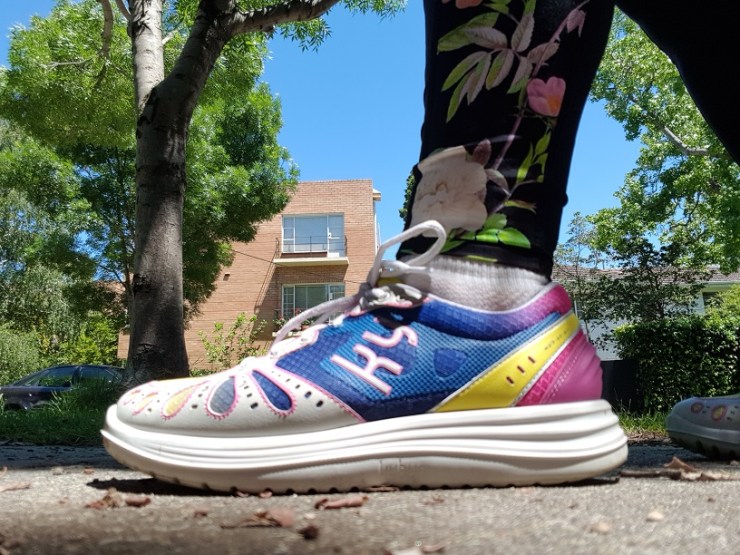
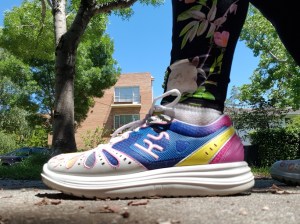
Now I deliberately use every opportunity to clock up a few extra steps: my kyBoot shoes definitely help. Without the heels I can decide, weather permitting, to walk an extra 1,000 steps down the road from my office before catching the tram.

The photo at the top of this page was taken on just such a day recently. It was a beautifully sunny end of the day, not too hot, the trees provided such a pretty filtered sunlight effect and the evening birdsong was a lovely musical accompaniment: I really enjoyed just de-stressing from the office by stretching my legs.

I am extremely lucky in that the tram line goes directly from my work location to my home location with many stops along the way. I can easily walk part way, tram part way. Not everyone has such a convenient transport situation.

If you drive to work, is it possible to park a little further away from work? That isn’t possible for me, on the days I do drive to work my only parking option is the staff car park. This is one of the reasons I prefer to take the tram as it gives me more options for incidental exercise.

Cycling to work is great exercise already: my knees don’t like cycling, so it is not an option for me. Luckily my body doesn’t object to walking in any way, which is one of the reasons incidental exercise is so important to my welfare and the management of my rheumatoid arthritis and damage in my lumbar spine.

How many of us travel to the gym or the pool, to diligently undertake exercise, in our car? My swimming pool is only 1.5 kms from my home. I have reached the point now where walking 1.5 kms is easy. One issue I have to be careful of is exposure to the sun, so I can only do that walk weather permitting. I also need to be careful not to overdo it. I am well aware that a three kilometre walk and a swim may send me into the #spoonie Boom/Bust cycle if I am not careful. Pacing is paramount. My gym is located at work: I do the same incidental steps as on a normal work day.

I walk to my general practitioner’s clinic rather than drive.

As I am a person with chronic health conditions, I don’t get to 10,000 steps on a daily basis due to the energy/lethargy issues that go with my conditions. Yet. I am slowly building up and each month I am more active that the previous month.

Look at your daily routine and determine what adjustments you might be able to make to increase your level of daily activity. I am a firm believer that frequent movement is better for our bodies and our health than being stationary all of most days then working out like mad in the gym for 45 minutes maybe three days a week. I was very happy to have my belief confirmed when I did the Pain Management Program! The reality was brough home to me more recently when I spent a day in the Emergency Department (why is a story for another day) – my body almost turned to concrete through not moving. I was very stiff after lying on a hospital bed all day.

Yes, I certainly do work out in the gym because resistance training is very important, especially as we mature, but moving as much as possible is perhaps even more important, yet so difficult for many of us to achieve.

I know from my own experience with my conditions, the days I am not working in the office and move a lot more I get to the end of the day with no stiffness or little niggles anywhere. Days when I am more stationary I will end the day in discomfort. Not pain, but discomfort. Move more. Movement is medicine has become my mantra.

This is an edited version of an article I first wrote for Kybun.

Codeine or Movement? Which Will You Choose?

There are patients whose conditions have progressed in ways many of us cannot imagine, despite their best efforts and the efforts of their medical teams. One such patient is Sam Moss. In 2010 Sam was diagnosed with rheumatoid arthritis, but that was just the start of her medical journey: she has since been diagnosed with other conditions.

12 months after my leg broke, my right femur was also showing signs of disease on MRI with bone marrow involvement so a rod had to be placed in that to prevent an imminent break and repeat medical emergency like we had with my femur break in 2014. I am constantly dealing with multiple foot fractures and none of my broken bones in my legs or feet will heal.

Source: My Medical Musings

Sam now runs a support group for those facing medical challenges, Medical Musings With Friends. It is a closed group, very supportive. If you would like to join, click the link. Membership of the group is also a rapid introduction to how severely some conditions can progress, even with the best medical care and patient tenacity in the world.

My objective, for myself and my clients, is to slow condition progression and manage pain where possible. Yes, sometimes our medical conditions do take control as described above, but many of us, in collaboration with our medical teams, can control our conditions, be the master of our medical destiny. We, as patients, want to ensure we don’t give those medical conditions any head start if we can help it. If, like me, you are lucky enough to have a choice, don’t waste that opportunity – there are many out there who would be very grateful to be in our situation. Chronic condition severity is a spectrum and we are all somewhere along that spectrum trying to do the best we can.

I support the recent rescheduling of codeine. I definitely think the change over could have been better planned, as it seems many where left without codeine OR any alternative. Those who ensured they had prescriptions found there was no stock available in pharmacies.

In the past I have used Panadeine Forte after having teeth extracted. I’ve used Tramadol (another opioid) about three times a year. I’m not against codeine per se, it has a place in medicine. Taken under medical supervision when appropriate it is a useful drug. Self-medicating with over-the-counter supplies regularly can lead to problems.

There is a reason why morphine and its equivalents feature on the World Health Organization (WHO) list of essential medicines, along with oxygen, steroids and penicillin. These are virtually irreplaceable in certain situations, including severe burns, postoperative recovery, cancer pain and palliative care. But there is no additional benefit of opioids over simple drugs like paracetamol and ibuprofen when taken for toothache, back pain, migraines, asymptomatic kidney stones, muscle sprain, fractures and many other conditions associated with chronic pain. Here, opioids are not just unhelpful but they can also worsen pain, apart from the fact that they are addictive and fatal. Therefore, it’s best to avoid them for all but a narrow range of conditions that you should discuss at length with your doctor.

Source: Ranjana Srivastava, The Guardian

Early in my journey, one of my problems was I was VERY stiff and sore when I got out of bed in the morning. I had two choices, A) try a pain killer of some sort or B) move. Back then I really had no idea what I was doing, I was on a learning curve. I found very quickly if I walked, even as little as a few dozen steps, the pain and stiffness subsided. Clearly, for me at least, moving worked.

Now, some years later and professionally trained, I am much better at linking my discomfort levels to what I have, or have not, been doing. This last week has been a classic. For whatever reason I had several days when by six o’clock at night I was out of energy. I mean totally out of energy. I’d arrive home from work and flop on the couch and be unable to move. Which, for me (and many others) is a very bad plan. The stiffness and pain returns. Just getting up of the couch, I was stiff and had to straighten my back. Not how I like to be. As anyone with chronic conditions knows, sometimes there are no obvious reasons for “flares” they just arrive unannounced. I had my thyroid function and iron levels checked, they were fine. I had again had a change to my routine, which my conditions do not seem to like very much, so that may have been the trigger. While understanding why is helpful to prevent future flares, I haven’t managed to detect a pattern (flares are rare for me), I just needed to get back on the horse.

Kyboot

When I ensure I move enough and keep my strength up I am pain free and have very little, if any, stiffness. A little discomfort every now and then if my lumbar spine reminds me “Hey, I’m here, don’t forget I’m here”. I reassure my facet joints I haven’t forgotten them, do some stretches and core strength work and they settle down.

Best-practice recommendations now are focused on self-management and self-support: moving away from opioids, prescription or otherwise, and focusing more on allied healthcare and other non-drug methods to minimise pain. Pain Australia has launched a campaign called RealRelief to help people move beyond codeine and take control of their pain. Their foundational idea is that most people with chronic pain can improve their lives without opioids or surgery as long as they are appropriately supported to do it.

The caveat there is the support. Hard to move beyond pain when you are by yourself and suffering.

Source: Making codeine prescription-only was right. Where do we go from here? – The Guardian

No, I do not take painkillers in these situations. I have an edge, of course: I did the PACT program. I know and understand the science behind the recommendations. I recognise it can be difficult for someone without that knowledge and support to resist reaching for the pill packet, which MAY give them some relief in about twenty minutes. I can walk 500 steps and be pain free a lot faster than the twenty minutes it takes the pills to work, without the associated health risks of codeine. I also stress the MAY (give relief). Anyone with chronic pain will attest to the fact sometimes the pain meds just do not even touch the sides.

What if I took Option A and reached for the pain killers instead of moving? What would happen? I’d get worse, that is what would happen. That is the cold, hard truth of it.

de-conditioningIf I reached for the painkillers, I’d then have a foggy head, so I’d lie (or maybe sit) down. I’d be doing nothing to actually strengthen or stretch my muscles or counter any of the negative affects shown above. I would progressively deteriorate over time and be on a downward spiral. Then my quality of life would suffer. Josh, another chronic condition patient, has written a very amusing story about having a couple of beers. Now, Josh is one of those patients I referred to in my opening paragraphs, he has done everything possible yet because of his medical situation he is on some pretty strong stuff. I may ultimately end up in a similar situation, but I’m going to do everything in my power to delay such a situation. I also do NOT see getting worse as inevitable for me. I like being able to have a nice wine or two over dinner or with co-workers on a Friday night without sounding smashed (to quote Josh’s wife).
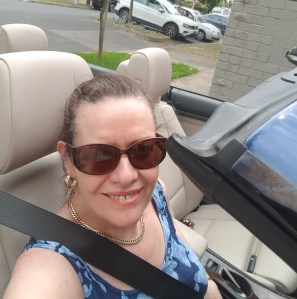
I like driving, dining out, dancing and swimming. I want to keep my body as functional as possible for as long as possible. Don’t you?

driving

Once we start on that downward spiral, we find we have so many restrictions. Such restrictions may include:

  • Limited driving ability (no drugged driving, for example)
  • No alcohol
  • Progressive physical deterioration due to inactivity
  • Loss of social interaction
  • Reduced working hours or incapacity to work
  • Depression and/or anxiety

No, it is NOT easy to start the movement momentum. Sometimes it is not easy to keep it going. Yes, it does require willpower and resilience. Yes, it requires mental strength to take those first steps in the morning or after sitting for too long.

Yes, as a community we need more support. Refer again to the above article: “as long as they are appropriately supported to do it“. I was lucky enough to be accepted into the PACT program but there are not enough of those programs available yet and there are waiting lists.

Think about where you want to be in five years time. Do you want to have a body that can support the quality of life you desire or do you want to be staring down that spiral?

Talk to your doctors, ask them if movement as medicine is an option for you.

“It’s [resilience] vital to the process,” he explains. “I’ve seen patients who, under the circumstances, might want to just give up, but they don’t. In fact, they thrive. Their resilience helps them cope and keep moving forward to find a solution. They say, ‘I’m going to make it no matter what.’”

“We used to put patients on bed rest for pain. Not anymore,” says Dr. Tom. “Staying physically active is critical for pain management, as it releases endorphins which can improve your mood and even ease pain.” People who don’t move can get tight muscles, joint pain, muscle strain and spasms, which can worsen existing pain.

Source: 4 Resilient Ways To Cope With Chronic Pain

If you’d like to give moving a try, click on Contact and send me an email.

Make 2018 YOUR Year for SMART Goals

Seasons Greetings to all! Christmas is 30 or so hours away as I write (for those of us in the southern hemisphere). As the sun sets on 2017, we have an opportunity to re-evaluate our health progress and polish up our plans to get stronger, more active, more mobile and have less pain, less lethargy, better sleep: culminating in a better quality of life in 2018.

If you are still in “I’m thinking about it” mode, take stock over Christmas. What invitations did you turn down because you didn’t feel you could summon the energy required? Would you like to accept those invitations next year? Were you able to do the shopping you wanted to do without crashing in a heap for two days afterwards? Make 2018 the year you make the choice to include moving more into your treatment plans.

Talk to your doctors, get a clear understanding of what benefits you may expect from moving more.

SMART Goals

Now that my recent treatment change is behind me, I’m making more ambitious plans for myself and setting new goals for the new year. SMART goals. SMART goals are used in many walks of life: I’ve seen various wordings used depending on the context. For our purposes, I like the following definitions.

S = Specific. The goal needs to be something specific, not a nebulous idea.

M = Measurable. If we can’t measure our achievements against the goal, we won’t know if we are getting anywhere.

A = Achievable. It has to be achievable. If I set myself a goal of climbing Mt Everest, while both specific and measurable, for me it is not achievable. Swimming a two kilometre session – THAT is achievable.

R = Relevant. You will see realistic often used in this spot, but for our purposes I prefer relevant. We have limitations on our energy, our strength and our time. There is no point in setting goals that are not relevant to what we wish to achieve, which is better quality of life.

T = Timeboxed. There needs to be a time period within which you will achieve this goal. This helps to hold you to account and stay on target.

Let’s give it a try. “My goal is to swim two kilometres.” Is this a SMART goal?

No, it isn’t. While it is specific, measurable, relevant and (I hope) achievable, I have set no time target. “I want to walk more”, while relevant and achievable, is not a measurable goal – “more” could be anything. Walk longer distances or walk more often? Nor is it timeboxed. Walk more by when? 

Let’s have another go at this. “My goal is to swim a two kilometre session by 30 June 2018”. Now I have a SMART goal. I will need a progress plan to reach that goal, so I will need shorter term goals to get there: “My goal is to swim 1.2 kilometres once a week by 28 February 2018”.

That is one of my goals. Yours may well be something along the lines of “I will do my stretches every day for the month of January.” This is specific, measurable, achievable, relevant, timeboxed AND will set you up for the next step in establishing a movement as medicine strategy.

A walking more SMART goal could be very simple. “I will walk for three minutes, five times a day for one week”. At the end of the week a new SMART goal can be set. Remember when setting goals to pace yourself, always pace yourself.

Kyboot

For context, I was on crutches for much of 2014. I was diagnosed at the end of 2014. You can read how I started back to moving more on How tough is it to get moving?. My major goals for 2018 are:

  • Swim a two kilometre session by 30 June 2018.
  • Increase my daily step count to 10,000 steps a day by 30 September 2018.
  • Increase my leg press to 160 kilograms by 30 June 2018. (I was at 140 kg before my treatment change – I have to work back up after dropping back).

As I achieve those, I will set new goals during the year.

Of course, I have one other goal: help others get moving! I am back to normal availability after my recent hiatus, so reach out. It costs nothing to investigate the possibility.

Have a great time over the break! Stay safe!

Movement As Medicine

Pacing For Beginners

Pacing in the context of managing our pain relates to our rate of activity or our performance progress. In this article I am using walking (that’s why the feet!) as an illustration, but the same logic can be applied to sitting, standing, resistance (weight) training or whatever activity it is that we are having trouble doing to the level we want to. The activity might be sweeping the kitchen floor, or sitting long enough to fly interstate. Walking is just the example here.

As I have shared previously, when I was first started on this journey, I walked five minutes at a time, four times a day. Five minutes was how long I could manage before I experienced pain. Slowly, by pacing, we can build up.

Please be aware pacing is only one component of condition management, it is not THE solution. This is a general introduction only, each person requires specific planning tailored to their circumstances.

Warning: Maths Ahead

Let’s assume for the maths that like I could, you can walk five minutes before you experience discomfort. It is very important to know your starting point. Smartphones have easy calculators: the keystrokes for the below example are 5 + 4 = 9 / 2 = 4.5 * .8 = 3.6.

The important point here is just because you CAN do 5 minutes, that is NOT the starting point.

    1. Take that five minutes as your Test 1 measurement.
    2. After a suitable rest, do a second Test. The Test 2 result might be four minutes.
    3. Add 5 + 4 = 9. To find the average of your two trials: 9/2 = 4.5 minutes.
    4. Now you need your baseline, your official starting point. This is 80% of your average. 4.5 * 0.8 = 3.6 minutes, or 3 minutes 36 seconds.
    5. Increase at a rate of 10% from your baseline. 3.6 * 1.1 = 3.96 minutes. Let’s just call it 4 minutes!

Each day (or week depending on the type of activity) you increase by 10%. JUST 10%. On your calculator that is “current time” * 1.1 = “new time”.

10% a day increase is reasonable at a 5 minute walk, but for longer durations and other activities, the increase should be spread over a week.

Putting Pacing into Practice

How does this work in practice? I did some timings on a stroll the other day. It took me 217 steps and 1 minute 48 seconds to walk from one tram stop to the next.

What is a tram, you ask? I’m glad you asked! This is a Melbourne tram. Terrific mode of city transport.

If you don’t have trams in your area, do you have an alternative?

Why was I doing the timings? Because we can use local infrastructure to our advantage. After a while you will get very bored with your backyard or walking around the same block. Tram lines are fantastic because we can walk, hop on a tram for a rest, get off further down the line preferably within one or two metres of a nice cafe, finish our rest over a nice coffee and then repeat the exercise back.

As we build up, we can use the distance between trams stops as stepping stones. Looking at my 1 minute 48 second walk between stops cited above, that is way more than a 10% increase from a 4 minute baseline. That would be closer to 50%, WAY too much. But later on it will be possible. You are not stuck on 4 minutes for long! As you build up you can walk just past a tram stop then back and still catch a tram to reward yourself with coffee. Over time you will be reaching the next tram stop.

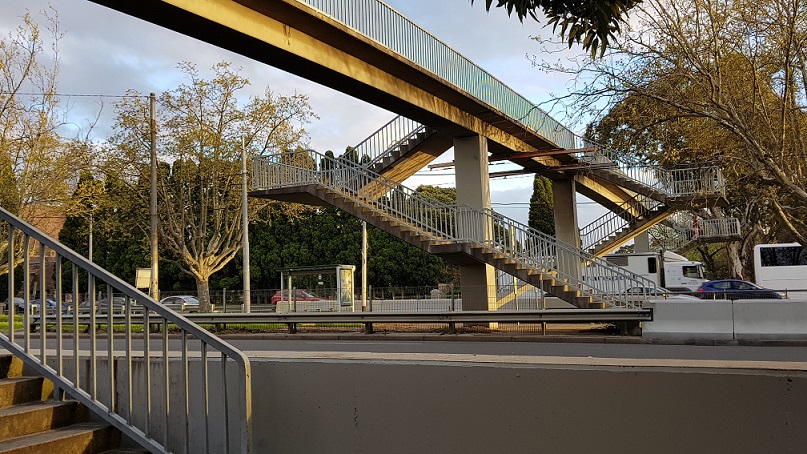
A little reconnaissance may be necessary. This is the tram stop I was passing. In the middle of a busy main road, there are lots of steps up from the pavement, an over-bridge and then more steps down. This may not be ideal for those pacing up slowly! This is one of the tram stops you might want to zoom straight past – as a passenger!

Of course there are many alternatives: drive to a favourite park or beach, then walk. I don’t suggest the shopping centre, as it could take 20 minutes to walk from the car park to your store of choice!

The Rules

Rule #1: stick to the times. DO NOT be tempted to do more than you should, despite how great you might feel right that minute. You risk undoing all your hard work to date if you do that.

Rule #2: do it every day. Even if you don’t feel the best today, do your allotted time. Every day. Note this is for these small starting activites. I would NOT do a leg press every day!

Rule #3: Wear appropriate footwear. If it is sitting you are working on, ensure you have an appropriate chair.

Other Thoughts

I also apply pacing strategies to manage the fatigue, along the lines of how much I do on any given day. I’ve mentioned before I don’t do grocery shopping on days I do a strength workout. I don’t do strength workouts the days I work eight hours in the office. We work out rules for our individual circumstances.

Christine Miserandino (lupus and fibromyalgia) has written The Spoon Theory which is a great way to visualise the energy/fatigue situation. I found it very early on in my journey and it certainly helped me adjust to my new life. I do have many more spoons these days than I used to, but that didn’t happen overnight.