New Year’s Eve Message 2022

Movement As Medicine

Let’s talk about specifics while I’m actually madly using movement as medicine in my own life. I use it all the time, obviously, or Limberation wouldn’t exist! Right NOW it is critical to just getting through my day.

I am in the process of changing medications. While my rheumatologist said “The medication’s stopped working”, now that I’m a few days down the track I tend to think it may not have quite stopped completely. Maybe a drop of 50%. Because I’m in a LOT more pain now than I was on Thursday when I saw him. Today is Monday, for reference. Thursday morning was the last dose of the old medication.

Why medications stop working for me is an as yet unsolved mystery, so for the point of today’s discussion, just accept it happens for me. We’ll investigate why another time.

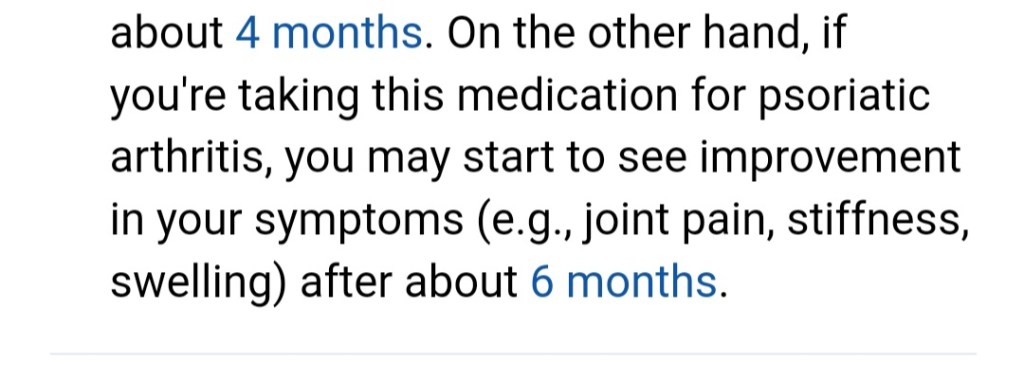
I was hoping the new medication would at least provide some improvement in the short term. Not so far (but it has only been five days). In an attempt to get a handle on when I might expect an improvement, I looked up the information.

Information re medication

Improvement after SIX MONTHS? I should say the documentation accompanying the medication and detailing two of the clinical trials provided more nuanced detail and I might see improvement by four weeks, so I’m hopeful! Even so, given that several areas of my body start getting painful at about 3 am, are REALLY painful by 7 am and that lasts until about 10 or 10:30 am depending on when I start moving (i.e., get out of bed), I have to get through the next weeks, whether they be four or 24. As my rheumatologist very sweetly squeezed me in on the last day of consulting prior to the Christmas break, we really didn’t have time for lengthy discussions, it was a fix-the-immediate-issue type consult. I will see him again in January and have the opportunity then to delve into the detail! I’m just grateful I was seen at such short notice! As he has me on Prednisolone (bridging) for six weeks, I’m figuring four to six weeks is the expectation for SOME degree of improvement.

The current list of sore bits?

  • Both shoulders (not too bad)
  • Both ankles
  • Soles of both feet
  • Posterior leg muscles, roughly around the back of the knee (could be gastrocnemius origin, not sure)
  • Right wrist (not bad)
  • Left wrist (EXCRUCIATING) – UPDATE: this is actually De Quervain tendonitis, diagnosed Dec 28.
  • Both hands, some fingers worse than others
  • The other day my neck was also in the mix, but it seems to have settled down – after some remedial exercises.

I think I’ve listed everything.

When I say the left wrist is excruciating, I mean when I load it (that is turn it, or try to lift a coffee mug) it feels like I’m being stabbed with a scalpel. When I once used that description of pain to my GP I saw the “you don’t know what that feels like” look on her face. I said, “I once stuck a pitchfork through my foot. Completely through. Into the ground on the other side.”

“Ah”, she replied, “You know what a puncture wound feels like.” Yes, sadly (and stupidly), I do.

In this particular case, it isn’t just the wrist itself, it is the tendons from the thumb, right where they pass the wrist joint. OUCH!

Anyway, back to movement! So my day goes like this. Wake up, in pain in all the various spots listed above. Clearly getting dressed and having breakfast are challenging. Getting that bra on….. you guys don’t know how lucky you are, trust me. I take my Prednisolone. Yes, ideally I should take it at night to counteract the development of inflammation overnight, however, if I do, I get NO sleep. So that’s not an option for me. I like my sleep! I need my sleep!

I potter about having breakfast (Pred has to be taken with food), gently moving everything until I can actually get dressed. By 10 or 10:30 I can walk. I mean walk outside, movement. This morning I monitored the improvements for the purposes of this article. By 300 metres the pain behind my knees had gone. By 500 metres my feet were feeling heaps better. By 1 km my ankles were improved. I have stuffed ankles anyway, the surgeon in charge of feet in my world wants to replace my ankles, they are mechanically so bad. So given they are likely a hot target for PsA inflammation, I’m not expecting them to resolve completely on a walk, but they are now much happier that when I left the house.

Walk

Having got the lower bits & pieces thawed out, I then tackle my hands. Warm, salty water in a bucket. Various finger movements, here are some.

I will also make fists. I hyerextend the fingers too, but do that out of the water.

By about 11:30 am I am actually a functional human being again. Pretty much. Am I completely pain free? No. Can I walk, use my hands? Yes.

Now I can use my hands, I can do remedial exercises for my shoulders. As I’ve detailed those at that link, I won’t repeat myself today.

I haven’t mentioned any pain medications have I? Well, no, because as I may or may not have mentioned before, the run of the mill pain meds we are allowed at home don’t really work for me most of the time. Endone we don’t even bother trying any more. I do take Panadol Osteo, it does help a little bit. This morning I didn’t bother with Tramadol as I wanted to compare to yesterday (when I did take it) and as I suspected, no difference. So I can now put Tramadol on the list of “May Work On Lucky Days” – or with some types of pain, but not all. Not working with what I’m dealing with at the moment, obviously. I do know about keeping severe pain under control, that it is harder to get back under control if you let it get too high on the scale. I’ve had a hysterectomy and a total knee replacement among other surgeries, I learnt stuff! I also know when a medication is not working.

For the record, I was born with these resistances (pain meds and sleeping meds, both). Most of my life it wasn’t a problem. I didn’t have pain and I slept like a log. Until I got sick. NOW I need the damn things to work, but the chances are slim! I also have wonky/broken pain sensors. Some, not all. I do wonder if that has anything to do with why pain relief doesn’t work with any reliability either. Pain to do with muscles, tendons, entheses I feel. Other stuff, like stomach ulcers, an infected tooth or abdominal adhesions – those pain sensors failed the quality checks during assembly.

My GP asked me had I always been that way. I said I have no idea – to ME I was normal. I didn’t know other people felt pain when I didn’t, plus I was rarely sick (other than the usual measles, mumps, chickenpox etc in pre-vaccine days). I did have meningitis at about 12. I did tell my GP that I remembered saying to people after the birth of my first child , “I’m not sure what all the fuss is about, it isn’t that bad.” The look of shock on her face was quite dramatic! I think that was the point she jumped on board with the pain management crew at the Barbara Walker Centre who first suggested I had faulty wiring.

Prior to my appendectomy, I went from absolutely no pain to agony in the space of about 30 minutes, BUT that really isn’t a reliable indication, as that can happen with appendicitis. No pain with my gallbladder either, BUT I had a porcelain gallbladder and often there is no pain with a porcelain gallbladder. So again, not conclusive evidence. Indicative, perhaps, as the surgeon did seem a little surprised that I had no pain given the state of the thing.

Without using Movement As Medicine I’d be in BIG trouble right now.

Are my legs, feet and ankles sore when I take those first 300 or so steps? Yes, I’m not going to lie to you, they are sore. I don’t start while they are still really painful, I do that thawing out first, pottering about. But no, I don’t leave the front door feeling normal.

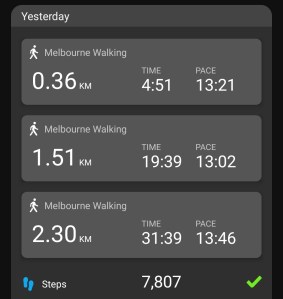
Do I have a good rest of the day? Yes, pretty much. Yesterday, I still reached my four kilometres and 7,500 steps targets. I’m slow, but I’m moving. These items list in reverse order, by the way. The 0.36 was at the end of the day, just to reach the targets. I was up earlier yesterday too, so thawed out earlier.

Taregts

My fingers and hands are still swollen and they actually feel swollen. But the soreness has gone for the day. I am NOT lifting weights at the moment. My assessment is (an example) the load on the wrists of holding the dumbbells for the bicep curl is not going to help the wrists. The biceps are fine! I could probably risk lower body and core stuff, but my body is fighting a battle with itself at the moment, so I’ll keep it to remedial level activities.

I will rinse and repeat the day just described until the new med starts to kick in. I will add activity intensity as I deem appropriate. For example, if I get the shoulders settled, I’ll hit the lap pool. The shoulders aren’t too bad, so I think I may be able to calm them down relatively quickly with focused attention.

Here’s the caveat. Make sure you talk to your doctor/(s) and/or physiotherapist before using Movement As Medicine. My purpose is to provide my experience as encouragement from a practical perspective. To illustrate the value of moving. Having said that, not all conditions are the same. Different patients have different comorbidities, different degrees of severity: a host of clinical considerations. Always consult YOUR health care providers.

The below is from an interview with Arizona-based chronic pain specialist David Tom, M.D.

Movement As Medicine

I have subscribed to this theory since late 2014 and it has served me well. Eight years and I’m still moving. Movement has helped me get through six medication changes (this new one is my seventh medication).

My final tip for the day? Get bright shoes! They lift your spirits!

It Feels Like Selling a Faulty Product

I’ve had this thought floating around in my head for months, but had great trouble turning it into a readable piece! After recent events (December 22 to be precise) I feel I can better illustrate the concept. What happened? My medication stopped working. I’m faulty. Action had to be taken. Right on Christmas.

Fair warning: I might be the only chronically ill person who feels like this. But I actually doubt that. Often when we think “it’s just me” we find out it isn’t “just me” at all. But it is something no-one talks about. I will primarily use myself as an example because I don’t want to speak for other people – so please think about situations I describe in relation to other chronic illnesses. The circumstances may be different, but I suggest the feelings are similar. Please share your perspective in the comments!

Many chronically ill people are single: this is where the “selling a faulty product” comes in. Some will have been single when the disease first made itself known. Others may have become single as a result of their illness. Illness place stresses on relationships and some fail as a result.

I’m NOT suggesting any of us, especially me, want to get married. Or even live with anyone. Living alone has benefits, trust me. Younger chronically ill people may have a different perspective on that, but I’m not in my twenties anymore! Companionship would be nice. A friend with benefits, perhaps. Just because we are sick, doesn’t mean we suddenly lose the desire for intimacy or love.

Most chronic conditions come with complications. At one end of the spectrum may be a Type 1 diabetic whose condition is so well controlled you’d never know unless you were told. At the other end of the spectrum we may have a person who is bedridden. Along the spectrum some will have clearly visible indications of unwellness: a walking stick, a wheelchair, a walking frame. Some will be like me (at the moment, anyway): my condition, psoriatic arthritis, is invisible. Unless I tell someone, that person will have no idea. Many chronic illness are like that. But I know I’m a “faulty product”. At least that is how I see myself.

Don’t get me wrong – I’m pleased with what I achieve in managing my health. I know and completely accept my limitations. A note for newbies to this life: acceptance takes a while. A few years in fact. But you will get there! Even so, I know I’m a bit like a car with worn brake pads or a shirt with a missing button. I, therefore, feel I should be open and honest about my limitations. But when, exactly? And no, there is no discount price involved!

Let’s take a closer look at the rose. In fact, let’s take a look at two images of the same rose.

Some days, most days, I like to think I am the rose on the left. But some days I am the rose on the right. Unlike the rose, which does not revert, I can be either conformation at any given time. Most chronic illness people will nod knowingly. Healthy people with no experience of the chronic world will be more inclined to go “WTF?”

If you “bought” the rose on the left, but woke up next to the rose on the right, what would be YOUR reaction?

As I have discussed before, chronic illness is relatively new to the human race. Many people struggle with the concept that we are incurable, most of us are not going to “get better” next week, next month, next year or, in fact, ever.

If we contemplate dating, when do we tell the “customer” that we’re faulty? Even bigger question, how much do we tell them and at what point? Up front and perhaps scare the living daylights out of them? Later and risk them feeling we weren’t sufficiently open and honest initially? Or…..is it easier to just put ourselves on the shelf? Not for sale. Return to manufacturer.

Dating a healthy person sounds good on paper, but are they going to understand? Are they going to be able to cope with the challenges we face on a day-to-day basis? Dating another “sickie” perhaps has the benefit of understanding (hopefully), but do you effectively now have double trouble? Now you have two people with challenges. If one needs to walk lots and the other needs to rest lots, how is this going to work on a practical level?

As regular readers know, I recently had some flares that saw me in ED. We put that down to an infected tooth (since extracted). However, I didn’t really get better. Three days before Christmas, I called my rheumatologist. Fortunately, I’m not cooking Christmas Dinner for anyone: my daughter and her husband live in South Australia and are coming over the first week of January. If they had been here and I had been hosting, I would have had to cancel – three days before Christmas.

We can make plans and then have to cancel at the last minute.

It isn’t just about plans and activities though. It is about the other things that go with our diseases/illnesses that healthy people may have no knowledge or experience of. Here is a SHORT list of just some of the more common issues chronic illness people may be dealing with, aside from the obvious mobility aids we can all clearly see.

  • Patient administered injections (some find this freaky)
  • Skin rashes, which may lead to the next item
  • Icky creams that end up on bed linen and don’t feel very romantic
  • Rules around eating times driven by medications
  • Ostomies
  • Continence issues
  • Mood swings, weight fluctuations etc due to medications
  • Fatigue/lethargy
  • Malaise
  • Brain fog
  • Pain – chronic, periodic or unpredictable

Some patients are stable. A rheumatoid arthritis patient told me recently he’s been on the same dose of the same medication for ten years and basically lives a normal life. I’ve just failed my sixth medication in eight years. I am in a lot of pain as I write this, waiting for a new medication to kick in.

I tell myself that two perfectly healthy people could start dating and some time later something occurs that disrupts their lives completely. The story of Sam Willoughby’s BMX accident is a classic example of such a situation. This is a great love story, do read it!

The pain is still etched on Sam Willoughby’s face.

Not just pain.

Uncertainty. Fear.

“BMX was my life,” Sam says while looking straight down the camera at the start of Ride, an ABC Documentary released on Sunday.

“Until it wasn’t.”

The accident that left Sam, a two-time world champion and Olympic silver medallist, paralysed from the chest down, happened on September 10, 2016.

Just 22 days earlier, Sam had been racing in the final of the Olympics in Rio de Janeiro.

https://www.abc.net.au/news/2022-11-21/ride-documentary-sam-willoughby-alise-post-bmx/101559036

In contrast, I could look at my situation as a positive: after all I know what my situation is. Or do I? Do any of us? Many of these diseases are progressive. Many have comorbidities which in some cases may be worse than our first condition, IF we develop any of those conditions on top of the one we already have.

I may have worn brake pads now, but the motor could blow up next year.

I’m a fiercely independent person. I’m not suggesting this is necessarily a positive thing, it just is what it is. Would it be nice to have someone spray this icky foam on my back, where I can’t reach? Sure it would. Then my mind says “Who’d want to do that? Someone with a controlling tendency?” It is a risk. Am I overthinking it? Probably. Maybe. Maybe not.

Interestingly, my GP has broached the topic of singledom with me, yet my psychologist never has! My psychologist talks about “expanding social circles”, very generic. My GP is much more specific (and trust me, I do mean “specific”), bless her. I would have expected it to be the other way around.

There are no manuals about how to navigate this particular aspect of being chronically ill. Nobody talks about it. At least not that I’ve seen in the readily available literature. There may be a scientific study somewhere, if you know of one, please share the information! I think the silence is born of what I see as the fact humans have not yet adapted to this fourth state of health – chronic, not curable. We haven’t developed social protocols to deal with the disclosure or information sharing.

It would be so easy if we could get our primary health care provider to write a letter, like they write a referral to a specialist, outlining the practicalities and the patient just hands it over (or there is an exchange of such letters) at a socially pre-determined appropriate time (first date? second date? before sex? I don’t know!). Then I’d feel I’ve been open and honest, the ball’s in your court now.

I don’t have a solution for this. I am hoping society can have more open conversations about the situation. So many of us live our lives hiding our conditions where possible, as I discussed in You Look So Healthy:

I asked two members of the support group if they would permit me to use photos of them looking absolutely stunning to illustrate this article. Both declined because the state of their health is not public knowledge – they are concerned about the impact being on a public website such as this may have on their jobs. One in particular is striving for remission and may be able to put all this behind her. 

You Look So Healthy!

Now I am retired, I don’t have to hide for fear of losing my job. So I can pose the difficult questions, write about the stuff no-one talks about.

Let’s Talk About Teeth

This is a follow-on from my previous article, where I detailed spending too much time in ED with rather nasty PsA flares. As detailed, the consensus in the end was I had an infected tooth and that was driving my flares.

The offending tooth has now been removed! The improvement in my overall health is nothing short of remarkable.

I have had NO major PsA flares since the tooth was extracted. I have not needed Panadol Osteo or Tramadol and have tapered off the Prednisolone. Yay!

I haven’t had a painful wrist, painful or swollen fingers, painful toes or ankles since the extraction. When I say painful in this context, I do not mean excruciating, I just mean sore, irritating or annoying. These are distinct from from full on flares, such as when I couldn’t cut the cheese as the wrist was too painful. I had been experiencing these niggles off and on since starting my new PsA medication, but had actually put it down to the new medication not being as efficacious as the previous medication. I am revisiting that assumption!

The tooth was extracted on November 21. I have delayed writing this update as I wanted conclusive proof of a couple of seemingly related improvements, however I think it may take a month or more for that, so we’ll see what happens.

In a nutshell, it seems I may have had an infected tooth for most of this year, without realising. One aspect of this saga I didn’t mention in my previous article is I have some (not all) broken or wonky pain sensors. This was initially suggested by the Barbara Walker Pain Management Centre when I did a pain management program there. There are situations where it seems every other patient known experiences pain, but I did not. I’ll cite one example here to illustrate. I have had my gall bladder removed, yet during the whole process of trying to find out what the problem was, I had NO pain. Just dizziness and nausea and felt unwell. Finally scans were done and bingo, there was a porcelain gallbladder. The surgeon’s words, on reviewing the imagining, were “That needs to come out. Now”.

We’ve decided anything muscle or joint related, I feel pain. Things like gallbladders, teeth etc – not until the very last minute, if at all.

It seems it went like this. Some time before April, the tooth became a minor problem and steadily got worse until by May/June I had developed the ongoing fever. The tooth I had issues with in June may have only had issues because the infection from this tooth had spread, upsetting a nerve. The June tooth seems fine now! Antibiotics at the time settled things down for a while, but it resurfaced. As I mentioned in the last article, this tooth is one that my partial plate clicks onto. There were times the tooth felt uncomfortable this year, but it was off and on and I wouldn’t call it pain as such, just uncomfortable. I thought it was probably just the load of the plate putting stress on the tooth, I never considered infection. Not until the very last days before I ended up in ED. By then I did actually have a toothache! Even so, it wasn’t an excruciating toothache.

Now, during this year I also lost high frequency hearing (yes, confirmed by the audiologist), lost my sense of smell and my nose was swelling internally every night, waking me up as my breathing was disrupted.

For two days after the tooth was extracted, my sinuses continuously drained down the back of my throat. Two days after having my tooth out, I walked outside after it had been raining. I could smell wet earth! Hmmmm, I thought to myself, if my sense of smell will recover, what about my hearing? After all, I had experienced a VERY mild earache during the worst of what I now refer to as “the ED weekend”. The best home test of that is taking my temperature as the high frequency alert beeps are in the frequency I can’t hear. I have been able to hear them a few times since the tooth extraction, but not every time. While I could smell the wet earth, sticking my nose in a rose is no different than it was before – yet anyway. If I walk past certain plants on my walks, I can smell a scent in the air though. I can smell cinnamon again. So while there are changes, I don’t yet have conclusive proof either my hearing or my sense of smell will return to normal. The changes to date (less that two weeks) are interesting though.

The nose swelling is still an issue, but improving. My gut is also settling, although attributing that to the tooth is complicated by the fact we also increased my Thyroxine dose at about the same time as having the tooth extracted.

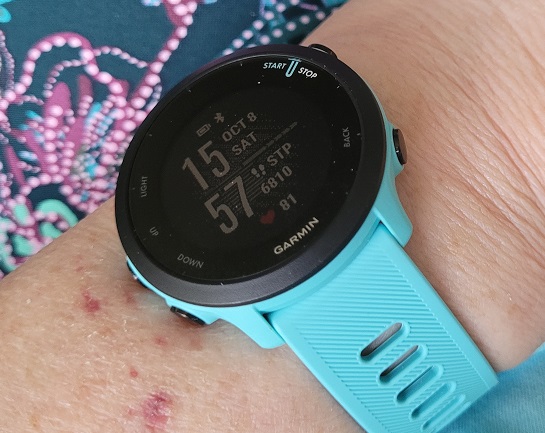
Upsettingly, due to my drop in activity over this time, Garmin has kindly reassessed my Fitness Age – and not in a positive direction! I am not above admitting that at my age and with my medical conditions, I was quite proud of the fact my Fitness Age was younger than my chronological age. My objective now is to pace back up to where I was!

The bottom line here is teeth are SUCH a vital component of our health. Yes, those of us with chronic conditions are likely more susceptible to complications due to our underlying conditions and/or our medications. Even so, healthy people are also at risk. My personal situation is complicated by the pain sensor thing: clearly if I’d had a toothache earlier and reported that, I might have avoided much of what ensued!

It has certainly been an interesting experience!

The Tangled Web of Chronic Illness

Recently I described a less than optimal week which had included a fancy nuclear med stress test of my heart. This week, which is not yet over, has been another WTF? week in the life of this chronic illness patient. I’m sharing for several reasons:

  • For friends, family & co-workers of other chronic illness patients, to show “what happens”, enhance understanding
  • To highlight the complexity involved and why GPs are so important in our health management (wary of the NSW pharmacist prescribing proposal in cases like mine)
  • To illustrate the October and November episodes may well be related to each other – and to a tooth
  • Dental care needs to be included in Medicare

This article assumes the reader is not new to my writing – if you are, click on the included links for the backstory. One piece of information that may be missing from linked articles is back in May/June of this year I had a fever for six weeks. Continuously. No idea why at the time. Bloods, CT scans, nothing indicated why I had a temperature. Did the merry-go-round of my treating specialists: GP -> gastroenterologist -> rheumatologist -> endocrinologist. Then out of the blue I got a very sore tooth. Dentist prescribed antibiotics, temperature disappeared. I don’t know about you, but I suspect I had a painless tooth infection for six weeks. Just tuck this paragraph in your memory banks for later in today’s story.

So we roll forward to November 10. I had a painful tooth – different tooth this time. I also had flaring hands from the psoriatic arthritis. Skin was flaring on the left arm. I stopped wearing my partial plate as it “clicks” onto the painful tooth, I hit the Osteo Panadol. November 11 (Friday) I woke to the flare worsening. I needed pain relief. I took Osteo Panadol, Tramadol and Prednisolone (as per previously established protocols). I also took my temperature. Low grade, 37.4 (but given at my age my normal temperature is about 36.6, it was a little higher than I’d like). Me being me, I thought if this is no better tomorrow, I’ll call my GP. Good plan, right? Not all plans go according to plan.

Late in the day, I developed a rather nasty pain under my left scapula. I pulled out the foam roller, that’ll fix it! No, that didn’t work. Spikey ball? Minor relief. Massage ball? Also, technically, a fail in this case. Sticking to my plan of call GP tomorrow, I gave up on curing the pain, took pain relief and went to bed. In the middle of the night I woke up, as one does, to go to the toilet. Just one minor problem: I couldn’t lift myself up from the supine position without the pain under my left scapula wiping me out. I spent some time figuring out how to use my right side to get myself out of bed without contracting any muscles on the left. Yay! I’m standing! Woo hoo! Phew! Did what needed to be done and had the same issue laying back down. But I’d figured out what movement I could and couldn’t do, so I managed.

When morning came, no improvement, same problems. Called GP clinic, the advice was go to ED. So I did. One aspect that amazed me was this: despite the pain in trying to sit up or lay down, I could do my bra up with no problem. Our bodies are weird or amazing, depending on your perspective. Which ED to go to? The private hospital ED would cost me $480 out-of-pocket as the safety net threshold only applies to out-of-hospital charges! I decided the public hospital ED fitted my budget better. I trammed to ED. Mentioned to attending doctor about the tooth. I suggested maybe I have a tooth infection that is driving a PsA flare. Doctor looked at tooth and was very concerned about how loose it (now) was. This was considered a very likely scenario. Plan of action was I would go to dentist on Monday to see about tooth. ED gave me five Palexia to get me through to Monday if needed. I went home. By then the shoulder was miraculously perfectly fine. I rested, as I figure that was probably a sensible approach to the situation. I could almost hear my GP saying, “Just rest!”

By Sunday, I was going stir crazy from resting. It is, as we know, not really my style. I decided a one kilometre walk around the block was needed. As I walked, I felt a twinge in my right hip flexor. Uh oh. I also felt a little dizzy and had to lean against a fence for a few seconds. Flash back to my October event right there. It is a very minor twinge, nothing even remotely severe, I figured it would pass, just my body being flary given the tooth infection. Looking back on my notes though, my temp that morning had been 39.1 and I’d woken in a freezing/boiling cycle with a sore hip. Had forgotten all about the hip until I revisited my notes just now. Notes are kept for my GP, symptom diary. Useful, by the way, as we forget things. How did I forget I’d woken with a sore hip that morning? Obviously it didn’t last long, replaced by the hip flexor specifically, later in the day.

I was hopeful, wasn’t I? 2 am Monday I woke up to go to the toilet. I couldn’t move my right leg due to the pain. I lifted my leg off the bed with my arms so I didn’t have to contract leg muscles, grabbed the walking stick that lives beside the bed for just such events and got myself to the bathroom and back. Now, half of me was saying, “this is just another flare” and the other half of me was asking “but what if it isn’t?”. I already know from my October event that if I called Nurse On Call, given my history, they will call an ambulance. I figure I might as well save the time and call them myself. We decided I was not P1 (very reasonable), so I was allocated to the queue. While in the queue I had to somehow get to the front door to unlock it. While I didn’t time that journey, it felt like half an hour and I had to rest on the couch before heading back to bed. And find a nightdress. Ambos don’t need naked patients. And the recording had said have a mask on.

Ambos arrived and decided to do Virtual Emergency Department. That doctor advised “take the patient to ED”. So that’s what happened. I got my first try of the “green whistle”, that was exciting! Hey, we have to look for the positives and innovations are positives! It was pouring rain as I got in the ambulance, we all got wet.

Kind of a rinse and repeat of Saturday with a few extras thrown in: x-ray of leg/hip, x-ray of teeth, antibiotics prescribed. I called my dentist from ED, but dentist was closed. Thankfully, dentist called back and booked me in for Tuesday. CRP had jumped from 28 on Saturday to 85 on Monday. ESR was now 61. Definitely something going on. Tooth again got the blame. Has this happened before, I was asked. Actually, aside from Saturday, yes, it has. October 25 my wrist was so sore I couldn’t even cut cheese. November 04 my hands had been swollen and sore, but I’d put that down to a reaction to my second Shingrix vaccine. November 25 I had woken with an extremely painful left leg (probably ITB). All these things had resolved within 24 hours though. Suggestion is made that perhaps I’ve had a low grade tooth infection for a few weeks but as I didn’t have pain in the tooth, I didn’t realise.

That’s when I first thought back to my October event. Now, as luck would have it, I had a gastroenterologist appointment for Monday afternoon. From ED I called to reschedule. That appointment happened yesterday. My first question to her was “Can a tooth infection upset the gut?” Yes, was the answer. Her advice, on hearing the story, is we get the tooth sorted first, manage the gut in the meantime, then reassess. After all, the gut was determined to be the cause of my October event, but now we are considering the tooth was causing the gut to misbehave.

Am I tearing my hair out? YES! I’m over it! I’ve missed most of my exercise routine for the week, I’m losing a tooth on Monday and that will require my partial plate to be remodelled after the extraction site has healed. I now realise we may have all been chasing down wrong paths for a month and that is no-one’s fault – it is a fact of life with us complex comorbid patients. An elevated CRP isn’t a specific indicator, nor is an elevated ESR. I didn’t realise I had an infected tooth until late last week so I couldn’t tell anyone I had an infected tooth. Also, we do get used to waking up with a sore hand one day or a sore foot another day – we often pay little heed to these “glitches” – they become our normal. Except when they aren’t.

My GP rang proactively arranging an appointment for me for the Tuesday evening. I am sure she stayed late to fit me in. She wanted to make sure we now had all our ducks in a row and I love her for it. I’ve also written to my rheumatologist to bring him into the loop, although there’s not much he can do about teeth!

To top it off, at this time there are shortages of antibiotics. So I’ve got a single course of ten tablets. Let’s hope that is enough to ensure the local anaesthetic works! I needed two courses to clear the May/June tooth infection.

It isn’t over – yesterday the knuckle on my right forefinger decided to develop a bump. Redder than my camera captured. Interestingly that particular knuckle has a piece of cup stuck in there – a prime PsA attack site, therefore, I think. It’s OK, it too will subside. Once the tooth is gone. It seems possible the infection has also impacted my sinuses, so I’ll be interested to see if my blocked nose at night issue resolves as well. That would be good!

For those wondering why would a tooth infection cause PsA flares, it kinda goes like this. As with many treatments, my treatment for PsA suppresses the immune system, so not only are we more susceptible to infections in the first place, we are also less able to fight them off. The quote below may be scary reading to novices, but we live with it. Note the higher risk of developing shingles, which is why I had the shingles vaccine. A normal, healthy person may have fought off the tooth infection without batting an eyelid.

Serious infections. RINVOQ can lower your ability to fight infections. Serious infections have happened while taking RINVOQ, including tuberculosis (TB) and infections caused by bacteria, fungi, or viruses that can spread throughout the body. Some people have died from these infections. Your healthcare provider (HCP) should test you for TB before starting RINVOQ and check you closely for signs and symptoms of TB during treatment with RINVOQ. You should not start taking RINVOQ if you have any kind of infection unless your HCP tells you it is okay. If you get a serious infection, your HCP may stop your treatment until your infection is controlled. You may be at higher risk of developing shingles (herpes zoster).

https://www.rinvoq.com/

The existence of an infection though, can stir up the immune functionality we do have left and then PsA sees a crack in the wall and tries to break through. That’s a very lay description! I’ll never forget being told that my biggest Covid-19 risk factor was considered to be my underlying inflammatory condition. PsA and Covid-19 could have quite a party.

Let us look at the current news topic of pharmacists prescribing and the argument for Dental being covered by Medicare. Based on my symptoms, I could have many things and I have a complex medical status to consider prior to any treatment. I am knowledgeable about my own medical situation, but many patients are not and the knowledge and experience of the GP is invaluable. I have great faith in my pharmacist – I seek out their advice re drug interactions and what med to not take with what other med every time. I’m not as confident a pharmacist has the medical knowledge to safely and effectively diagnose me and then prescribe the right medication for me. The second point, dental coverage, should be obvious. My teeth have caused considerable angst and pain and are costing me dollars other patients may not have. It is false economy to not ensure we look after people’s teeth. Teeth lead to many other health problems, some extremely serious, which cost a lot more to treat that fixing a tooth initially.

In closing I would like to emphasise none of the above is in itself, for me, medically serious. My son-in-law is fighting leukemia – THAT is medically serious. That is life threatening. My challenges have been been painful, probably costly to the health system and certainly inconvenient. Yes, the outcome could theoretically (based on symptoms) have been more serious, but it isn’t. However, all chronic illness patients live with this complexity and disruption to our lives reasonably constantly. And every day we grow in number. THAT I discuss in detail in Will Society Adapt? When? How?

Covid Is Not Over

Covid is not over and anyone who thinks it is, is ignoring the reality around them.

I live this chronic illness life. I’ve lived it for eight years now. Every. Single. Day. My biggest concern is the increase we are seeing and will continue to see in the numbers of chronically ill people worldwide as a result of Covid-19 infection or infectionS – yes, plural – with multiple infections: researchers are telling us in no uncertain terms, the chances of unfavourable long term outcomes increases with each infection.

This is NOT just a health question. In broad terms, we hear arguments of economy versus health, or health versus economy, whichever you prefer. The simple fact that the health of the population impacts the health of the economy seems to escape many people. There is no healthy economy without healthy people. Let’s be very clear on that. The economy needs workers and it needs customers. Without sufficient numbers of both, businesses close. End of story. Yes, I am sorry, it IS that simple.

Let us look at some facts, but agreed facts are hard to come by. Current estimates are varying. A CDC study estimates 20% of Covid-19 patients end up with Long Covid. Other estimates are higher, some are lower. The one thing that is certain, it is a problem.

Whatever long Covid’s toll turns out to be, it will be too many people. However you gather or analyze the data, experts told STAT, the proportion of people whose troublesome, sometimes disabling symptoms linger after their acute Covid-19 infections clear is sizable and worrying. It’s the cruelty of large numbers: Even if the actual prevalence of long Covid is much smaller than recent estimates, a small percentage of a large number is a large number.

https://www.statnews.com/2022/07/06/understanding-long-covid-estimates/

Covid-19 should be a serious operational consideration for any business, large or small. In very simple terms, sick people who can’t work don’t have money to spend. The economy, including your business, will suffer as a result. It is a double whammy, as there is the risk of lack of workers and lack of customers. We already see supply chain disruption when any of us visit our local supermarket.

A healthy economy is dependant on a healthy population. A person suffering severe fatigue and/or malaise does not go out for dinner at restaurants. A person no longer able to work does not buy new suits. A person no longer able to pay their rent or mortgage may end up homeless.

The risk is not people simply catching Covid-19. Yes, some people are asymptomatic. Or their case is mild. The risk is under the current lack of protections, those people continue working. While working, they are spreading the virus to other workers, potentially to customers. Spread, as we well know, leads to new variants.

We already know the latest variants are evading existing immune responses (from prior infection or vaccination). That potentially leads to more cases. That leads to less workers and less customers.

This is where the economic hit comes. One study estimated 5% to 12% of people infected with Covid go on to develop Long Covid. Long Covid can affect the brain, heart, lungs, pancreas, and other organs, with common symptoms including weakness, general malaise, fatigue, headache, concentration impairment, hair loss, shortness of breath and coughing. We are already seeing waiting lists for Long Covid rehabilitation clinics blow out to more than five months.

As noted earlier, in some jurisdictions the estimates are higher (emphasis added):

That 20% figure, from a recent CDC analysis of millions of health records, implies that tens of millions of Americans — a fifth of people infected with Covid — have at least one lingering post-infection symptom that is seriously affecting their daily life. Compared to other estimates, like an April meta-analysis that puts global long Covid at closer to 50% or a June household survey from CDC saying 1 in 3, it’s even on the low side.
Source: https://www.statnews.com/2022/07/06/understanding-long-covid-estimates/

Given we have a range of estimates, let’s go with the middle ground and use 12% for illustrative purposes. Remember, there are leaders in various fields who are trying to sell the idea that we will all get Covid in the end so just let it rip and be done with it. If we are stupid enough to accept that proposition, then we can estimate 12% of the population will ultimately suffer from Long Covid. At this point in time we don’t know how long Long Covid actually is. 6 months? 18 months? 2 years? Life? The time may vary depending on the type of Long Covid. We don’t know enough yet to make any firm calls on this.

The accounting profession likes to forecast income and expenses using the conservative approach – i.e., we don’t forecast on “best case” scenarios. What is the cost to YOUR business if you lose 12% of your employees because they can no longer function in their role? That’s an increase in casual staff costs while your permanent staff are on sick leave. Or you lose 12% of your customers because they are now chronically ill or disabled and can no longer work? Or 12% of your customers can now only afford to spend 50% (or less) of what they used to be able to spend because they can no longer work their usual hours and their discretionary expenditure is now severely limited?

Then there is the occupational health and safety aspects. At some point in the probably not too distant future an employee will contract Covid-19 at work, become disabled, and sue due to an unsafe work environment. The first case may not win, but the costs involved to defend the action could be considerable. Think back to asbestos as an example of something that was once considered safe but ultimately proved not to be. No employer would expose their employees to asbestos without safety protections in 2022.

Businesses will also suffer from loss of customers because many people do not want to catch Covid-19 because of their own specific health risks. I am one of those people and was interviewed as a vulnerable person by SBS News.

She hasn’t been to a large shopping centre such as Chadstone or Fountain Gate in Melbourne for more than two years, and still schedules her grocery shopping trips for quieter periods.
Source: https://www.sbs.com.au/news/article/the-australians-still-putting-their-lives-on-hold-to-avoid-covid/nom62hc2y

Attendance at venues drops with each wave. Theatres, pubs, clubs, gyms will all suffer. People shop on-line rather that venture into shops. When does a business decide to close an outlet and retrench the staff? Is this good for the economy? No, of course not, because now those retrenched people have less disposable income too. It becomes an ever-increasing problem. An ever increasing health problem due to more Covid infections, more Long Covid patients, new variants. An ever-increasing economic problem due to increased health care costs, less disposable income, less spending, worker shortages.

Mitigations against spread are necessary to ensure we maintain a healthy society and a healthy economy. These mitigations include clean air, mandatory isolation of the infected, masks indoors and vaccines.

Covid-19 is not just a health issue. Do not be complacent.

Dr David Berger has been vocal on the topic.

The pleasing notion that COVID has now been vanquished, however, that it has been turned into “just another seasonal upper-respiratory virus” by vaccination, “hybrid” immunity from repeated infection and natural attenuation of the virus itself, is not supported by the facts.
Source: https://www.smh.com.au/national/the-notion-that-covid-19-has-been-vanquished-is-not-supported-by-the-facts-20221031-p5budz.html

Dr Berger points to reports of new variants.

A “variant soup” of coronavirus has arrived in Victoria and experts warn the new Omicron offshoots will be better at evading immunity and will soon drive up infections….

… Doctors warn they are increasingly treating people who have been infected with coronavirus “three or four times”. Infectious diseases physician Associate Professor Paul Griffin said the emergence of new, more evasive subvariants, posed an increased threat to both vaccinated and previously infected people.
Source: https://www.smh.com.au/national/coronavirus-variant-soup-arrives-in-victoria-increases-risk-of-reinfection-20221031-p5bu88.html

There are two petitions seeking the reinstatement of mandatory isolation for those infected with Covid-19.

The first is an parliamentary epetition with an end date on November 23rd

Petition EN4520 – Reintroduce covid isolation mandates

The second is a Change.org petition with no end date.

Reinstate Mandatory Covid Isolation

I strongly recommend both be signed. Let us protect both our health and our economy.

Choosing Your Doctor/(s)

At the risk of the medical profession banning me for life, yes, I’m going to look at this topic. Let me say at the start I have a great medical team: my GP, my specialists, my surgeons and my allied health practitioners are all fantastic. If they weren’t, they wouldn’t be in my team. It is that simple. Of course, they aren’t “mine” as in, I don’t own exclusive rights to them. Even so, to me, they are “mine”. I do share them with other nice patients!

My condition, psoriatic arthritis, is not terminal: so while my life does not depend on my doctors, my quality of life certainly does. In my experience, it is important to feel you “click” with your doctor/(s). I think that is important to anyone managing a chronic condition. We aren’t popping in once a year to have our blood pressure and heart rate checked or for an annual blood test. We need to be able to communicate on an ongoing and regular basis, years in fact, with someone we trust and whom we feel trusts us. Our relationship with our long-term doctors is, in my view, critical to ensuring we achieve patient goals. There would be no point in my seeing doctors who were not as into Movement As Medicine as I am, for example. Continuity of care is also important. I don’t have to relate my history every time I go for an appointment, my practitioners know my history.

Now, doctors are just the same as the rest of us. They may relocate, they may take maternity leave, they may make a career change. I’ve had my GPs take maternity leave, I had an endocrinologist move into management, a psychologist give up private practice. Or we move – I changed endocrinologist, gastroenterologist and GP when I moved from one side of town to the other. Doctors retire – my rheumatologist is currently in the process and I have proactively moved to one of his colleagues to ensure a smooth transition of care. Even if you are happy with your current doctor/(s), there will no doubt be a time you have to change.

Patients need to think about what is important to them, aside from clinical expertise. If you feel you gel or click with your doctor, you are more likely to follow their advice and instructions.

What do I look for (other than clinical/surgical expertise)?

Top of the list is a sense of humour. One of the ways I deal with my disease is humour and I need my doctors to be on board with that. This would not work for everyone, I acknowledge that.

The doctors need to have moved on from their registrar days in hospitals and not expect their sick patients to look sick! That’s me on my invisible illness crusade again. It doesn’t matter how much pain I am in, if I can get that lippy on, I will have it on. Don’t look for a lack of lippy as an indication of my state of health.

Me after my total knee replacement surgery. My nails were painted by Day 2!

Don’t speak to me like I am a child. The doctor is trained in their field, I’m trained in mine, don’t think I’m less intelligent that you are! If the doctor can’t adequately answer my questions, that says more about the doctor than about me. I don’t care how “medically dumb” my question is, I expect a proper explanation because I’m not medically trained – if I was, I may not have asked the question. Gold star to my knee surgeon, by the way. He excelled!

Which brings me to arguing debating. Yes, I will debate issues with my doctors. Once we’ve agreed a strategy, I’m a very compliant patient, because I then have equal ownership of the decisions made. Let’s face it, I’m the foot soldier here. The doctors are the commanders back at headquarters, they aren’t in my home every day ensuring I take my medications, (try to) sleep right, eat right and exercise. They aren’t the ones doing the hard yards managing my health on a day-to-day basis, I am. Flip side note here: I was once a member of a support group and another patient said her rheumatologist was going to be cross with her. Why, she was asked. Because she hadn’t filled the prescription the rheumatologist had given her three months ago. I don’t know how doctors deal with situations like that, I don’t think I’d be good at it! SO I take my hat off to those doctors that manage those situations smoothly.

The ability to admit they don’t know something. I don’t expect any medical professional to know everything (there is SO MUCH to know), but I do expect them to be open enough to say, “I don’t know, I’ll find out” or “I don’t know, ask your [other] specialist”. This is also about being curious. Your doctor needs to be the curious type. Those of us categorised as “complex comorbid” are not text book cases. Symptoms may be caused by any one of a number of conditions. I recently did the specialist merry-go-round to find the cause of an issue. From GP to gastroenterologist to rheumatologist to endocrinologist. Also, research takes about 15 years to become embedded in practice. Curiosity can work in our (the patients’) favour.

Although this is a bit of a long shot (I was lucky), it can definitely help if the doctor or specialist has an interest in the particular condition you have. Or has it themselves, which just about ensures a specific interest. Again, doctors are people too – they aren’t all text book “healthy”. They may have an interest in a specific condition because a family member or friend has that condition or simply because it interests them. We all have specific interest in our lives: yesterday was Melbourne Cup Day – I am not the slightest bit interested, but a girlfriend will have been there in all her finest frockery. I went to the gym and lifted heavy things. Why does one person become a virologist and another a microbiologist? Something about each attracts that specific person. My hope is they will be more up-to-date with treatment developments if they have that specific interest.

I do like to see they look after their own health. They exercise, don’t smoke, wear a mask (re Covid-19) and hopefully get enough sleep. Sleep can be difficult when hospitals ring anaesthetists at 3 am in the morning when a patient’s pain is uncontrolled, I know. I wonder how many calls each night some receive. To my way of thinking, if a doctor doesn’t follow the advice they give to patients, why should the patient follow that advice? Of course, as noted above, some doctors have chronic conditions themselves so they may not look like the embodiment of Superman or Superwoman and that’s fine.

Have I ever had a problem with a doctor? Yes, I have. I once ended up with two Merina IUDs in my body and was not at all well as a result. The story is a bit long for this article, but the experience taught me that patients have every right to question and to go to another practitioner if deemed appropriate. Which is exactly what I did in that case.

There are times when we have no choice. A friend had surgery that was only available from one surgeon in Australia at the time. Whether he liked the surgeon or not was not a consideration – if he wanted the surgery, that’s who my friend had to go to.

Yes, cost is a factor as well. Clearly I am not talking about attending out-patient clinics in public hospitals where there is no choice of practitioner and it is possible the patient sees a different doctor each time they attend an appointment. I am an avid supporter of public health, but there are ways we could try to improve it especially in relation to chronic illness patients. Seeing doctors in private practice means you need to ensure you really understand how the safety net threshold works and that you are registered correctly as a family or couple if applicable.

One’s relationship with one’s doctors in not quite the same as with other service providers. A plumber comes in, fixes the drain and leaves. Job done. One’s relationship with one’s health care providers is more personal than that. The impact on my life could be considerable, so I need to feel I have the right doctors for me.

One problem is this. I’d love to take my GP out for dinner, but my understanding is that is ethically inappropriate, sadly. I also have an awful feeling we’d get into trouble – and I suspect if she reads this I am in trouble. I have sent a previous GP flowers because she had gone above and beyond on a particular occasion and I wanted to show my appreciation. Flowers are OK.

leg press

I Am Angry

I’m not just angry, I’m sweary angry. However, because I am publishing I am behaving and resisting using the words I am using in my head. Those of you who know me personally can imagine, I am sure.

Recently I was interviewed by SBS News as a vulnerable person in relation to Covid-19.

Robyn Dunphy, 67, has psoriatic arthritis and is on immunosuppressive medication. She is at risk of severe disease. She still takes precautions such as avoiding shops, only buying takeaway coffees and even wearing a mask in the gym if there are other people there.

The Australians still putting their lives on hold to avoid Covid

I later learned it was said about me that “vulnerable people don’t go to the gym“. That is paraphrased. I was like WTF??? My immediate reaction was along the lines of, “Well, that is one person’s uninformed opinion, it doesn’t matter, don’t let it worry you”. Then I thought about it. No, it won’t be only one person’s opinion. There will be others thinking similar, if not the same.

I’m here to tell you why vulnerable people go to the gym. It is a question of risk and return. Of wanting to live a life worth living.

If I do not exercise, my condition will worsen. That is 100% guaranteed. By comparison my risk of catching Covid-19 is lower. Yes, I have four risk factors which mean if I catch Covid-19 I may not fare well:

I mitigate risk as much as I can:

  • I have had five Covid-19 vaccinations including the new bivalent Moderna shot.
  • I mask anywhere indoors – see gym masking below for variation to that rule.
  • I choose my times to go to the gym very carefully.
  • I am retired so I am not exposed to a work environment.

I have a choice. I already know my health deteriorates without the required exercise. I have experienced that, especially over the last two years. I need the weight training in order to retain my physical independence. My rheumatologists words? “Exercise, eat right, good sleep.” We are about to clock up three years of this pandemic – if I had not persevered with my exercise regime as much as I could during that time, I’d be in trouble. I’d be in pain I don’t want to be in.

This attitude of “vulnerable people don’t go to the gym” is very similar to the Invisible Illness issues I addressed in a recent article. People who don’t know make assumptions, make judgements. Unfair and incorrect judgements. Am I being accused of “making it up”?

I mentioned above my masking rule variation for the gym. I’m currently lifting 115 kilograms on the leg press and yes, I do find that level of exertion difficult with a mask on. At lighter weights I can lift with a mask, but as I progress (hopefully back to my personal best of 160 kilograms) it is harder. So I personally do the following.

  • Make sure I am going to the gym at an off-peak time. May only be two other people there.
  • Wear mask into and through the building,
  • Depending on the weather I may do my warmup by walking around the outside of the building rather than on the treadmill.
  • I take my mask off for my 30 minutes of weight training, pop it straight back on when finished lifting.

Swimming is similar. I will take my mask off immediately before putting on my cap and goggles, mask is straight back on when I step out of the pool. I wear the mask in both the hydrotherapy pool and the spa.

Even if I am exposed to the virus during that 30 minutes in the gym, I will have minimised the viral load.

Yes, I am clinically a vulnerable person.

Yes, I will continue to go to the gym to maximise my health by adequately managing my psoriatic arthritis condition. That is a risk I calculate is worth taking given the potential cost to my health of not doing so is high.

Do not make uninformed judgements about what is right for vulnerable people. Do not call our integrity into question by voicing those uninformed judgements.

If you have questions, ask those questions.

Would I prefer we still had protections in place to mitigate the spread of Covid-19? Mitigations like mandatory isolation of infected persons, clean air regulations and masking indoors. Of course!

We All Get Those Weeks

Perfectly healthy people get “those weeks”. Chronically ill people get them too, even us retired ones. My purpose in sharing my week is to assure other chronically ill people, you are NOT alone. Things just go nuts sometimes.

For a few weeks I had been experiencing a recurring tightness in my chest, off and on. Then I was getting spasmodic nausea episodes again. Occasionally I was feeling lightheadedness. My gut feeling was along the lines of my actual gut playing up, BUT to be on the safe side, I called Nurse On Call. Because of my medical status and my symptoms, the nurse called an ambulance, so I ended up in the Emergency Department (ED). This was Thursday, October 20.

Why did I call Nurse On Call? Well, last time I tried to walk off left upper quadrant abdominal pain and ended up taking myself to ED, my GP was not overly impressed with my self-care solution, so I thought this time I’d be more sensible.

Even so, I felt like an absolute fraud – I was convinced someone else needed that ambulance more than I did. In ED they did the appropriate blood tests, which all were, thankfully, negative. They organised a NM Myocardial Perfusion stress test for the morning to categorically rule out my heart as the cause of my symptoms. I was allowed to go home.

Specific grabs from the paperwork

Prior to my trip to Nuclear Medicine the next morning, I prepared my breakfast (I had checked I didn’t need to fast) and made my coffee. I then re-read the paperwork (luckily). For 24 hours before the test, NO caffeine. The cup of coffee went down the sink. Water it was.

The stress test went without a hitch and despite my known nocturnal AV block, my heart is functioning very well.

The general consensus was at this point back to my gut (after we had discounted gall stones on the basis I have no gall bladder). So I have doubled my Somac (Pantoprazole) as per previous gastroenterological advice.

Missed my weight training on the Thursday. Not happy. Given I now had the heart all clear, I was back lifting weights on Saturday. However, I was modifying my workout because that morning I had woken up with VERY painful hands and fingers. Took 15 mg of Prednisolone per my rheumatologist’s instructions for situations like that. If it wasn’t one thing, it was another. The inflammation in my hands was not going to impact my lower body!

I took Sunday as an active rest day.

Yesterday (Monday) I lost my grip on the coffee jar. It hit the coffee mug. The coffee mug hit the floor.

My coffee mug!

Later in the day I went to cut some cheese. Cheese is soft, right? My right wrist was so painful I could not cut the cheese. The wrist wasn’t sore just hanging around doing nothing, but I could not cut cheese. So 15 mg Prednisolone again this morning (yes, could have taken it last night, but it interferes with sleep, so this morning it was). THIS time I will take it for three days.

Also yesterday I had to venture into dangerous territory – public transport. You see, as well as the above, I had noticed my gums were receding slightly. I needed a trip to the dentist and public transport is the only real option as parking is a nightmare in the city.

I’m masked for public transport!

Virtually no-one was masked. Going in wasn’t so bad as there were not many other passengers: coming home was a crowded carriage and I counted only two other people wearing masks and one of those two was clearly a health care worker. Now mandatory isolation has been done away with, I can only imagine how many Covid-19 infectious people might have been on that train. Hence the full force mask! That is not a typo, by the way – I do mean full force!

To digress slightly, I have been working with a team on a petition to reinstate mandatory Covid-19 isolation. My suddenly having these personal health glitches was not helping as I was not contributing as I wanted to. As you are reading this, please visit, read, sign and share the petition! We have over 12,300 signatures so far!

All the while my guts were not exactly behaving, but I’m not going into details, that is more than enough information! As I am typing this, I have needed another nausea wafer, but at least there is improvement from last week!

Today it was back to the GP to confirm I am doing all the right things. Then it was off to the gym, again being careful of my hands and adapting my workout. When I came out of the gym, I looked as red as my lipstick, but sadly the darn camera did not capture the redness! I was annoyed at my camera!

After my workout

Despite all of this, I have still kept up my step count, except for the Thursday. I’ve still found flowers, including the great foxglove which reminded me of my childhood.

My walking flowers

So that is my week so far. Some of us will get much worse weeks. After all, I’m just juggling sore hands and a grumpy gut. Even when “mildish”, these weeks can be disruptive. I’ve had difficulty concentrating. I haven’t got the things done I wanted to do this week. I’ve been very grateful I am retired as the fact I’ve been below par hasn’t impacted work colleagues or work deadlines. I still managed to paint my nails (of course).

To friends and family members of chronically ill people, please be aware that even though we may essentially have our conditions under control, well managed: we will still have “those weeks”. Make your patient a cup of coffee, take them out to lunch if they are up for it. Be gentle.

Reminder: this also links into the topic discussed in “We Don’t All Look Sick! Invisible Illness“. Please read that too if you have a moment.

Let’s Talk About the Medicare “Fraud”

Two days ago the ABC published a scathing assessment of fraud and waste. Sadly, this alleged behaviour has generally been attributed to general practitioners (GPs).

My writing focuses on Movement As Medicine and the challenges of chronic illness. Doctors are a vital part of the life of any person with a chronic illness. At one point in my journey I had ten, yes, that’s right, TEN specialists. I am quite an experienced patient, one would suggest, including experience with the topic of billing. Furthermore, I am an accountant. And I have worked in hospital finance departments with exposure to the complexities of billing.

As a patient, I have skin in this game. You come after my doctors, you are coming after me too.

I will say upfront yes, I have no doubt fraud does occur. Let’s be honest here, I am an accountant yet I know full well there have been convictions of crooked accountants. There have been convictions of crooked lawyers. No profession is free of bad apples.

It is also very obvious that Medicare is a VERY complicated system. Sometimes even a stupid system. Example: I can not have two foot MRIs on the same day. Why? I have two feet. Should I have one MRI at 11:50 PM and the other at 12:10 AM the next day? This is a stupid rule. I know of a mother whose child was injured in a sporting accident. Child needed MRIs of BOTH lower limbs. Medicare rebate only allowable for one, so mother had to pay for the other MRI in full. I once went to a pathology collection site with three pathology request forms from three different doctors. I was told I’d need to come back the next day for one of them as two doctors had ordered the same test (amongst others). The pathology organisation in question would not automatically share the result of a single test. Protecting their revenue stream, yes, I get that. Not good, but not exactly illegal. I paid, in that case, as I did not have the time to visit again the next day.

Which brings me to the next point. Medicare is not just GPs. It covers pathology, imaging (MRIs, CTs, x-rays), child dental, psychology, specialists, surgeons, various allied health providers under Health Care Plans….. the list goes on. Why is it being suggested GPs are the primary alleged perpetrators here?

Medicare expert Dr Margaret Faux believes wrongful claims are being applied to millions of billings

https://www.abc.net.au/news/2022-10-17/medicare-leakage-fraud-waste/101537016

Believes? Believes? I do hope Margaret doesn’t say to patients “I believe you have cancer, here take this chemo”. Actually, patients are safe, as Margaret is a lawyer, not a medical doctor. She has a PhD in “Claiming and compliance under the Medicare Benefits Schedule”, completed in October 2021. Interestingly she runs a medical billing business – more accurately an administrative solutions to the health care sector business that includes billing.

I’ll let you think about that, it would be inappropriate of me to comment further.

Quite rightly, many GPs are not feeling great about this sort of media coverage.

I don’t blame them. I’m upset on their behalf. I’m also, personally, concerned that this is being driven by the never-ending attempts by certain political persuasions to completely privatise our health system. To become the USA, where patients ration their insulin. Where you can’t choose your doctor, essentially your insurance company does. Where insurance companies can overrule medically indicated treatments.

I have no doubt errors occur. Classic example is the processing of bulk-billing then charging a gap fee. Simply administratively wrong as the patient then fails to met the safety net threshold (the gap must be recorded). This is lack of training, billing incorrectly does NOT advantage the doctor financially, it is simply incorrect. Not only do doctors need an MBBS or MD degree – they need a masters degree (or their staff do) in Complex Bureaucratic Nightmare Systems. Simplification would solve many of the issues.

Patients, including me, have come out in support of GPs.

I think Ronni Salt summed it up.

When the accusers can show me clear, forensic evidence of widespread fraud, then I will listen. I am not interested in rumour, innuendo and “believing”.

To my own GPs, my specialists, my surgeons and my allied health providers – THANK YOU from the bottom of my heart for your care of me.

Addendum: Since I wrote this article, the MJA’s (Medical Journal of Australia) Insight has published “Medicare rorts? We read Dr Faux’s thesis so you don’t have to“. A very good read!