A Tale of Two Fountains

We are different now. Some of us will regain our pre-illness selves, some of us have an unknown prognosis, some of us know we will never go back. For the moment, all of us are changed from our old selves.

I think of the fountain above as my old self. I think of the fountain below as my new self. Or visa versa, it really doesn’t matter.

Just as these are both beautiful and different fountains, in both incarnations I am a useful, valuable person. I just do things a little differently these days. Well, yes OK, some things I might do a LOT differently. So might you.

It is easy to feel hopeless, useless, incompetent and a whole host of other negative words when we face chronic pain or fatigue/lethargy. When we have to set aside time to self-manage our health we may feel guilty because we are not doing other things friends or family may think we should be doing.

Look at the fountains more closely. One shoots water into the sky using, I imagine, quite a lot of pressure to achieve the height. The second fountain does the complete opposite: water gently falls from many small outlets. In both fountains the water is successfully circulating through the system. Both fountains bring pleasure to visitors. Birds stop and drink. Grass grows around them. So it can be with all of us.

Yes, we are different now. With the right support and guidance we can live a meaningful life, despite the pain and/or the fatigue.

Most of the normal people around you will not understand, especially if you have no visible evidence of illness. No-one can see my friend’s cancer tumor. No-one can see my fatigue. No-one can see the pain another friend suffers from fibromyalgia, This was brought home to me personally this week, when I was diligently recording the calories in a mini muffin at a work birthday afternoon-tea. “Oh”, my colleague said, “you can work that off in five minutes, don’t worry about it!” No, I can’t work it off in five minutes because I can no longer do that level of exercise. Yes, I do a lot of exercise, but gone are the days when I could eat anything I liked. Because I don’t look sick, people don’t comprehend the self-management we need to adhere to in order to live the lives we want. We cannot expect people to “get it”, but we can set appropriate limits.

We are still beautiful fountains. We just function a little differently these days.

leg press

Change Your Exercises for Safety

The target audience for this article is those who are already gym literate. You know how to do a dumbbell bench press and load the leg press. Your technique has always been good and you’ve never hurt yourself in the gym. You are trying to pick up where you left off, but now you have the complication of our new partner, our chronic illness, or some degenerative change making things a little different.

Here are some personal practical examples to illustrate you can change what you are used to doing and still achieve your goals. No, not your old goals – your NEW goals! The ones you have now for regaining or retaining your quality of life!

Dumbbell Bench Press

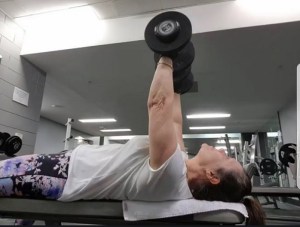
As previously mentioned, I have a few problems in my lumbar spine: a bulging disc, a herniated disc and some very grumpy facet joints. I have always preferred free weights. I knew something I was doing in the gym was irritating my back, but I wasn’t 100% sure which exercise. I suspected it was the dumbbell bench press – not the actual exercise, but getting off the bench at the end of a set. Every time I finished a set, I felt a definite sharp twinge (that may be an understatement there) in my lumbar spine and I would suffer varying degrees of discomfort in the following days.

I stared at the chest press machine and decided I was going to have to give that a try.

The action of getting off the machine is not subjecting my back to any undue stress.

It works. No aggravation of my back as I step out of the seat. No, I’m not happy about giving up my free weights, but I’d rather adapt my exercises than not do them at all.

Much easier than getting off the bench!

In February I will under go Radiofrequency Facet Joint Denervation which will hopefully help: in the meantime I have adapted. If the RFJD works, then I’ll have time to work on building the muscles supporting the spine in readiness for when the RFJD wears off.

Edit March 2018: I avoided the above-mentioned denervation! Exercise rules!!

Loading the Leg Press

Those weights for the leg press have two handles – use them! I realised lifting and carrying a 20 kilogram weight one-handed was not something I should do any more. By the time I’d loaded six of these onto the machine, plus the top-up weights, I was feeling it. Then there is putting the weights away at the end. You DO put the weights away, don’t you? Yes, I knew you did! Using two hands feels a bit awkward at first, but better to use two hands than stop doing the leg press altogether. 

Some readers may have no difficulty with a mere 20 kilograms, I realise that. Some of us more mature souls, or those starting back slowly may be very wise to take things gently initially! Pace up!

Leg Curl

Prone (face down) leg curl is another exercise my back doesn’t like. Luckily my gym has a seated leg curl machine. I’ve found I can do my leg curls with no issues at all in a seated position. No, it doesn’t look as tough, but I no longer care about looking tough, I care about staying limber and strong-ish.

Leg Curl

General Tips

Remember to PACE! While you might be an old hand in the gym, are you new to the concept of pacing for medical reasons?

Make sure you adjust the seat heights (or anything else that needs adjusting) for your particular height. While we may all have been a little cavalier about such details in the past, it pays to be picky about such details now. I usually find tall people have been on everything just before me and I have to adjust every single thing! Your body will thank you.

I don’t recommend lifting to failure, unless you are well and truly on a path to remission or lucky enough to be in remission. I do, now (“now” being until my iron vanished into thin air), lift to failure, but it is something I’ve built back up to and I certainly don’t make a habit of it – besides “failure” is a lot less now than it used to be! Russian Volume Training is probably not a great idea for us either. We’ll end up in the Boom/Bust cycle again, if not with pain, with fatigue.

Slow and steady should be our mantra for the moment. All is not lost though: I know a young man who was diagnosed with reactive arthritis. Told he would not play professional sport again, he became a hypertrophy competitor, fitness professional and was one of our teachers. He is a pretty buff guy.

I hope this may give you some ideas. If you would like assistance, contact me.

Be careful and safe!

I’m done for the day!


Environment

Why Do Our Bodies Attack Us?

Why our bodies attack us in the form of autoimmune (AI) diseases is still unknown. There has been much research and there are correlations, links, hypotheses……but no definitive cause has been found.

Some of the studies I have read over the years have looked at:

  • gut bacteria
  • smoking
  • stress
  • genetic predispositions
  • pollution
  • diet
  • processed foods
  • links to medications we may have been on for other conditions
  • lack of exercise
  • B lymphocytes
  • environment

Some AI diseases are local (i.e. single organ involvement), others are systemic. Co-morbidity (patient has more than one condition) is reasonably common, about 25% of patients. The rate of co-morbidity is increasing, as is the number of conditions a patient may develop.

Although it does me absolutely no good to ponder about WHY I have the conditions I do, I ponder anyway. Most patients probably do!

I can tick off several items on that list: I’ve had a reasonable amount of stress in my life, I used to smoke (quite heavily by today’s standards), I may have a genetic predisposition but am unable to confirm that, I live in a major city so am certainly exposed to pollution. Like everyone else, I am exposed to our rapidly changing environment.

“Our gene sequences aren’t changing fast enough to account for the increases,” Miller says. “Yet our environment is—we’ve got 80,000 chemicals approved for use in commerce, but we know very little about their immune effects. Our lifestyles are also different than they were a few decades ago, and we’re eating more processed food.” Should prevalence rates for heart disease and cancer continue their decline, Miller says, autoimmune diseases could become some of the costliest and most burdensome illnesses in the United States.

Source: Questions Persist: Environmental Factors in Autoimmune Disease

It isn’t just the chemicals. We are destroying our soil and our water. Both vital aspects of our food chain. Pop across to my book review earlier this year of Julian Cribb’s Surviving the 21st Century for more details. The Adani mine proposal in Queensland is most likely a health disaster waiting to happen. I look at the photo above: which environment might be healthier?

Yet many people do not develop AI diseases. Do they have a natural resistance?

Are all the different diseases really just different expressions of one disease?

So many unanswered questions.

I do think we have changed our natural world so much and so fast. We live entirely different lives than we did a hundred years ago: faster paced, less exercise, exposure to many things that didn’t exist a hundred years ago.

We also died younger: perhaps these diseases did exist, we just didn’t recognise them or live long enough for them to bother us. Yet many of these diseases do not worry about age: young or old, so many succumb to an out of control immune system irrespective of age. Consequently I’m not a fan of that theory.

It is estimated a hundred years ago humans got five times more exercise that they do today, just from living their lives. Office jobs were a rarity, not the norm. Movement was a natural part of life, not something we were encouraged to do for thirty minutes a day.

“Sitting is the new smoking” has been a mantra for a while, but now studies show standing is not the solution either. Movement is the key to good health, but we have developed a civilisation in which movement is not happening enough. We sit or stand without movement in so many jobs.

Sleep is another lifestyle concern. Most of us don’t get nearly enough. We watch too much TV, have the iPad or our phone on our bedside table so go to sleep way after sundown, yet get up at 5:30am to get that 30 minutes of mandated movement in the gym before 8 hours sitting (or standing). Rinse and repeat.

For those of us already managing AI conditions, (the pain, the financial impost, the lifestyle restrictions) finding the cause may be too late for us personally. For those coming after us, I do hope science finds a solution. Soon.

I do recommend counteracting as much as we possibly can. Eat healthily, sleep well, MOVE, avoid processed foods, give up smoking, minimise stress. Science has given us ways to manage many of these conditions reasonably well, however we can help. There is no point in my taking my prescribed medications every morning if I undermine the efficacy by my lifestyle choices.

While the scientific jury is still out, I’m looking at AI diseases as having a multi-factorial cause. I don’t believe I can rid myself of my conditions, but I can sure as hell give my body the best help I can.

Resources:

Multiple autoimmune syndrome

Autoimmune diseases (a good intro from the Australian Society of Immunology and Allergy)

Recent insights in the epidemiology of autoimmune diseases: Improved prevalence estimates and understanding of clustering of diseases


Hyperactive Thyroid Won’t Behave

I have rearranged this page to place the latest updates at the top.

November 13, 2017

The last few weeks have been a whirlwind.

  • Oct 26: completed my Pain Management Program
  • Oct 30: had double dip endoscopies and a second iron infusion
  • Nov 3: flew to Perth to visit my cancer patient friend (4 hour flight)
  • Nov 5: stopped my thyroid medication
  • Nov 7: back to Melbourne (4 hour flight)
  • Nov 8: dinner with brother visiting from NZ, organised by my wonderful daughter
  • Nov 11: another thyroid function test
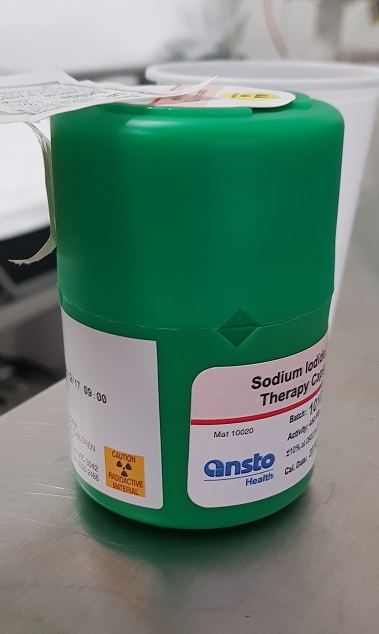
  • Nov 13: nuclear scan of thyroid in prep for radioactive iodine (RAI) treatment on Friday.

Tomorrow I have a post-procedure appointment re the endoscopies and on Friday I have my radioactive iodine (RAI) treatment. But that is not all! Reading all that back to myself, I wonder how I am still standing!

The bouts of nausea have been increasing in frequency. I am tentatively blaming this on the whole thyroid treatment changes (stopping meds in prep for scan, thyroid slightly but not dramatically whacky, etc) but really, the jury is still out. I did learn today blood test results can lag behind a little, so the patient can feel a greater degree of “unwellness” than is reflected in the blood tests initially.

I had to leave work at 1:30 pm on Friday, much to my disgust. Yes, I am worried about the next few weeks, but although I could take medication while waiting for the RAI to work, the meds could inhibit the uptake of the RAI – not something I want, really.

My BIG shock for the day was this. Initially, three years ago, my hyperactive thyroid was diagnosed as a multi-nodular goitre with no cold nodules. Today I am diagnosed with Grave’s Disease with one cold nodule that will need a biopsy – before Friday. I want to stress this DOES NOT mean I was misdiagnosed: depending on what is going on with the thyroid at any given time, one condition can mask the other condition. Plus I’ve been on treatment for three years. I’m a layperson, I don’t understand the finer technical points of reading the scans (although I will certainly quiz the radiologist when I see him, just out of curiosity), but I mention it to show these things aren’t always a static situation. Treatment of both is essentially the same, apart from that cold nodule needing a biopsy.

Hyperactive thyroid could explain my arm and quad weakness that I was blaming on my low iron levels. Is it any wonder today I am finding my usual sense of humour around all this medical stuff in short supply?

I have just dashed around to my GP to get the forms ordering a “USS guided FNA” – in layman’s terms an ultrasound guided fine needle aspiration biopsy. I’m hoping I can sneak in to Radiology at lunch time – I’m assured it is a very fine needle!

One person I find absolutely invaluable in all of this is my stellar general practitioner, Dr Rebecca Watt of the Airlie Women’s Clinic. I cannot speak highly enough of her care.  For a patient, battling multiple conditions is very different to simply getting the odd work certificate for a virus. Dr Watt’s approach has been such a comfort to me, I highly recommend her and the practice.

My plan is still, at this point, to be back to normal operations by December 1.

Stay tuned.

October 26, 2017

Had a blood test yesterday to check my iron levels after my iron infusion and before I have my endoscopies on Monday (and by the sounds of it, probably another iron infusion). My iron is still too low.

I have read (on nps.org.au) that this is not completely unknown in patients with inflammatory conditions, which includes little ‘ol me. Even so, the “elimination of other causes” process will continue.

I look forward to a thrilling weekend of endoscopy preparation. As I won’t be able to do much, readers may be subjected to more of my writing!

October 19, 2017

More news. Now adding a Radiofrequency Facet Joint Denervation to my list of upcoming interventions. The professional assessment of my lumbar spine MRI is the pain in my glutes is likely to be the result of the unhealthy looking facet joints. Not a permanent solution, but should last twelve months, if I’m lucky up to two years. Can be done more than once, if it works. Scheduled for February. Can’t say I know a lot about it at this point, I only found out on Tuesday this week.

This will not prevent my return to normal operations scheduled for then end of November.

October 12, 2017

Did my first post-infusion strength workout on Tuesday. Was very happy with the results. Definitely have more energy and strength. Did discover getting up off the bench after a bench press is not something my herniated disc likes too much, so after discussions with my physiotherapist (to confirm my suspicions), I have decided my chest press will have to be in the weight machine from now on, at least for a while. I much prefer free weights, but my back is telling me to change, so change I will.

Other than that, the waiting continues for the next step. Slowly creeping towards the end of November, but I am impatient!

October 5, 2017

The infusion went well (Monday) and I am feeling more energetic already (Thursday). Will be resistance training on Saturday and swimming on Sunday. Clocked up over 8,500 steps today without an issue.

Feeling positive!

October 1, 2017

socialising is important

At the risk of over-sharing, to explain my reduced availability for a few weeks here is a short account of medical complications I am currently dealing with. This also demonstrates that even us “poster girl” patients can’t control everything!

The first complication is my hyperactive thyroid doesn’t want to behave nicely. My current medication is no longer appropriate, due to the risks associated with being on the dose my thyroid seems to crave for long periods of time. So radioactive iodine it is, requiring me to stay away from people for ten days after I take the radioactive dose. I also have to be off my current medication for some days prior: as a result I expect to be a little off colour for a week or two as my thyroid will effectively be running riot.

The second complication, which may or may not be related to the first, is my iron levels have taken a dive. A rather deep dive. I was wondering why I wasn’t getting my usual improvements with my strength training and was feeling tired at the 800 metre mark of my swims: now I know. Investigations are underway to determine if my iron is vanishing into thin air and if so, why. Procedures are scheduled for the end of this month. Iron infusion to tide me over is happening tomorrow! Very excited about that!

As you can see, my autoimmune arthritis is the least of my issues at the moment. One condition can be challenging enough: with co-morbidity, the chances are higher that clear sailing can be disturbed at any time, completely unexpectedly.

I’m still working, but reducing my availability until after these little glitches are resolved. I expect to be back to normal by the end of November. I will update this article periodically during October and November to advise of any changes. If my responses to enquiries during this time are not prompt, those are the reasons.

Wish me luck!

October 5, 2017

The infusion went well (Monday) and I am feeling more energetic already (Thursday). Will be resistance training on Saturday and swimming on Sunday. Clocked up over 8,500 steps today without an issue.

Feeling positive!


Movement As Medicine

Pacing For Beginners

Pacing in the context of managing our pain relates to our rate of activity or our performance progress. In this article I am using walking (that’s why the feet!) as an illustration, but the same logic can be applied to sitting, standing, resistance (weight) training or whatever activity it is that we are having trouble doing to the level we want to. The activity might be sweeping the kitchen floor, or sitting long enough to fly interstate. Walking is just the example here.

As I have shared previously, when I was first started on this journey, I walked five minutes at a time, four times a day. Five minutes was how long I could manage before I experienced pain. Slowly, by pacing, we can build up.

Please be aware pacing is only one component of condition management, it is not THE solution. This is a general introduction only, each person requires specific planning tailored to their circumstances.

Warning: Maths Ahead

Let’s assume for the maths that like I could, you can walk five minutes before you experience discomfort. It is very important to know your starting point. Smartphones have easy calculators: the keystrokes for the below example are 5 + 4 = 9 / 2 = 4.5 * .8 = 3.6.

The important point here is just because you CAN do 5 minutes, that is NOT the starting point.

    1. Take that five minutes as your Test 1 measurement.
    2. After a suitable rest, do a second Test. The Test 2 result might be four minutes.
    3. Add 5 + 4 = 9. To find the average of your two trials: 9/2 = 4.5 minutes.
    4. Now you need your baseline, your official starting point. This is 80% of your average. 4.5 * 0.8 = 3.6 minutes, or 3 minutes 36 seconds.
    5. Increase at a rate of 10% from your baseline. 3.6 * 1.1 = 3.96 minutes. Let’s just call it 4 minutes!

Each day (or week depending on the type of activity) you increase by 10%. JUST 10%. On your calculator that is “current time” * 1.1 = “new time”.

10% a day increase is reasonable at a 5 minute walk, but for longer durations and other activities, the increase should be spread over a week.

Putting Pacing into Practice

How does this work in practice? I did some timings on a stroll the other day. It took me 217 steps and 1 minute 48 seconds to walk from one tram stop to the next.

What is a tram, you ask? I’m glad you asked! This is a Melbourne tram. Terrific mode of city transport.

If you don’t have trams in your area, do you have an alternative?

Why was I doing the timings? Because we can use local infrastructure to our advantage. After a while you will get very bored with your backyard or walking around the same block. Tram lines are fantastic because we can walk, hop on a tram for a rest, get off further down the line preferably within one or two metres of a nice cafe, finish our rest over a nice coffee and then repeat the exercise back.

As we build up, we can use the distance between trams stops as stepping stones. Looking at my 1 minute 48 second walk between stops cited above, that is way more than a 10% increase from a 4 minute baseline. That would be closer to 50%, WAY too much. But later on it will be possible. You are not stuck on 4 minutes for long! As you build up you can walk just past a tram stop then back and still catch a tram to reward yourself with coffee. Over time you will be reaching the next tram stop.

A little reconnaissance may be necessary. This is the tram stop I was passing. In the middle of a busy main road, there are lots of steps up from the pavement, an over-bridge and then more steps down. This may not be ideal for those pacing up slowly! This is one of the tram stops you might want to zoom straight past – as a passenger!

Of course there are many alternatives: drive to a favourite park or beach, then walk. I don’t suggest the shopping centre, as it could take 20 minutes to walk from the car park to your store of choice!

The Rules

Rule #1: stick to the times. DO NOT be tempted to do more than you should, despite how great you might feel right that minute. You risk undoing all your hard work to date if you do that.

Rule #2: do it every day. Even if you don’t feel the best today, do your allotted time. Every day. Note this is for these small starting activites. I would NOT do a leg press every day!

Rule #3: Wear appropriate footwear. If it is sitting you are working on, ensure you have an appropriate chair.

Other Thoughts

I also apply pacing strategies to manage the fatigue, along the lines of how much I do on any given day. I’ve mentioned before I don’t do grocery shopping on days I do a strength workout. I don’t do strength workouts the days I work eight hours in the office. We work out rules for our individual circumstances.

Christine Miserandino (lupus and fibromyalgia) has written The Spoon Theory which is a great way to visualise the energy/fatigue situation. I found it very early on in my journey and it certainly helped me adjust to my new life. I do have many more spoons these days than I used to, but that didn’t happen overnight.

Challenges of Living Alone with Chronic Conditions

If you have newly discovered you have a chronic illness/condition/disease AND you live alone, there are challenges patients living with family don’t face to the same degree. Some of the items below I have mentioned before, but today I am looking at the specific circumstances of living alone, which can complicate matters. While we may not have children or a partner to care for (in some ways making life a little easier perhaps), the flip side of living alone means no-one to make us a nice cuppa, to help us make the bed (or let us off the hook entirely), or to just snuggle up to for comfort.

Even if we have a nice neighbour to call on for help (as I have done from time to time), we may need to plan our activities very carefully. It is easy to fall back into the boom-bust cycle, both physically (pain) and psychologically (the stress), especially in the early days. We aren’t used to the “new me” at all, we tend to think of it a bit like having the ‘flu, we’ll just get over it. No, sorry, this is here to stay (unless we go into remission, which is possible in some cases). We can learn to manage it, yes. In time and with practice.

Today I’m asking you to carefully consider the physical and practical aspects of managing day-to-day tasks. It WILL get easier as your treatment starts to work and you build up your resilience over time, learn to pace and build up (or build back) your strength, but today we are talking about the beginning, when we are adjusting to living this new life. These are some of the things I wish I’d known in the early days.

Grocery Shopping

Grocery shopping can be a challenge. Yes, I could order on-line and have my groceries delivered, but that costs money: if we live alone we don’t usually buy enough to qualify for free delivery! It is OK to carry the bags in from the car one at a time if necessary – or even half a bag at a time. Take the frozen stuff first, in case you need a rest between loads. Once you get stronger this will improve – but don’t try to do what you used to do before, not until your body is ready. If we struggle to carry in all the bags at once, where do we go? Yep, back into that pain boom-bust cycle.

Shop more frequently if possible and necessary.

Showering

I remember standing in the bathroom in tears when my shoulders were playing up badly. I could not dry my back after my shower. It wasn’t just the pain, it was the inhibited range of motion. Also, this was out of the blue, completely unexpected. Situations like that can make fears of the future rise up and cause anxiety, anger and frustration. Living alone means we have no-one to talk to about those fears right there and then, no-one to comfort us in our time of stress. Also, no-one to dry our back. Mindfulness exercises will help. Relax our mind and relax our muscles – often times that is just enough so we can complete the task at hand. That alone makes us feel better.

Bath sheets instead of bath towels are very useful. Being larger, not so much shoulder movement is needed to dry one’s back. While there is a lot of technology out there to assist people, I haven’t found anything yet that helps dry one’s back. I admit I haven’t looked very hard because the problem was not ongoing for me.

The unexpected can happen. Negotiating our ablutions, unexpected events or not, can be a challenge. Putting prescribed skin cream on areas you can’t see, for example, can be a bother to say the least.

Changing the Bed Linen

I’ve mentioned before that changing the bed linen used to wipe me out. But there is no-one else to do it, so it is either manage it somehow or sleep in dirty sheets – not the best option. Break it down over the day. Get the linen off the bed (I find that not too difficult) early, then do the rest spaced out over the day if necessary. Put on the bottom sheet, go away and do something else or rest. An hour later tackle the top sheet. If putting on the new doona cover is too hard to do in one hit, break that down too. It is OK, you are the only one seeing your messy bedroom! You have all day to get the bed back together! If we give in to the “I must do it now” story to do our bed in one hit, where do we go? Yep, back into that pain boom-bust cycle.

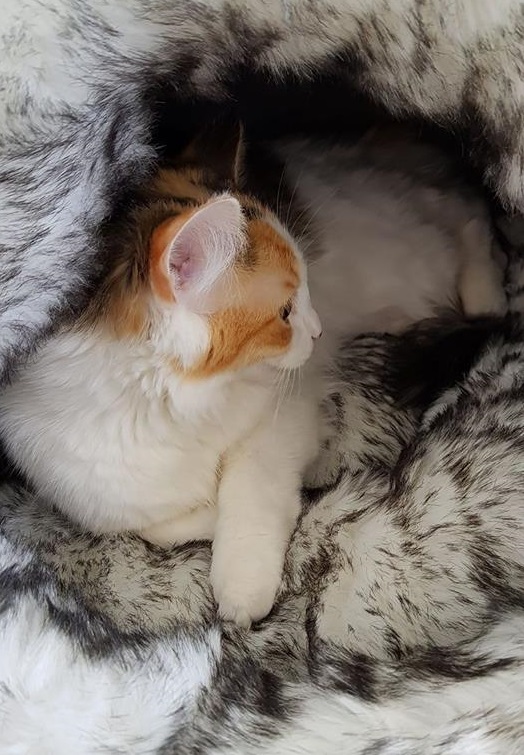
Above is Cleo, very comfy in her little fluffy igloo. She feels safe and warm and protected. We need to feel the same, we just don’t need to cause ourselves a flare getting there.

Our Hair

For anyone with long hair, this can be a challenge, especially if our shoulders are involved in our condition, or if standing causes pain (a chair in front of the mirror would solve the standing issue). Blow drying long hair can take twenty minutes or so, our arms raised for much of that time. On a bad day just don’t do it – letting your hair dry naturally is not a crime, the fashion police will not issue a citation. Actually, no, the fashion police might very well issue a citation, but WHO CARES! Our path to regaining our functional movement and managing our pain is WAY more important than someone caring about our hairstyle. If we force ourselves to do our hair to meet social expectations, where do we go? Yep, back into that pain boom-bust cycle.

Dishes and Ironing

Ironing is easy – I’ve talked about that before – just don’t do it. One item when you need it, that’s enough. Although sitting may be a solution, I find I don’t get enough pressure happening so the clothes don’t look “done”.

A fellow patient I know says it takes her three tries to get the dishes done, with rests in between. Standing is a major source of pain for her at this time. It is what it is – if you have to wash a plate at a time, so be it. Build up to two plates. In time you should be back to being able to do all the dishes at once, but feeling guilty because you can’t now is not going to help. Wash anything you use as soon as you use it is a strategy I adopt most of the time. Living alone we tend not to generate a dinner wash of six plates and cups, which is a good thing. If you have a dishwasher, I hate you already (I don’t).

Cooking

Cooking is a little different. We need to ensure we are eating healthy, nutritious food: the two main reasons are to enable our body to fight this battle the best it can and to minimise or reverse any weight gains due to medications and our reduced activity levels, thereby protecting our joints and internal organs. Unfortunately, cooking is not necessarily as easy to spread over the day as other tasks can be.

We need to plan our food preparation so we don’t do more than we should at any given time. We may simply have to give up some of our favourite dishes – for a while – if they require lengthy preparation. There is NO point in spending a painful hour preparing something only to be too exhausted or in too much pain to actually enjoy the fruits of our labour. Don’t put yourself through it. Console yourself with the knowledge that a dish requiring less preparation is probably a healthier dish anyway!

This is where living alone can actually be a plus, as we aren’t faced with anyone complaining about the “plain” food. Then again, someone else could be cooking for us! It is what it is, just please eat healthy, nutritionally balanced meals!

If you can afford it (many of us, having reduced our working hours due to our conditions, can not) delivered meals such as Lite n’ Easy can be a great solution, at least to have some in the freezer as a standby. I use my slow cooker to cook six meals at a time and freeze five. My freezer is bulging with pork, beef and lamb meals which take seven minutes to defrost and three minutes to heat in the microwave. Lifesavers if I have a tiring day at work. I’ve been known to boil two eggs and have them with a steam fresh bag of vegetables if all else fails.

I never peel potatoes or carrots, the skins are good for us anyway. I’m not allowed green beans or onions, so I avoid a lot of slicing and dicing. There are great kitchen appliances available to make these things quick and easy. Make Christmas present requests. I know two people who are stroke survivors, both need to manage with one hand and have quite a few utensils that are very useful. Look at what is available that will make food preparation easier for you.

General Housework

One thing to avoid is the temptation to clean up like a whirling dervish if visitors are coming. Try to spread out doing tasks over the week and have a room you can just chuck stuff in if need be and close the door! “OMG, Jane’s coming over, I must have a pristine home” is a recipe for disaster, especially in the early days when you are learning your new life. Most of us who have worked all our lives are very much into the routine of spending a good part of our weekend doing everything: clean the bathroom, dusting, vacuuming, clean the oven, maybe mow the lawns, wash the floors, change the linen, do the laundry, ironing for the week ahead, grocery shopping and THEN we used to add some socialising on top of all that.

socialising is important
I do get to socialise! It is important.

Ummmm – not a good plan any more. It doesn’t matter what your major symptom is; pain, lethargy or other. Trying to do it all is not going to help. Stop. Don’t be tempted. We have no-one to delegate tasks to and can be so tempted to do it all at once, to feel we HAVE to at least try to appear “normal”. No we don’t. We have a new normal now. If Jane is a really good friend, she is not going to care if your place doesn’t look like Martha Stewart’s been your housekeeping consultant, Jane is going to care how you are feeling, how your health is.

Summary

Look, all that and I haven’t mentioned exercise once! I am now. No, I don’t write template exercise routines and publish them because that, I believe, is inappropriate for my client base. Every single one of us is different. Different conditions, different stages, different trouble spots in our bodies. It is important we make sure we have time to build our physical condition though, in ways appropriate for us as individuals. This is NOT a luxury any more so we can look good on the beach come Christmas holidays, this is now a necessity.

Living alone can make exercise harder. No-one to motivate us or support us. No-one to take that first short walk with us. It can be easier to just turn on the TV and hide from the world.

All the above careful planning of our activities will be for naught if we don’t build conditioning into our routine. Even before I did any formal exercise or pain management studies, I learnt very early on if I moved, my stiffness and pain receded. That’s what led me to learn more. Why was it so? How much better could I get?

Have I had bad patches? Of course I have. I remember the shower incident mentioned above, another day I was woken up by pain in my right arm that was excruciating, a day I lay down for fifteen minutes and then couldn’t get off the bed. Overall am I better now than I was in late 2014? Definitely. So. Much. Better.

For Melbournites, yesterday I walked from the corner of Nicholson St and Victoria Parade to Federation Square. Stopped, had a coffee (very nice Bailey’s Latte it was too), then walked to the Arts Centre.

Bailey's Latte
This was SO delicious.

Three years ago I was on crutches.

recurring appointments

Yes, Brain Fog IS a Thing

Brain Fog is definitely a thing. Not a thing we want, like, enjoy or get used to. It sucks: BIGTIME.

There can be many causes. Brain Fog can be a symptom of menopause. It can be simply a sign of aging. It can be a side effect of medications. It can be due to lack of adequate nutrition. It also seems to go hand-in-hand with many medical conditions, including autoimmune conditions and chemotherapy.

Before we can deal with brain fog in our day-to-day lives, we have to actually come to grips with the fact it is a thing. That’s tough. I had a memory like an elephant – once upon a time. At first you think maybe you are going nuts: at one stage I asked my GP if I could be tested for early onset dementia, I found it so scary, so “un-me”. It gets less scary as you develop strategies for dealing with it.

Check With Your Doctor

If you feel you are being affected, the first thing to do is check with your doctor (or doctors as the case may be). If you are female and of the right age, it may be menopause related and you may be able to consider Hormone Replacement Therapy which may solve the problem. If it might be a side effect of your medications, there may be alternative medications that may reduce the problem. Don’t just suffer in silence without finding out if there could be a different cause or a possible solution.

My personal example is around sense of direction. I would be driving in the right direction to get from point A to point B but my emotions would be telling me I was driving the wrong way. It wasn’t just driving. I’d park in the supermarket car park and when I came out I’d have no idea how to get back to my car. Admittedly, that was in a complex of shocking design, but it was distressing. I was almost thinking maybe I was going to have to give up driving, it was so bad. My daughter drove me to a medical appointment and I was convinced she was going the wrong way. It was stressful.

For completely unrelated reasons (several side effects I won’t list) I discussed a change of medication with the appropriate specialist. Within five days of ceasing the drug my sense of direction was back. I was ecstatic! Now, I can’t prove my sense of direction issue was due to the medication in question, however the co-incidence suggests it may have been. No, correlation does not equal causation, but in this particular case I’m fairly convinced.

Write Everything Down

Makes sense, doesn’t it? Write EVERY appointment or thing you have to do down. No, it doesn’t have to be on a piece of paper in a diary. I have calendar apps on my smartphone that will display several calendars at once, in different colours. This highlights any clashes between different aspects of my life. I have my office calendar, my Limberation calendar and my personal calendar.

Flag emails for follow-up! You’ll forget you said you’d respond tomorrow!

However you choose to do it, do it religiously! Unfortunately, this alone does not solve the problem.

Look at Your Calendar

Make it a religious part of your daily routine to look at the calendar. Allow me to illustrate. Last week I had a major change to my routine. While usually I work three days a week in an office, Wednesday to Friday, Last week I changed to working Monday, Wednesday, Friday because on Tuesdays and Thursdays I am going to Pain Management School (my name for it, not theirs). This change is temporary, but it is a disruption foggy brains find …… challenging.

I had an appointment on Thursday morning. As I lay snuggled under the doona I ran my day through my head. No, I convinced myself, I have this morning free. I made plans to have a late-ish breakfast and then wash and curl my hair. I was sitting waiting for the heated rollers to cool when my allied health professional rang and asked was I all right. “I’m fine”, I replied, thinking isn’t this a truly lovely gesture on her part.

“Well, I wanted to make sure because you are always so prompt.”

O.M.G I was SO SO SO embarrassed. I’ve always been the punctuality police. Being LATE gives me the horrors. Missing an appointment altogether because I FORGOT? O.M.G.

So make checking the calendar a part of your daily routine NO MATTER WHAT your foggy brain may suggest to you. Also check for flagged emails at the same time!

Medications Too!

Medications to be taken every morning or every night may not be so bad: I find that becomes just part of my normal brush-the-teeth-comb-the-hair routine. Anything that is not daily? Make an appointment in that calendar. The Repeat function in your calendar is great for that (see picture above). The classic example (sorry guys, this is a female example) is Hormone Replacement Therapy patches. Change twice a week, Wednesday morning and Saturday evening. If my phone doesn’t beep at me, it will be Friday morning before I think to myself “Did I?”

Even this morning (another Thursday, must be something about Thursdays) I again had a late breakfast (but DID check my calendar) then took a phone call, then sat on the edge of the bed to check social media and then thought “Have I taken my medication?” I decided I was pretty sure I hadn’t, so I took it. But the change in routine nearly bit me again.

Yes, the pill organisers from the pharmacy can certainly help because you can look and see if Thursday’s pills are gone.

Don’t Feel Guilty

This is about taking care of yourself. If you stuff up, as I did last Thursday, accept this is now part of life. You will forget things. All feeling guilty will do is add stress to your day and we’ve already talked about stress. Most of your medical team will understand if you miss an appointment – they’ve seen it many times before. WE each think we are the only one, but we aren’t. Friends and family should care enough about you to understand. Work, I agree, is slightly different. If employed, we are getting paid to do a job and we should do our utmost to not forget, but if it happens, it happens. Apologise, reschedule, move on.

Shopping Lists

I’d happily been through my whole life rarely if ever writing a shopping list. Now? I write shopping lists. I can’t stand getting home from the grocery shopping to find the one thing I REALLY REALLY needed is not in that pile of shopping bags.

Variations on the Theme

Brain fog is a thing. It can also be different for different people. One thing I haven’t yet found a solution for is retention of new information. For example, I’ll read something on a web site, let’s say a price of an item. As soon as I’ve gone from that page, I can’t remember the price. While studying I found rote learning of anatomy hard to retain – I still struggle with the names of some of the muscle origin and insertion points, although I know where they are! Concentration may suffer, your mind will wander during conversations. The brain may “freeze” – finding a perfectly common word just escapes you (very difficult in business meetings, also very menopause-typical that one).

Some days, the brain just doesn’t want to be taxed.

Sleep, Exercise and Nutrition

Poor sleep, inadequate exercise and less than optimal nutrition can all contribute to brain fog, over and above any medical issues. Do the best you can to ensure you keep these aspects of your life in tip-top shape.

I’m relatively lucky. I’m not suffering from brain fog much at all and I have strategies to mitigate the difficulties. The first step was accepting there was a change and I had to manage it. The second step was learning to work with it, rather than fighting it. Fighting it is stressful and then we get back on the wheel of exacerbating our condition by fighting the condition. Completely self-defeating.

What are your experiences of brain fog? What are your managing tips? Please share!

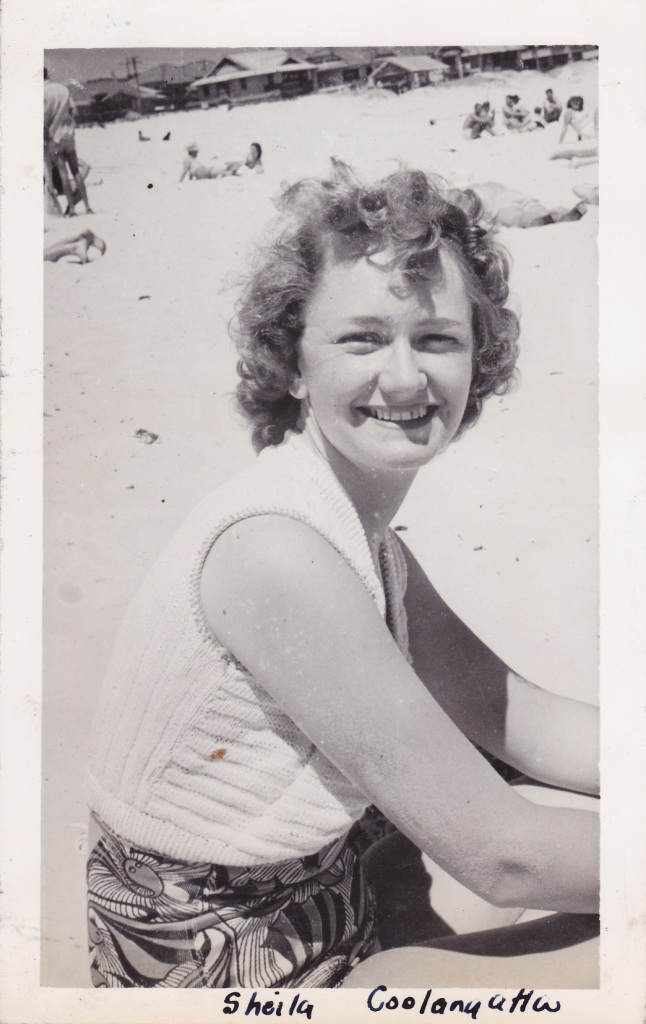
Sheila Constance Lacey

Science is Not Static

Fifty years ago my mother (above, photo 1949) was admitted to hospital for exploratory surgery. To see if she had cancer. Today a very dear friend of mine is bravely fighting cancer: he is in week two of chemotherapy and radiotherapy. A scalpel hasn’t been near him yet. There will be surgery, but the diagnosis hasn’t required surgery. We have ways to look inside the body that we didn’t have in my mother’s time.

It Began With Sudden Blackouts. Then Came Some Alarming News is about a woman’s survival today that would not have been possible fifty years ago. G.C.M. is a rare autoimmune disease.

It was giant-cell myocarditis (G.C.M.), the most dangerous of the possibilities. This mysterious and deadly autoimmune disease has only been diagnosable before autopsy since the development of the heart biopsy some 50 years ago. Effective treatment has only recently emerged.

In Get the Stress Out of Your Life I talk about another RA patient I met at the gym. I can’t help but wonder had he been diagnosed in this era, rather than over twenty years ago, would his outcomes have been different?

Many people will remember thalidomide. Thought initially to be a great drug for treating morning sickness during pregnancy, it caused babies to be born with limb deformities.

About 40% of babies damaged by the effects of thalidomide died in their first year. But there are adults alive today who are living with disabilities caused by thalidomide.

Medical science learnt and the drug was no longer prescribed to pregnant women for morning sickness.

Medical science continues to learn. There are many articles in the media of late about opioids and addiction. Here are just two recently published; one from the USA, one Australian.

Neither article paints a positive picture. From the latter article:

…health authorities worldwide are grappling with soaring rates of opioid addiction and deadly overdoses. In Australia, the majority of opioid overdose deaths are now related to prescription painkillers rather than heroin.

Earlier in the week I became involved in a discussion on Twitter about alternative approaches to the management of chronic pain. I had just published an article, Our Pain, Our Brain and Our Nervous System. I work very hard to stay off pain killers and am very happy with my progress. In this twitter conversation I was told by an American MD there is no evidence supporting activity as a strategy. I wished my pain clinicians had been in my study so they could have taken over! As I was somewhat outnumbered and I do find 140 characters limiting, I bowed out of the conversation. I felt it didn’t matter what evidence I presented, I was not going to be heard. Two of the participants in that conversation reached out and I am communicating with them individually.

That experience got me thinking. We, both doctors and patients, are happy to use our new imaging technologies. We are grateful there is now a way to save a G.C.M. patient. We embrace biologics such as adalimumab. Why then are some so resistant to the concept there may be other ways to treat chronic pain than pain killers? UK studies have found GPs are “unconfident” discussing exercise with patients. This is perhaps related to the bigger picture.

The Pain Management Research Institute (University of Sydney) offers the ADAPT program.

When no effective or curative treatments are available the person in pain needs to shift their focus from seeking pain-relieving treatments to things they can do something about, despite ongoing pain.

These include increased activities, physical fitness, strength, mood, sleep, reducing reliance on unhelpful medication, developing useful coping strategies, improving relationships at home, getting back to suitable work, etc.

This requires that the person in pain has a good understanding of their pain and accepts the idea of living a normal life despite ongoing pain.

I can attest it doesn’t happen overnight. Yes, it takes effort. But the rewards and results are worth it.

Alternatives to pain killers are definitely worth considering. The programs do have exclusion criteria (refer the ADAPT link above) and people like myself with underlying on-going medical conditions do face additional challenges. It works for so many of us. What have you got to lose? More importantly, what can you gain?

Use of strong pain killers can result in drowsiness – no driving, perhaps unable to work, limits social interaction. One common one makes me and many other people very nauseous to the point all I can do is lie still. Not how I want to live my life. None of the pain killers cure the pain or help me live a normal life. We do less; as a result our bodies de-condition. As a result of that we most likely develop more pain. Weak muscles lead to unstable joints. I can’t build muscle strength if I am lying on the bed too nauseous to move from the use of a pain killer. I got my life back.

Resource:

Manage Your Pain (Australian Pain Management Association)

Are Your Shoes Contributing to Your Pain?

I’m not just talking about six inch stilettos. Our shoes affect how we walk, how we stand and consequently our posture. If we are already facing joint issues, postural imbalances aren’t going to help. In simple terms, we can end up favouring (guarding or protecting) some aspect of our body which can place more strain on another part. It can become a case of the chicken or the egg, trying to work out where it all started.

Part of the solution may be changing your footwear. My rheumatologist gave me a stern lecture about heels. OK, his tone wasn’t stern, but I could tell his intent was! We know high heels aren’t good for us, but we keep wearing them anyway – until we get to the point that it is JUST TOO PAINFUL to persevere. We have to find more suitable footwear.

My Shoe Adjustments

About six months ago I bit the bullet and went on a “low heels” shopping spree for the office and social wear. In my down time I was living in runners, but that’s not such a good look in the office. Socially? I was warned, in no uncertain terms, by a girlfriend NOT to wear runners on a night out. Even with these lowest of low heels I was still experiencing pain in my right buttock and lumbar spine at various times, usually towards the end of the day.

I’ve found a great help for me – and for a neighbour, a friend and the friend’s husband. This may not work for you, but I’m sharing in the hope others may also benefit.

In sheer desperation one day I dragged my old MBT shoes out of the closet and wore them for two days. NO PAIN! However, they were so old (I’d forgotten I had them) that wearing them triggered end of life (theirs, not mine). Not surprising really – nothing lasts forever. I tried to buy replacements. Very, very hard to get in Australia these days.

kyboot by kybun

Doing my “can I buy them somewhere else” research I stumbled across kyBoot by kybun. I discovered the brains behind the original MBTs, Karl Müller, had moved on to developing his next generation shoes. There are only four stockists in Australia: one in Melbourne, two in New South Wales (Sydney and Mona Vale) and one in Brisbane. kyboot don’t have a very high profile in Australia – yet.

What makes them different? This is an American video, but illustrates the technology.

I visited a then Melbourne stockist in early July with NO intention of buying, just seeing what they had and trying them on. Yes, I walked out with my first pair. As soon as you walk around in them you can feel yourself standing differently. A co-worker who sees me at work every day told me I was walking as if I was twenty years younger – and without dobbing that person in, they are qualified to make that assessment.

I walk around a lot in my other job so my first priority was something I could wear to work that looked professional (i.e. did not look like runners). As you can see from the video below, they are fine for an office environment.

My Contacts’ Reactions

I posted about them on my personal Facebook page and spoke to a neighbour in my apartment building. It isn’t just me. My neighbour bought two pair: one for work and one for social. Her comment to me, “I don’t even take them off when I get home, they are too comfortable”.

The Facebook contact’s experience is best shown by her posts to me (I have redacted her name to protect her privacy).

After a while this was her follow-up note to me.

She sent me a picture of her choice.

Kyboot

A Second Pair

So now I had solved my office problem, but I wanted some that I could wear working in Limberation. Something that would go with my gym gear. On the kybun website I had spotted the very colourful style featured at the top of this article. Sadly, this style is not stocked in Australia. Yet, anyway! The then Melbourne stockists, Peter Sheppard, very kindly ordered them in for me specially. I was very excited when they arrived. I was able to determine the size required by trying on another similar shape style prior to ordering.

Pros and Cons

These are not cheap. Up to $500 a pair depending on the style. As a friend said to me, “You can’t put a price on pain reduction”. Yes, my budget has been very tight this month, but I’m set for a while now.

The heel can also look a little odd when walking. Ignore the cat hair, she was all over me when I got home! In this photo I am landing on my heel to show the “squishiness”. The runners I have bought are not as squishy.

Kyboot

You really must try them on and be correctly fitted. My two pairs are two different sizes – the runners I wear with socks are slightly bigger than the ones I wear with stockings or bare feet. Take a typical pair of your socks with you to ensure the correct fit. I was really interested in getting a pair of sandals for summer, but I have very flat feet and in an open shoe my toes don’t stay where they should, so I think I’ll have to stick to closed styles.

The benefits, if these shoes suit you, are worth every cent. Everything we do – controlling our weight, increasing our movement & exercise (re-conditioning our bodies), reducing stress in our lives – all contribute to us managing our conditions and improving our quality of life. If a shoe helps us experience less pain or be able to move for longer before we experience the change (onset of pain), then we are going to be better off. Not only will we experience less pain, but we will re-condition faster than we might otherwise have done which in turn will help us manage our pain.

Summary

Before you ask, no, I don’t get any payments or discounts for writing about the kyBoot. I’m sharing because I’ve been so amazed and so have two contacts of mine. I have worn mine every single day since I got them (nearly two months ago). One of the Peter Sheppard staff told me that is what she had done the day I bought my first pair and frankly I didn’t believe her. Now I do.

The styles available in Australia are not the full range, however styles will change over time and if you are travelling overseas you may find different styles available in different overseas outlets. Just make sure you are getting the genuine article by checking the kybun stockists page.

Research. Read the kybun site to familiarise yourself with the product. The English version of the site probably doesn’t read quite the same as the Swiss version, but the basics are covered. There is even a section on “Initial Reactions” as depending on how you are standing/walking now you body may need to adjust. I didn’t have that experience, nor did the people quoted above, but be aware it is a possibility.

These may not be suitable for you. Even if these aren’t, it won’t hurt to evaluate your shoe wardrobe. Ask yourself whether you suffer less pain, or last longer before pain starts, in one shoe compared to another. Get rid of the ones you know are not doing you any favours. I hated giving up my heels – but now I just don’t care! I’m happily walking around everywhere! Yes, I kept my low heeled fashion shoes – there will be social occasions when I want to wear a dress shoe.

If you were a MBT wearer, these are much easier to walk in. There is a MBT v kyBoot comparison page on the KyBun site.

If you already have some kyboot shoes, please share your experience in the comments.

Update November 19, 2017

Above I stated I received nothing from kybun for writing this article. That is correct. I am disclosing that as a result of this article I have since been engaged to write for kybun for a period of twelve months.

Update October 21, 2022

As there is no longer a Melbourne stockist, I buy my kybun from Future Footwear in Sydney:

sales@futurefootwear.com.au

Future Footwear Pty Ltd
Shop 4 / 12-14 Waratah Street
Mona Vale NSW 2103

Tel:   02 9979 1713

Electronic Medical Records and Patients

The reverse side of my business card says “Exercise guidance for chronic conditions”. Those of us with chronic conditions often have a team of medical people keeping us healthy. The bane of our existence can be the information involved in our cases. Therefore I feel justified in digressing from exercise and diet topics to take a look at the practicalities of our medical records and information sharing.

In 2015, shortly after I had been diagnosed, I wrote eHealth and the silo culture of medicine, published on the Australian Independent Media Network. In that article I gave the following as an example of why I thought an eHealth system was a great idea.

Once I discovered I was unwell, I signed up for eHealth. The driver for my doing so was a very embarrassing discussion with my gastroenterologist.

Have you had a colonoscopy before?
“Yes, I have, years ago.”
Who did it?
“Ummmm, I’ve forgotten.”
Where did you have it done?
“Ummmm, I’ve forgotten.”

eHealth would solve that problem, nicely, wouldn’t it?

We are now in 2017, creeping towards 2018. I follow a few medicos on social media and happened to notice A new hope for the My Health Record? by Dr Edwin Kruys, chair of RACGP Queensland and vice-president of the RACGP . “Ooooh”, I thought, “Good news!”. The most likely reason I noticed the article fly past in my notifications list was because on Friday I had the exact same conversation with a new specialist. And I felt as stupid this time around as I had the first time. This specialist asked me about my deliveries: was one of my children a forceps delivery? Hmmmmm – yes, I think so. I did remember the episiotomies (does any woman forget?).

Philip Darbyshire, Professor of Nursing, isn’t quite as positive about any new hope. In response to Kruys’ article Darbyshire wrote Is there really “New hope for My Health Record?” Why I think not.

I was sad again. But I laughed. Darbyshire’s article was from the perspective of a patient (yes, even the medical profession gets sick from time to time). His description of his first foray into the My Health record was similar to mine. He also has a similar disdain for faxes, I noticed.

After finally ‘getting in’ what did I find? Absolutely NOTHING. A giant black hole. A blank excel spreadsheet would look more inviting.

Yep, ex-aaactly!

I signed in again recently to see if there had been any improvement. Nothing useful.

Back in 2015 I only had three specialists and a general practitioner to worry about. My current list:

  • Endocrinologist
  • Gastroenterologist
  • Rheumatologist
  • Dermatologist
  • Colorectal Surgeon
  • Ophthalmologist
  • Gynaecologist
  • General Practitioner
  • Physiotherapist

I am also a patient at the Barbara Walker Centre for Pain Management.

On top of that, I have changed general practitioners a couple of times in the last couple of years, due to relocation. Changing general practitioners (GP) is a pain in and of itself. Let’s assume your GP has referred you to three specialists. Referral’s cover twelve months. You relocate, need to change GP. Visit a specialist after relocation. Ask for report to be sent to new GP. No, I’m told Medicare doesn’t allow that. In order for my new GP to be included in the correspondence (or replace the old GP) I need to get a new referral. Is this, or is this not, just plain silly? So I need to find the time to go to have an extra visit to my new GP just to get a replacement referral when my old referral has not run out?

With a decent MY Health record, I should be able to update MY GP and have that flow through the system seamlessly. It is, after all MY health we are talking about.

Getting your records transferred from one practice to another is expensive. I was told I’d have to get a quotation if I wanted the complete file sent to my new GP. I didn’t bother, I used my big pink folder of my own copies of endoscopy results and blood test results. Somewhere I have large envelopes of ultrasounds, MRIs and nuclear bone scans – but I’ll misplace them at some stage – how long should I hold onto these things? The answer is, I shouldn’t have to – they should ALL be available to ANY practitioner I give authority to. MY Health, is it not?

If, as a chronic condition patient, you have any health care plans the date of issue is important – if you change GPs and didn’t keep your copy, then that becomes a problem to be solved.

Then there is the whole blood tests thing. So three of my specialists (at least) all test for thyroid function. Don’t you dare go into a blood collection centre of one specific pathology company with three pathology requests (all wanting thyroid function) from three different doctors on the same day or the pathology company will charge you for two of the tests, rather than do the test once and share the results. I wrote about that back in 2016, If you have regular pathology tests, here is something you should know.

While on the topic of blood tests, you know how they tell you NOT to use your arm after a blood test? Good advice, may I say. Here’s what happened when I forgot.


Don’t use your arm after a blood test!

There is space on request forms to copy in other medical professionals. However it isn’t a very large space: I almost need to have a preprinted list to attach these days.

Drugs may interact. Blood test results can be relevant to all my specialists. If I have an MRI this week for back pain, the images are useful to the colorectal surgeon. My physiotherapist retrieved ultrasound results from 2015. This was only possible because I remembered where I had that particular ultrasound done.

MRI
MRI fashion doesn’t improve

In my view of a perfect MY Health record, everything would be stored: blood test results, prescriptions, MRIs, x-rays, CT scans, ultrasounds, treatment/consultation notes. In fact, prescriptions should be electronic, I shouldn’t need scrappy pieces of paper. Speaking of prescriptions, I noticed Real Time Prescription Monitoring survey now open. This is a Victorian initiative, but a decent MY Health record should surely be able to replicate this functionality and save money? Also reduce the number of systems medical practitioners need to use.

Kruys raises some of the challenges.

Doctors have also voiced concerns about the medicolegal risks that come with accessing a patient’s My Health Record, for example when diagnostic tests and images will be available that may not have been reviewed and actioned by the requesting clinician. Clear guidance is required on how the reports are to be handled and who is responsible.

I am a patient, so to me the solution is clear. Those tests and images belong to me and I should be able to let whoever I want to review and/or action them, provided they are suitably qualified. It is my body and I paid for the product (the test/scan/image). Maybe I have decided to not see the requesting clinician any more and surely that is my right? Maybe not in the USA, but this is Australia. Discarding the tests and repeating them is a waste of money.

The amount of time clinicians AND patients spend currently sharing information has to be considerable. Time that could be better spent on clinical hours rather than administration. I’d be better spending another thirty minutes in the gym than scratching around in unpacked boxes looking for old medical records I may or may not still have. Brain fog is a symptom of many conditions – and if it isn’t from the conditions, the meds might give us brain fog. So try as we might we can’t always keep those records in pristine shape. The ones from 40 years ago? Heavens!

Too often, when looking at these sort of systems, the patient gets left out of the discussions. I hope this time around we are included. Of course, getting us to agree is probably like herding cats. Patients who do not want information shared can opt out. For many of us, a comprehensive system would be WONDERFUL!

If healthy people read this and think “Oh, but that’s never going to apply to me!”, yes, well, a lot of us used to say the same. I have a friend who has just become a cancer patient – out of the blue, totally unexpected. If you had asked me in the year 2000 what my health would be like in 2020, I’d have told you I was planning to sky dive at age 70. I still might, we shall see.

As an IT professional in another life, I can well envisage the many issues around a comprehensive My Health record. Secure data transmission, access rights to data, compatibility issues across medical practices and hospitals: the list goes on. None are insurmountable. Correcting typos would be a good start.


Other issues, such as medicolegal, stepping on professional toes and possible misuse of data also exist. Potential sharing between government departments worries me and strong protections would need to exist to ensure prevention.

I just want to be able to walk into a clinician’s office, open my My Health app on my phone and grant access to that provider to all my records. The lot. That is all.

How about you? What would you like to see?

Update August 29. I spent considerable time again today organising and collecting MRI films on disc because although they are available on-line, the specialist I’m seeing on Thursday doesn’t have access to that imaging provider’s system. Waste of half a day.

The Australian Digital Health Agency has been sharing updates. Here are a couple you may find of interest.