Strength Training – Getting Started (Part II)

If you have not done so already, read Part I before reading this article. Also pay close attention to the caveat therein.

Please bear in mind it is impossible for me to cover everything in one or two articles. My aim is to give you ideas and tips about how to get started.

Choosing Your Trainer

If you have an exercise physiologist – problem solved! They can develop a program for you and will know all the stuff I’m (hopefully) putting in laymen’s terms in this article! But not all of us do have exercise physiologists. Like any profession, you have to find the right one for you. I’m very happy with mine, but I have pointed out to one (in a hospital environment) that what I was being asked to do was not suitable given my overall situation at the time. Communication is, as with so many things, key. Recently I met a personal trainer who has become a osteopath as he wanted to increase his knowledge. This would be another ideal situation, of course!

From here on, I am writing as if you do not have an exercise physiologist.

As I described in Part I, different trainers have different areas of expertise, the same as doctors. No doctor graduates from medical school as a rheumatologist. Fitness coaches/personal trainers don’t finish their certification with a specialist knowledge of chronic illness patients. We need to find a trainer with either further education in this field or considerable experience – or willing/wanting to learn.

What questions should we ask? That is going to vary from person to person, depending on your particular condition/(s) AND the stage of progression of your condition/(s). I can give you some ideas, but you will need to think about your own specific situation and what might be the best questions to ask in your situation. What you are looking for is the trainer’s willingness to and hopefully knowledge about adapting exercises to suit your situation.

One question I would ask is do they recommend the chest press be done with free weights on a bench, or on a chest press machine. Yes, we already know I’d MUCH prefer to be doing the chest press with free weights – but I don’t for safety reasons as explained in Part I. I’d be looking for a trainer who was aware of the risk mitigation.

Another may be simply asking what do they know about your medical condition/(s). Hopefully you know enough to know if their answer is correct! If they don’t, are they willing to research. Effectively, your trainer becomes part of your “treatment team” and while you don’t need another doctor, you need them to understand the basics of things like flares and inflammation.

Side arm raises are an exercise where the angle can be changed from the standard lateral raise. Or the elbow can be bent slightly. These modifications depend on individual circumstances – I adjust my technique, you may not need to. This is a classic example of why the questions you ask need to be tailored to your situation.

The big one is the old “no pain, no gain” mantra. For a healthy person there is some truth to this – you might feel like you’ve lifted weights a day or two after you’ve lifted weights especially if you are lifting to failure. None of us will be doing that! If we feel discomfort doing an exercise it could be for a number of reasons:

  • Could be because we haven’t used that muscle or muscle group for a while
  • Could be because there is currently some inflammation there
  • Could be because over time we have “protected” that area and it has become weaker than it should be

The list is rather endless but we must stick to the pacing principles of Chronic Pain Management – feel a change, stop! NO “pushing through”. As I pointed out above, it may be a solution to change the angle, or drop the kilograms you are lifting, or do less repetitions (or drop kilograms and increase reps – the possibilities are many). The bottom line is you need a trainer who is well aware of these adjustments and who will NOT encourage you to continue at ANY level of discomfort.

Program Options

What sort of program you do will depend on your condition(/s), your background with strength training (if any), your level of overall fitness and your energy levels. While yes, you want to improve, you also have other things to do in your life such as cooking, laundry, driving and you need to ensure you don’t use all your energy on any one activity. Some chronic illnesses impact our energy levels quite severely, others not so much.

Be guided by the trainer – that’s why you are paying them after all – but be guided by yourself. If you feel the program design is too much for you when first starting out (e.g. do you feel wiped out the next day) then cut it back, add exercises back in slowly.

You may start with something like (I just plucked these out of the air for illustrative purposes):

  • Warmup
  • Leg press
  • Chest press
  • Seated row
  • Leg extension
  • Bicep curls

That’s not a heavy load BUT it is enough to see how your body reacts. If you feel fine, add a couple more exercises in.

Remember, the more exercises you do per session, the more careful you may have to be about increasing the weights because more exercises means using more energy. Increasing kilograms means using more energy. You don’t want to use too much energy all in one go. Avoid the Boom/Bust cycle!

Also, see the “How Often” section. You can split the workload!

Starting Kilograms

Recently I took a much younger friend, Tanya, to the gym with me. Tanya had expressed an interest in building her strength but was a bit wary of hitting a gym full of body building champions (my words, not hers). My gym is nothing like that so I invited Tanya along. Essentially she is healthy, not a chronic illness patient. She had recently noticed that physical work had resolved some shoulder pain she had been experiencing and that had driven her to think more strength training would be a good idea.

We did a warmup on the treadmills then headed for the leg press. I am mortified by my own (now) measly (by my expectations of myself) 125 kg leg press, and innocent me assumed given Tanya’s relative youth and health status, she’d easily lift that. I was wrong. We needed to drop the kilos. I have lifted weights most of my adult life, I have a history. Tanya doesn’t. So even though I’m sad I can’t lift what I once did, Tanya’s legs had no such experience! On one machine I had to set the weight to no weight at all. I will say Tanya is now more inspired than she already was to build her strength!

And she posted a lovely compliment: “Can this woman lift some serious weight, yes she can! Put me to shame!” I didn’t put her to shame at all really. I suspect it was a simple case of my friend underestimating my abilities due to my age (compared to her age) and medical conditions! Tanya is 16 years younger than I am. I probably overestimated her abilities due to her youth and recent physical work.

The lesson here is your starting weights could be anything. DO NOT STRUGGLE. Yes, you will see healthy people lifting to failure (keep increasing the weight until they literally fail to lift that weight). WE are NOT going to EVER do that, unless you are lucky enough to go into remission!

Start with a weight that feels comfortable for you for that exercise. You might start by doing 8 reps a set instead of 10. Increase the reps each session, then increase the weight and drop back the reps at the new weight. As I mentioned in Part I, I tend to build up to 12 reps a set before I increase the weight. At the new weight I’ll do 8 or 10 reps depending on the exercise.

If your trainer says, “That looks too easy for you, let’s increase”, that’s fine to TRY, but if you feel any discomfort or you struggle, drop back. Pacing rules rule!

How Often

When I started back I did strength training twice a week. I then increased to every third day. Now I’m doing three times a week and I very much doubt I’ll go beyond that, simply because I want to ensure I don’t overdo it. It also depends on what else you are doing. I walk and swim. You might cycle or run. Some readers will still be working, may have families you are caring for: any number of other aspects of life that require energy. And let’s not forget those darn medical appointments you still have to fit in – they take energy too.

Initially, I dropped my step goal on the days I did weights. I no longer do that, but it is an approach that works in the early days. It is all about balancing your energy use while you build more energy reserves.

Now I’m going to paint a general picture. I’m not saying this next idea is what you should do, I’m saying this is an example of what you MAY do. The trainer and you decide on a program. Be aware it doesn’t have to be done all on the same day. You can split the exercises. Spread the exercises over two days. You may do upper body one day, lower body the next. Or you may find a bit of both is better. For example, my wrists have been problematic from time to time. Most upper body strength training exercises involve use of the wrists in one way or another. Consequently, at those times, I do not do all my upper body on one day. That may aggravate my wrists, not something I’m keen on.

We have to be a bit more flexible (no pun intended) on how we approach strength training, especially in the early stages.

Other Adjustments

I’ve seen stroke survivors in the gym exercising one side of their body. I’ve been there in a moon boot doing upper body only. Other times I’ve done lower body only because my shoulders were flaring. I’ve walked in on crutches and only done upper body. We need to be prepared to be flexible in our approach. Sure, I’m working on increasing my weights, but there’s been days when my body just says, “no, not today” and I have to drop my weight (on whatever exercise) for that specific day.

Don’t get hung up about increasing constantly. That’s not what this is about, we aren’t aiming to compete at the Olympics, we just want to maintain our independence (see the articles at the bottom of Part I).

Don’t feel defeated if today you can’t lift what you lifted three days ago. We have chronic illnesses that often seem to have minds of their own and while we are in charge of managing those conditions, part of managing them is listening to our bodies.

I wear a mask. Yes, I’ve been asked, “Are you going to lift weights in a mask?” Yes, I am. I am immunosuppressed and have underlying inflammatory conditions. I DO NOT need Covid! I am not lifting the sort of kilos that would have me gasping for breath. I will say I can only manage about 500 to 700 metres on the treadmill with a mask, but that’s all I need for warmup.

Protein

Check how much dietary protein you are consuming. Many of us don’t eat enough protein and if we add strength training to our “To Do” list we need to ensure we are getting enough. I am not a nutritionist so I suggest you talk to your GP or a nutritionist. I have cited this article before, specifically related to inflammatory diseases (and inactivity).

Effects of inflammation and/or inactivity on the need for dietary protein – PubMed

I found this interesting as I realised at one point my protein intake was not reaching even the recommended levels for a healthy person AND my pain had increased. I asked a physiotherapist was he aware of any research re pain and lack of protein. He wasn’t. I discovered I felt better when I upped my protein intake. I then went searching for any research on the topic of inflammatory conditions and dietary protein. The above article is one of several I found and the one I cite.

Remember, if you eat a 180 gram steak, you are not eating a 180 grams of protein! A beef eye fillet is about 22% protein, per CalorieKing.

Note for Older Australians

If you have a My Aged Care Plan you MAY be eligible to have your gym membership paid for through your plan. Your program would need to be developed by an exercise physiologist (verification requires paperwork!) or similar allied health professional.

In Closing

I hope this has been helpful. If you have any questions, drop them in the comments and I will respond.

If there is a topic you would like me to address, let me know!

Build that strength!

Strength Training – Getting Started! (Part I)

This will be a series of articles! Too much information to cover in one.

Don’t worry, I am not trying to turn you all into Olympic Weight Lifters. I am definitely not an Olympic weight lifter, by any means! More and more studies are confirming that strength training is beneficial. And, believe it or not surprisingly good for people in their 90s. Both my general practitioner and my rheumatologist wholeheartedly support my efforts. To quote my general practitioner, “Strength training is so important”.

CAVEAT: This article assumes you have medical clearance to exercise. If you do not, please get clearance from your doctor. This article focuses on musculoskeletal chronic conditions but the underlying logic can be applied to many conditions.

I will admit to being biased. My fitness regime has always included weight lifting. That is not including lifting bales of hay and sheep on the farm! When I first became unwell, I had to take a break, but when I slowly started back, I wasn’t starting from scratch. I knew how to lift weights from past experience and I did a Fitness Coaching course specifically to learn more so I could keep myself as close to “healthy” as I could.

Practical experience taught me more aspects specific to having chronic conditions, musculoskeletal conditions in particular. When I did my qualifications, the course didn’t cover much about chronically ill clients. We did learn a bit about diabetic and asthmatic clients, but that was about it. From talking to other trainers who have qualified more recently than I, not a lot has changed in that respect. So bear in mind my advice in this article is based on my practical experience, building on what I learnt on the course. Think of your medical specialists – your rheumatologist did not graduate from medical school as a rheumatologist: a lot more study and experience and training was required. Personal trainers/fitness coaches are really no different. After they’ve completed their basic training they may go on to specialise in different aspects of training. Many will have such information about themselves publicly available on a web page. They may be like me, have medical conditions themselves and therefore have lived experience. They may have a family member or friend with a medical condition or just simply have an interest in the field and have undertaken additional training. Be prepared to interview your prospective trainers to ensure they have the appropriate experience to guide you. I will suggest some questions in Part II.

In my recent article, Accept the Project, I talked about the challenges we face when we initially find out we are now different. Generally our doctors will tell us to “get exercise” or “keep exercising” but it is not their role to give us specific instructions. As a result, many people will try to do what they did before. THAT IS NOT GOING TO WORK (unless you are extremely lucky). If you try to do that, the most likely outcome is you will end up in the Boom/Bust Cycle or, even worse, you may injure yourself.

My advice is start as if you’ve never picked up a dumbbell in your life before. If you have a history of weight training and are confident your technique is good, maybe you don’t need to consult a trainer. For complete novices, definitely consult a trainer. If you’ve had a considerable time away from lifting, I recommend consulting a trainer to ensure your technique is still correct. Technique (how you lift) is critical for healthy people, even more important for us.

Let me illustrate. If I am not in the perfect position when doing the shoulder press, my right shoulder will click. It doesn’t hurt, but I can feel it and hear it. It may not hurt now, but if I did that often enough, I’d very likely end up with an inflamed shoulder. My guess is my underlying conditions result in me not holding my shoulders in the correct position all the time, so I have to correct my posture before continuing with the set. But if we have no idea what correct technique for an exercise is, we could be doing it in a way that may exacerbate our situation rather than help us. I got caught the other day. I switched from tricep pushdowns to tricep kickbacks because my wrists didn’t like the pushdowns. One of the trainers pointed out my back was not in the correct position. Sometimes even when we KNOW how we should do something, because we can’t see ourselves, we don’t realise our technique needs correcting.

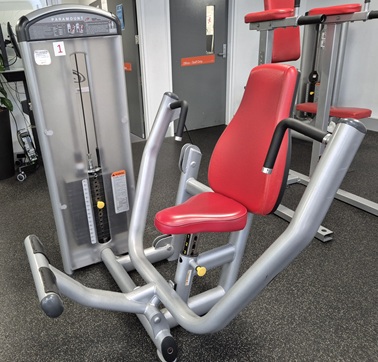
This next bit will be harder for some of us than for others. Sorry in advance! I used to do mostly free weights, not the machines. After I developed my condition(s), I realised quite quickly it is much safer to use the machines. Do I like using the machines instead of free weights? No. But I also know I need to be safe. Think of the chest press. If I am lying on a bench with a dumbbell in each hand and my body suddenly says, “No, sorry, not today” for whatever reason, I could lose control of those dumbbells and hurt myself in the process. On the chest press machine, at least the machine I use, I can transfer the load from my arms/hands to my feet very quickly (remember, I have bionic legs, so they cope!). In the picture below the foot rest can be seen. This moves as the handles move. Applying pressure to the footrest takes the load from the handles.

A chest press machine at the gym
Chest Press Machine

This way my chances of hurting myself are virtually zero. The machines can also be easier to adjust. Although we do aim to increase the weights over time just like any healthy person does, there will be days when for some unknown reason the body is just a bit “off”. I’ll put the pin in the plate I lifted two days prior and won’t be able to budge it. Very quick and easy to shift the pin to a lower weight without having to return dumbbells to the rack and get lighter ones. Usually dropping back by one plate is enough and I can keep going.

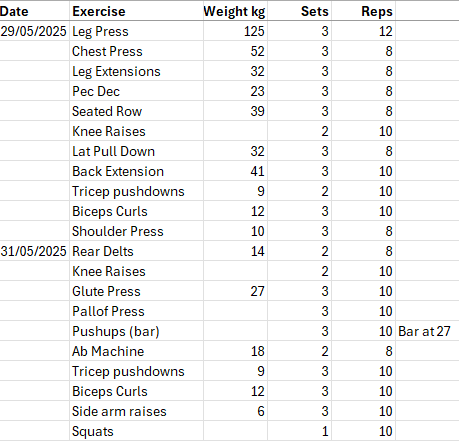
Having got those preparation aspects out of the way, what weights and exercises should you start with? You know what my answer is before I even type it, don’t you? IT DEPENDS! On so many things. Below is an example of what I am currently doing. This will be way too much for some people and others will scoff at my (to them) meagre weights. Yes, this is also an issue for those with a past history of lifting. I used to leg press over 200 kgs. My personal best since developing chronic conditions is 160 kg. At the moment I am sitting on 125 kg. If you are a competitive person it can be VERY, VERY hard to accept you are very unlikely to lift your previous weights again. My bicep curls are currently 12 kg – 2 x 6 kg dumbbells. Nothing wrong with my biceps, but prior to my recent new diagnosis my wrists couldn’t cope with anything heavier than about 4 kg. In my forties I was using much heavier weights. This is something we have to accept. We are now different, we have to have different goals.

THIS IS NOT WHERE YOU START! I’m merely illustrating what is possible over time.

The above shows two days. I go to the gym three days a week: Thursday, Saturday and Monday. The Thursday and Monday are fairly similar, but the Saturday is a lighter day and I do different exercises than the other two days. At the moment: I can change things around at any time.

Why are some sets only 8 reps and other 12? Usually 8 will indicate I’ve just increased the weight, 12 will indicate I am about to increase the weight. On the other hand, a 12 may indicate I have dropped a weight because that body part is not as happy as usual and I’m waiting for it to settle, so I’ve dropped the weight and increased the reps.

No, there isn’t a lot of core in that list. A lot of core exercises are on the floor and those I do at home. I also have a swiss ball at home. I don’t usually do squats at the gym, but that particular day I was short on total time so threw a set in to reach my time target.

In Part II of this series I discuss how you determine where to start on this journey. What questions might you ask a prospective trainer? What might be a good program? How many times a week? What kilograms might you start with?

Further Reading:

Not everything in the articles below is applicable to those with chronic conditions, but clearly the benefits of strength training are being recognised.

The ninetysomethings who revolutionized how we think about strength training – The Guardian
From strength training in your 20s to yoga in your 80s: how to reach peak fitness at any age – The Guardian
‘Never think you’re too old’: meet the world’s fastest 75-year-old woman – The Guardian

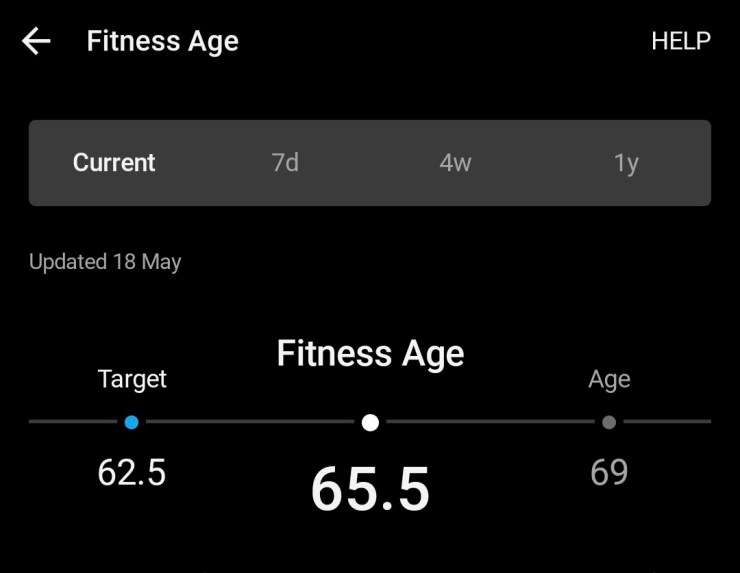
Garmin Fitness Age of 65.5

Accept the Project

I’ll start this article with clarification. This article will not apply to every person (remember we are all different) or every chronic illness or disease. But it does apply to many of us in the chronic illness population demographic. Remember, at least 47% of the population have at least one of just ten nominated chronic illnesses, so there are a few of us.

Please note as you read, I am using the word “accept” as per this Thesaurus definition: to accept or continue in a situation that is difficult or unpleasant: accept can be used when you want to say that you know a difficult situation will not change and you have decided to stop trying to change it.

But you CAN manage it in many cases. With, of course, the expertise of your doctors and allied health practitioners (physiotherapy, osteopathy, myotherapy, exercise physiologists particularly). Manage it to the point it is far less unpleasant.

The very first thing we have to do is truly accept the new us. Like you accept a new project in the work environment. Now, you may not like that project, you may not want to undertake that project: but you need to feed and clothe yourself, so you accept the project. You take it on board. You embrace it and do it to the best of your ability.

Discovering you have a chronic illness is a shock, no doubt about it. Many of us initially do some or all of the following:

  • Hope it will go away
  • Hope the medicine will do all the hard work
  • Deny the reality of the illness
  • Try to keep living “normally”, ignoring the illness
  • Think if they change aspects of their life to accommodate the illness they are “giving up”

The last one is the big one here. Let’s go back to the project at work analogy. To take on that project you may have to delegate some of your current role to other staff. You may need to relocate your office. You may have to hire new staff. Any number of aspects of your current work may have to change. You will have to set project milestones and goals.

With a chronic illness, same deal. YOU are the Project Manager of your life. To all intents and purposes, your doctors are your new employees (sorry, doctors, don’t read that the wrong way!).

It takes time to accept this new role. I estimate it took me four years. Oh, I started the Movement As Medicine immediately: it was the other things that took longer. Like cutting my work hours to part-time. Eventually I retired earlier than I would have liked. I’ve spoken to other patients who cite times from one and a half years to eight years. The risk of not accepting this new Project is that your illness may progress faster (or quite simply drain you) than it otherwise would have.

As I have written in the past, the energy depletion with many chronic illnesses can be astounding. If, for example, we continue to work full-time, at the end of the day we are exhausted. No Movement As Medicine happens. Weekends are spent recovering some energy for the next week. Or if we see getting My Aged Care as “giving in”, we are using our energy reserves to do housework rather than care for our bodies.

I have a damaged lumbar spine (result of a car accident about 44 years ago). In 2016 surgery was considered, as the pain was consistent and rather debilitating. That surgery would not have been permanent. Instead, I elected to try strengthening my posterior chain. It is now 2025 and that has been successful – no radiofrequency denervation of the lumbar spine for me! While not directly part of my illness, my illness (as do many illnesses) does love to exacerbate weak spots – a 44 year-old injury is a weak spot.

Clearly, to work on my posterior chain strength I need both time AND energy. Project Management priorities! Should I have continued working full-time and hoped my back would right itself? We all know that would have been unlikely. Or dropped my working hours and used that energy and time to work on my body?

If you are diagnosed with a chronic illness, you cannot ignore it in the hope it will go away. This IS the new you. The faster you take on that Project Manager role, the better your chances of maintaining your independence, mobility and freedom for as long as possible will be.

Stavros is another patient who took on the Project Manager role. You can read his Type 2 Diabetes story here: https://dodona777.com/2025/05/16/why-dont-people-choose-to-heal/ Stavros took charge of his project: control his Type 2 Diabetes.

Yes, I know I’ve been quiet for months! You see, I’ve been so wrapped up in enjoying my much improved body since the new diagnosis, and getting my own Movement As Medicine back on track, that’s been my primary focus (evidenced by the feature photo). I’ve increased my weight lifting/training from every third day to three times a week. For any readers raising their eyebrows about strength training, in closing I refer you to recent research findings:

The residents’ average age was 88, and three-quarters of them were women. Every resident had multiple medical conditions. Almost half required help to engage in the essential activities of daily life: getting out of bed, going to the bathroom, bathing, walking, eating.

One simple exercise proved older adults can build and retain muscle – and caused a paradigm shift in science

Source: The Guardian The ninetysomethings who revolutionized how we think about strength training

A New Diagnosis: and Other New Stuff

My chronic Illness life has been a a bit hectic of late. Several changes. I was going to title this “New Stuff Coming Out of My Ears”, but thought readers might think I actually did have stuff coming out of my ears – I can assure I don’t. Not yet anyway!

I honestly didn’t quite know how to write about it all. I want to help other patients understand what may happen during their journeys and yet I wasn’t quite sure what was happening to me! So I kept quiet for a while until I could wrap my own head around the whole situation. Plus I wanted to be able to have a positive outcome to talk about. My main message to other patients is do not be afraid to ask the hard questions of your medical team if necessary. Some conditions/diseases are clear, others not so much. Medicine is not an exact science. My thyroid diagnosis was always clear: bloods and imagining are well established. Other conditions are not so easy to be accurate about, especially perhaps in the early days of the condition.

As some readers will know, earlier this year I moved to a different rheumatologist. We will call her Dr IV (Dr Four). I don’t exactly remember why now, but one of the things Dr IV did was send me for a brain MRI. That came back showing while the brain was actually pretty darn good, thank you very much, there is a small brain aneurysm. By small I mean somewhere between 4.5 and 5 mm, depending on who is measuring it, it seems. I am assured we don’t worry unless it is 7 mm. Now, to a doctor dealing with these things, 2.5 mm might seem like the size of the Grand Canyon. To the patient 2.5 mm is a pretty small difference! However, I’ll take the neurosurgeon’s word for it! The medical advice is to monitor. He did send me off for a CT scan as well, but at the time of writing I do not have the results – it was being done more as a baseline for future comparisons. This was, yes, a bit of a shock! (See update 1 below)

Around the same time I was referred by my previous sleep specialist to a colleague of his. Now this was interesting. His colleague, let’s call her Dr S2 (for Sleep Specialist Two), read my sleep study results from two years ago rather differently and recommended a CPAP machine. So this was a whole new adventure too. I will write about the CPAP experience in a later article.

After the above issues, and already on my THIRD PsA medication for the year, I asked both my GP and Dr IV, “Do we have the right diagnosis?”. My GP said, “Fair question!’. Dr IV kinda went “Hmmm” and wrote out a pathology request including tests I had not had for years.

Those tests came back as a bit of a shock! I have rheumatoid arthritis (RA) – the tests were pretty conclusive and my Rheumatoid Factor (RF) was, shall we just say, quite high. There was another test as well that when considered together with the RF is about as conclusive as you can get. My medication was changed that day. So medication number four for 2024.

By now my head was spinning a bit. Brain aneurysm, CPAP machine and a new arthritis diagnosis all in the space of a few weeks. Actually, it is an old diagnosis revisited, as I was first diagnosed with RA in 2014. Then in late 2018 that was changed to PsA. Now in 2024 I’m back to RA.

Or – do I actually have both? Dr IV and I are keeping an open mind on that question. Well, Dr IV more than me – after all she makes the call, not me! Let’s just say I would not be surprised to have both. It is considered rare, but not unknown.

Having both would also explain, I suspect, why I was getting worse – the PsA may have been being relatively well controlled, but in the background the RA was ramping up. I want to be VERY clear – that is MY thought at this time, it has not been suggested to me by my doctors, who are still investigating.

Since all of that, Dr IV has also ordered more blood tests, some of which are new to me. I do not know what the outcome of those will be, I had them done on Friday. (See update 2 below)

How did I feel during all of this? My emotions included anger, fear, relief, gratitude: each of which would come and go. Gratitude Dr IV was going all out to get to the bottom of the problem. Anger that the increase in RF hadn’t been picked up before, fear re the brain aneurysm before I knew the size, less fear (but a little) re the high RF which can be related to many things, not just arthritis. Relief there was an explanation for why I was so sore everywhere! At the time of the new/(additional) diagnosis, I had painful arm muscles, shoulders, wrists, elbows, neck, fingers. Even my wonderful replaced knees were sore. Worth noting when knees are replaced, the muscles, ligaments, tendons etc remain and they can still get inflamed by inflammatory conditions. It was comforting that during this time I coincidentally also had my twelve month final post-operative check with my knee surgeon and both knees looked perfect from a mechanical perspective on x-ray. So the knee pain had to be inflammation related.

As most of us know, some of these medications can take months to work. I was really surprised with my new medication this time. I’m not perfect yet (probably never will be), but I’m so much better than I was on the day I took the first injection! I am off Celebrex totally and only on 7.5 mg of prednisolone per day. Hope to get off that entirely, of course. My blood pressure has improved too (Celebrex may increase some people’s blood pressure and I may be one of those people).

Today for the first time in ages I walked 3 km in one hit. I always walk 4 km a day, but lately 2 km has been my maximum distance in any single walk. Not only that, I did it at a pace of 11:51 minutes per km. I was very happy with that!

Thankfully, irrespective of whether I have RA, PsA or both, Movement As Medicine still applies. I don’t have to change my regime. In fact, Dr IV said to me she sees my dedication to Movement As Medicine as being what has got me through the years so far. That also made me happy.

This story isn’t over yet. There are more tests to come back, I still need to follow-up with the neurosurgeon for my own peace of mind and there is still the question of do I have both RA & PsA. The medication I am currently on treats both, which is comforting.

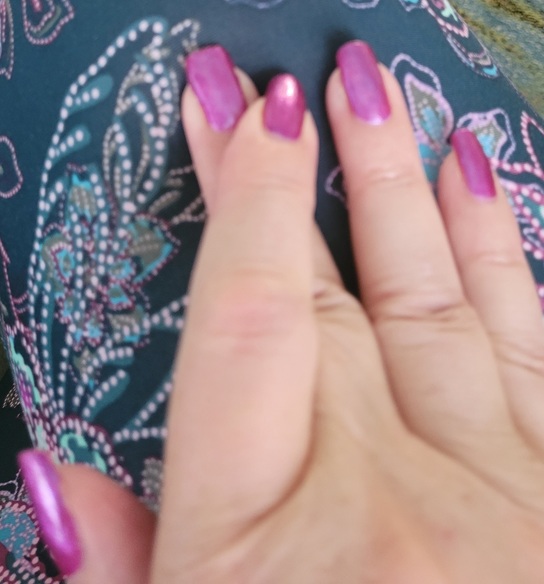
I have no sore bits anywhere. The capometacarpal joint areas of the index fingers are still both swollen, as are the areas around the ulnocarpal joints in both wrists. Dr IV tells me it can take a while for the swelling to go down. The heat of those swellings has gone. I am still limited with some finger mobility, but I’m working on the fingers and there are improvements. The top photo is my left hand today (can’t cross fingers), this photo is my right hand today (can cross fingers).

The video was captured last month. You can see on the left hand I can touch all my fingers to my thumb. On the right hand, not yet.

The best thing? No pain medications so I can hit the weights again (have done a few sessions already) and get those weights back up! Will I get back to 160 kg on the leg press? I don’t know, but I’m going to try!

Updates November 13, 2024

  1. I rang my neurosurgeon yesterday, just for peace of mind, for the CT results. That is when I discovered I forgot to tell his PA when I had the CT done. Where I had it done, they don’t send the results automatically. I burst into tears on the phone out of frustration at myself and embarrassment. The memory AGAIN. In fact, during that call, I could not even remember having the CT done, but I knew I had. I checked my calendar for the appointment and just after I found it, I REMEMBERED! It was in one of the rear buildings and I’d been trying to remember going to the main building. Nothing urgent about the results, but I will see neurosurgeon later this month to go through both the results and the plan for the future.
  2. I received a message yesterday that the blood tests done on Friday are not concerning, so THAT is a major relief!

Incidental Exercise

Never underestimate the value of incidental exercise. For many years 10,000 steps a day has been considered a desirable minimal level of daily activity for health. I’ve shared the video below in other articles, about the dramatic drop in activity from our active past to our now relatively passive present. Here it is again as a reminder!

I love that video because it illustrates so well the change in how we live. Our bodies were designed for the active past lifestyle but too many of us live the passive present depicted.

Back in 2014 I participated in the Global Challenge. Looking at the website for the 2018 event, I see it has changed since 2014, but the objectives remain the same. This is an annual event to encourage office workers particularly to get out and about and moving. I am proud to say I won all the trophies available, despite some challenges such as ending up on crutches due to a very, very grumpy knee.

2014 was the year I found out I was sick. Looking back, what I find interesting was my actual steps per day in early 2014, compared to that recommended steps a day number of 10,000. We received our pedometers well before the event started and several of us started wearing them to see how much of an improvement was needed. I found I was walking approximately 2,500 steps a day. I was shocked, as I had a history of being active, but, as they say, “life happened” and I had found myself in a very inactive phase.

To paint the picture of my life at the time, I was a senior manager with a company car. In the morning, I would walk out my back door, jump in my car, drive to work, park in the basement, take the elevator up to my floor, sit in my office or meeting rooms all day, at the end of the day repeat the journey in reverse. At home I was helping children with homework, cooking dinner – there was little time for me to take care of myself. I should have made the time!

Now I deliberately use every opportunity to clock up a few extra steps: my kyBoot shoes definitely help. Without the heels I can decide, weather permitting, to walk an extra 1,000 steps down the road from my office before catching the tram.

The photo at the top of this page was taken on just such a day recently. It was a beautifully sunny end of the day, not too hot, the trees provided such a pretty filtered sunlight effect and the evening birdsong was a lovely musical accompaniment: I really enjoyed just de-stressing from the office by stretching my legs.

I am extremely lucky in that the tram line goes directly from my work location to my home location with many stops along the way. I can easily walk part way, tram part way. Not everyone has such a convenient transport situation.

If you drive to work, is it possible to park a little further away from work? That isn’t possible for me, on the days I do drive to work my only parking option is the staff car park. This is one of the reasons I prefer to take the tram as it gives me more options for incidental exercise.

Cycling to work is great exercise already: my knees don’t like cycling, so it is not an option for me. Luckily my body doesn’t object to walking in any way, which is one of the reasons incidental exercise is so important to my welfare and the management of my rheumatoid arthritis and damage in my lumbar spine.

How many of us travel to the gym or the pool, to diligently undertake exercise, in our car? My swimming pool is only 1.5 kms from my home. I have reached the point now where walking 1.5 kms is easy. One issue I have to be careful of is exposure to the sun, so I can only do that walk weather permitting. I also need to be careful not to overdo it. I am well aware that a three kilometre walk and a swim may send me into the #spoonie Boom/Bust cycle if I am not careful. Pacing is paramount. My gym is located at work: I do the same incidental steps as on a normal work day.

I walk to my general practitioner’s clinic rather than drive.

As I am a person with chronic health conditions, I don’t get to 10,000 steps on a daily basis due to the energy/lethargy issues that go with my conditions. Yet. I am slowly building up and each month I am more active that the previous month.

Look at your daily routine and determine what adjustments you might be able to make to increase your level of daily activity. I am a firm believer that frequent movement is better for our bodies and our health than being stationary all of most days then working out like mad in the gym for 45 minutes maybe three days a week. I was very happy to have my belief confirmed when I did the Pain Management Program! The reality was brough home to me more recently when I spent a day in the Emergency Department (why is a story for another day) – my body almost turned to concrete through not moving. I was very stiff after lying on a hospital bed all day.

Yes, I certainly do work out in the gym because resistance training is very important, especially as we mature, but moving as much as possible is perhaps even more important, yet so difficult for many of us to achieve.

I know from my own experience with my conditions, the days I am not working in the office and move a lot more I get to the end of the day with no stiffness or little niggles anywhere. Days when I am more stationary I will end the day in discomfort. Not pain, but discomfort. Move more. Movement is medicine has become my mantra.

This is an edited version of an article I first wrote for Kybun.

Flu Vaccine

Get Your Flu Shot – NOW

No ifs or maybes. Just do it. Vaccinate, people, vaccinate. People with chronic medical conditions need to ensure they are protected. Many of us are on medications that suppress our otherwise over active immune systems. Other medications can suppress the immune system even if that is not the treatment objective.

Getting sick takes a bigger toll on those of us who are, well, you know …. already sick. Our bodies are already facing a daily battle. There is also a multiplication factor. One example is pain management. Using movement/exercise as pain management requires moving sufficiently EVERY DAY. Lying in bed for a week or more with tissues, blocked nose, headaches and fever is going to set pain management progress totally awry. While it won’t be necessarily back to Square One, there will be a loss of progress, perhaps a resumption of pain and/or stiffness. Not where any of us want to be. So not only will the flu knock us flat, it can set us back in other ways as well. I know if I spent a week or ten days unable to exercise, I would pay for it with increased stiffness and pain, plus we lose strength gains and muscle tone faster. It would set me back, and I don’t want that – for me, or for you.

Timing of the shot can be critical, as the Australian Medical Association highlights.

The Australian Medical Association has advised not to have the vaccination too early.

“Remember why you need to have a vaccine every year is the influenza virus rapidly and quickly mutates. It will be appropriate for some patients to defer having their flu shot until well into April,” he said.

Dr Gannon said people should speak to their GP about the best time to get the flu shot.

Source: Hold off getting the flu vaccine, AMA says

People with chronic disease are entitled to free flu vaccinations. Check with your doctor.

I received my first flu vaccine in 1999. I have had it every year since except one and I regretted missing it that year so much. My daughter, not vaccinated, became extremely ill last year – she WILL be getting the flu shot this year.

Get the flu shot people. Don’t take the risk. Last year’s flu season was very bad and this year’s may be worse. 1,100 people died last flu season.

Get the flu shot.

Meanwhile, for readers heading into SUMMER, remember your sun protection!

Additional References:

What you need to know about Fluad and FluZone High Dose, the new flu vaccines for over-65s

Doctors Best to Give Flu Vaccines

Australia prepares as US suffers ‘worst flu season in a decade’

Disclaimer: This is general advice. Every patient should check with their doctor to ensure correct timing for them and that there are no contraindications in their specific medical case.

Note: There is a contradiction in the ABC article linked above: a recommendation of May/June under the photo, while April is cited in the text. Check with your GP.

AprilMayJune

Note the title of this article has been updated to reflect the passage of time.

Make 2018 YOUR Year for SMART Goals

Seasons Greetings to all! Christmas is 30 or so hours away as I write (for those of us in the southern hemisphere). As the sun sets on 2017, we have an opportunity to re-evaluate our health progress and polish up our plans to get stronger, more active, more mobile and have less pain, less lethargy, better sleep: culminating in a better quality of life in 2018.

If you are still in “I’m thinking about it” mode, take stock over Christmas. What invitations did you turn down because you didn’t feel you could summon the energy required? Would you like to accept those invitations next year? Were you able to do the shopping you wanted to do without crashing in a heap for two days afterwards? Make 2018 the year you make the choice to include moving more into your treatment plans.

Talk to your doctors, get a clear understanding of what benefits you may expect from moving more.

SMART Goals

Now that my recent treatment change is behind me, I’m making more ambitious plans for myself and setting new goals for the new year. SMART goals. SMART goals are used in many walks of life: I’ve seen various wordings used depending on the context. For our purposes, I like the following definitions.

S = Specific. The goal needs to be something specific, not a nebulous idea.

M = Measurable. If we can’t measure our achievements against the goal, we won’t know if we are getting anywhere.

A = Achievable. It has to be achievable. If I set myself a goal of climbing Mt Everest, while both specific and measurable, for me it is not achievable. Swimming a two kilometre session – THAT is achievable.

R = Relevant. You will see realistic often used in this spot, but for our purposes I prefer relevant. We have limitations on our energy, our strength and our time. There is no point in setting goals that are not relevant to what we wish to achieve, which is better quality of life.

T = Timeboxed. There needs to be a time period within which you will achieve this goal. This helps to hold you to account and stay on target.

Let’s give it a try. “My goal is to swim two kilometres.” Is this a SMART goal?

No, it isn’t. While it is specific, measurable, relevant and (I hope) achievable, I have set no time target. “I want to walk more”, while relevant and achievable, is not a measurable goal – “more” could be anything. Walk longer distances or walk more often? Nor is it timeboxed. Walk more by when? 

Let’s have another go at this. “My goal is to swim a two kilometre session by 30 June 2018”. Now I have a SMART goal. I will need a progress plan to reach that goal, so I will need shorter term goals to get there: “My goal is to swim 1.2 kilometres once a week by 28 February 2018”.

That is one of my goals. Yours may well be something along the lines of “I will do my stretches every day for the month of January.” This is specific, measurable, achievable, relevant, timeboxed AND will set you up for the next step in establishing a movement as medicine strategy.

A walking more SMART goal could be very simple. “I will walk for three minutes, five times a day for one week”. At the end of the week a new SMART goal can be set. Remember when setting goals to pace yourself, always pace yourself.

Kyboot

For context, I was on crutches for much of 2014. I was diagnosed at the end of 2014. You can read how I started back to moving more on How tough is it to get moving?. My major goals for 2018 are:

  • Swim a two kilometre session by 30 June 2018.
  • Increase my daily step count to 10,000 steps a day by 30 September 2018.
  • Increase my leg press to 160 kilograms by 30 June 2018. (I was at 140 kg before my treatment change – I have to work back up after dropping back).

As I achieve those, I will set new goals during the year.

Of course, I have one other goal: help others get moving! I am back to normal availability after my recent hiatus, so reach out. It costs nothing to investigate the possibility.

Have a great time over the break! Stay safe!

Radioactive Iodine Treatment Done!

Don’t stop moving! Yes, swallowing a little radioactive capsule can be a bit scary, but my advice is not to catastrophise the event and lock yourself away. A very few patients have reactions, which you will be warned about, but my experience has been as smooth as silk. How well it actually works is yet to be discovered, but I’m hopeful of a good outcome.

As I have eleven days off work now I am going to catch up on my exercise! (Edit Nov 28 – see update at end of this article). The last week or so has been quite challenging with my thyroid doing whatever it felt like. To quickly recap, the process is:

  • Go off the hyperthyroid medication
  • 5 – 7 days later have a nuclear scan
  • Capsule ordered from supplier
  • A few days after nuclear scan, capsule is administered

Readers who have kept track to date on Hyperactive Thyroid Won’t Behave will be aware I was trying to fit in a biopsy between my Monday nuclear scan and my Friday radioactive iodine consumption.

As it turns out, once on the table for the biopsy, it was determined I didn’t met the criteria. A nuclear scan is a functional test, while the ultrasound is the structural test. The two need to be read in conjunction – once they took a look at my thyroid with the ultrasound, they were unable to confirm the nuclear scan suggestions, so I escaped. No cold nodule confirmed, therefore no biopsy.

Mind you, while the clinicians (of various disciplines) were busy making phone calls all over town to confer, I was sitting in trepidation, robed in yet more very attractive medical attire as you can see below.  If I look like I’m thinking “what next?”, it is because I was!

Waiting

That was Wednesday! Thursday I really wasn’t well and left work early (again). This was the most difficult part for me, the not feeling well and therefore taking time off work (as I mentioned in my last update). I slept very badly on Thursday night. Was this because I was a little worried about the treatment, or was it typical hyperthyroid sleep disturbance? I certainly didn’t feel worried, so I’m going with the latter. By then I had been off my thyroid medication for eleven days.

When I got to work Friday, I was told to go home. I had originally scheduled the capsule taking for 5:00 pm, the end of the work day. Given I was told to go home (they were right, I’d had very little sleep!) I called Nuclear Medicine to see if they could do me earlier.

Well, usually they could – but not on this particular Friday as the capsules had not yet arrived. But were on their way. So I trotted over and waited.

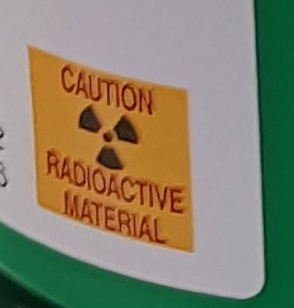
The capsule arrives in a little green bottle with a radioactive material warning sticker.

Container

A couple of weeks before I had received an information pack outlining the food restrictions for the week prior and the isolation restrictions for specified periods after treatment. The isolation periods depend on the dosage. As I had 15.7 mCi, I am stuck with the longest isolation times.

I talk about the information below, but not in totality – if you are having this treatment, MAKE SURE YOU READ YOUR PATIENT INFORMATION BOOKLET! I’m talking in general terms to give readers a feel for the process.

The food restrictions are around ensuring a low iodine diet for the week preceding the treatment. I am assuming, in my innocent patient mind, this is to ensure when we do take the capsule, our thyroid says something along the lines of “OMG, gimme, gimme that iodine, I’m STARVING“. The formal documentation says, “In order to ensure that the radioiodine is properly taken up by your thyroid tissue…”, but I like my description better.

Not allowed were: bread or other baked goods, milk or other dairy products, fish, egg yolks, soy products, green beans, iodised salt or stuff with bright red food colourings. Meat alternatives such as vegetarian sausages were also not allowed.

I was allowed meat (beef, pork, lamb, chicken) egg whites, homemade bread (made without iodised salt), breakfast cereals, fresh fruit, vegetables and unsalted nuts.

Beer and wine were OK, but coffee and tea had to be black.

I was eating bananas and cashews for breakfast because bacon and eggs on toast wasn’t allowed (plus I don’t bake bread) and how was I supposed to eat cereal without milk or yoghurt?

Fast for at least two hours prior to treatment and at least two hours after treatment. It was recommended to me I fast for four hours after treatment. I was STARVING (after a banana and cashews for breakfast and the rescheduling meant no lunch) so I didn’t make it to exactly four hours.

I have to stay away from children under five years of age and pregnant women for 20 days. Stay away means:

  • avoid spending more than 15 minutes per day within one metre of another person and maintain a distance of greater than two metres whenever possible
  • Sleep alone, abstain from physical relations
  • Avoid kissing.

The restrictions apply for 14 days for non-pregnant women and others over five years of age. Work restrictions depend on what sort of work you do, how close you work with other people and so on.

I have to do things like double flush the toilet (men should sit to avoid splashing – that made me giggle).

There are rules around washing bed linen and food preparation, most of which is not a concern as I live alone. The pamphlet includes twenty FAQs covering such questions as going to the movies, receiving visitors at home, catching taxis and using public transport.

The person administering the capsule spends quite some time with you to make sure you understand everything. Mine also understood my concern for my cat’s welfare and suggested I buy gloves to handle her. So I did. You also need these to pick fresh fruit and vegetables at the supermarket, although I had done a supply trip on Thursday night.

CatProtection

Plus she is not allowed in my room at night. She has a special snuggly bed I bought a while ago in preparation for this event.

I have been worried about the fact this treatment can take three months or more to really work and I have also been feeling so bad without any medication at all. I can’t take three months off work! However, the latest advice I have received is that after four days it is OK to start back on my old meds temporarily – all I have to do is call my endocrinologist if I feel I am not well enough to work without some form of treatment. That is comforting. It also means I will hit my target of resuming Limberation work at the end of November!

So how am I now? Pretty darn good really. See for yourself!

If overseas readers have trouble with my accent, that was about midday, just over 48 hours after my consumption of the radioactive material. I had already walked 7,000 steps going to the supermarket (yes, I kept two metres away from people). I feel perfectly fine, no adverse affects at all. I did not vomit, I’ve had no swelling to speak of and no pain. It occurred to me today I haven’t had a nausea attack either, but that may be merely because up until today I did not do too much. Yesterday it poured with rain here, so walking wasn’t an option and I didn’t want to try going to the gym in case I contaminated gym equipment. I did feel a little weak on Friday afternoon.

I’m monitoring my skin as it seems to be improving now I am off the medication I’d been on for the last three years. If that continues to improve I will share the details another day.

So! Onwards and upwards! May the little capsule beat my thyroid into shape and may I again be full of energy!

Edit November 20: Yippee! I can go swimming today! All the FAQs didn’t cover swimming without contaminating the pool, or returning to the gym. First thing this morning I called Nuclear Med. I can swim today, gym in two more days. Capsule day is Day 0, today is Day 3, gym will be Day 5.

Edit November 28: I may perhaps have been a little exuberant! Then again, that IS me. This week has been challenging – a lot of the time I feel fine, then the lightheadedness/nausea will overcome me. Some days have been worse than others. Yes, I have anti-nausea medication. Yesterday I gave in and rang my endocrinologist who has recommended I go back on my thyroid medication at half the dose I was previously on. My blood test yesterday showed my TSH was very low.

If I am not improved by next week, we will start looking for other causes. I still feel fine most of the time, it is just this darn lightheadedness/nausea that is a problem. I am also heat intolerant, probably due to the Grave’s Disease, and this last week has been around 33 degrees Celsius. We had a cooler day yesterday and then back up to 29 today. I think this has complicated the whole thing!

How I am feeling may well be unrelated to having stopped the thyroid medication in preparation for this treatment, but given it is the one thing that has changed, we have to go through the process of elimination.

Again I stress everyone’s experience will be different. I certainly can’t complain too much, I’ve been walking and swimming, just not as much as usual. I think that’s OK given the circumstances! By yesterday I had been off medication for 22 days and the radioiodine just doesn’t work that fast (unfortunately).

I am back to work tomorrow and hope to manage a full day. Fingers crossed.

This article is written specifically from the patient perspective and should not be interpreted as any form of medical advice.

A Tale of Two Fountains

We are different now. Some of us will regain our pre-illness selves, some of us have an unknown prognosis, some of us know we will never go back. For the moment, all of us are changed from our old selves.

I think of the fountain above as my old self. I think of the fountain below as my new self. Or visa versa, it really doesn’t matter.

Just as these are both beautiful and different fountains, in both incarnations I am a useful, valuable person. I just do things a little differently these days. Well, yes OK, some things I might do a LOT differently. So might you.

It is easy to feel hopeless, useless, incompetent and a whole host of other negative words when we face chronic pain or fatigue/lethargy. When we have to set aside time to self-manage our health we may feel guilty because we are not doing other things friends or family may think we should be doing.

Look at the fountains more closely. One shoots water into the sky using, I imagine, quite a lot of pressure to achieve the height. The second fountain does the complete opposite: water gently falls from many small outlets. In both fountains the water is successfully circulating through the system. Both fountains bring pleasure to visitors. Birds stop and drink. Grass grows around them. So it can be with all of us.

Yes, we are different now. With the right support and guidance we can live a meaningful life, despite the pain and/or the fatigue.

Most of the normal people around you will not understand, especially if you have no visible evidence of illness. No-one can see my friend’s cancer tumor. No-one can see my fatigue. No-one can see the pain another friend suffers from fibromyalgia, This was brought home to me personally this week, when I was diligently recording the calories in a mini muffin at a work birthday afternoon-tea. “Oh”, my colleague said, “you can work that off in five minutes, don’t worry about it!” No, I can’t work it off in five minutes because I can no longer do that level of exercise. Yes, I do a lot of exercise, but gone are the days when I could eat anything I liked. Because I don’t look sick, people don’t comprehend the self-management we need to adhere to in order to live the lives we want. We cannot expect people to “get it”, but we can set appropriate limits.

We are still beautiful fountains. We just function a little differently these days.

Environment

Why Do Our Bodies Attack Us?

Why our bodies attack us in the form of autoimmune (AI) diseases is still unknown. There has been much research and there are correlations, links, hypotheses……but no definitive cause has been found.

Some of the studies I have read over the years have looked at:

  • gut bacteria
  • smoking
  • stress
  • genetic predispositions
  • pollution
  • diet
  • processed foods
  • links to medications we may have been on for other conditions
  • lack of exercise
  • B lymphocytes
  • environment

Some AI diseases are local (i.e. single organ involvement), others are systemic. Co-morbidity (patient has more than one condition) is reasonably common, about 25% of patients. The rate of co-morbidity is increasing, as is the number of conditions a patient may develop.

Although it does me absolutely no good to ponder about WHY I have the conditions I do, I ponder anyway. Most patients probably do!

I can tick off several items on that list: I’ve had a reasonable amount of stress in my life, I used to smoke (quite heavily by today’s standards), I may have a genetic predisposition but am unable to confirm that, I live in a major city so am certainly exposed to pollution. Like everyone else, I am exposed to our rapidly changing environment.

“Our gene sequences aren’t changing fast enough to account for the increases,” Miller says. “Yet our environment is—we’ve got 80,000 chemicals approved for use in commerce, but we know very little about their immune effects. Our lifestyles are also different than they were a few decades ago, and we’re eating more processed food.” Should prevalence rates for heart disease and cancer continue their decline, Miller says, autoimmune diseases could become some of the costliest and most burdensome illnesses in the United States.

Source: Questions Persist: Environmental Factors in Autoimmune Disease

It isn’t just the chemicals. We are destroying our soil and our water. Both vital aspects of our food chain. Pop across to my book review earlier this year of Julian Cribb’s Surviving the 21st Century for more details. The Adani mine proposal in Queensland is most likely a health disaster waiting to happen. I look at the photo above: which environment might be healthier?

Yet many people do not develop AI diseases. Do they have a natural resistance?

Are all the different diseases really just different expressions of one disease?

So many unanswered questions.

I do think we have changed our natural world so much and so fast. We live entirely different lives than we did a hundred years ago: faster paced, less exercise, exposure to many things that didn’t exist a hundred years ago.

We also died younger: perhaps these diseases did exist, we just didn’t recognise them or live long enough for them to bother us. Yet many of these diseases do not worry about age: young or old, so many succumb to an out of control immune system irrespective of age. Consequently I’m not a fan of that theory.

It is estimated a hundred years ago humans got five times more exercise that they do today, just from living their lives. Office jobs were a rarity, not the norm. Movement was a natural part of life, not something we were encouraged to do for thirty minutes a day.

“Sitting is the new smoking” has been a mantra for a while, but now studies show standing is not the solution either. Movement is the key to good health, but we have developed a civilisation in which movement is not happening enough. We sit or stand without movement in so many jobs.

Sleep is another lifestyle concern. Most of us don’t get nearly enough. We watch too much TV, have the iPad or our phone on our bedside table so go to sleep way after sundown, yet get up at 5:30am to get that 30 minutes of mandated movement in the gym before 8 hours sitting (or standing). Rinse and repeat.

For those of us already managing AI conditions, (the pain, the financial impost, the lifestyle restrictions) finding the cause may be too late for us personally. For those coming after us, I do hope science finds a solution. Soon.

I do recommend counteracting as much as we possibly can. Eat healthily, sleep well, MOVE, avoid processed foods, give up smoking, minimise stress. Science has given us ways to manage many of these conditions reasonably well, however we can help. There is no point in my taking my prescribed medications every morning if I undermine the efficacy by my lifestyle choices.

While the scientific jury is still out, I’m looking at AI diseases as having a multi-factorial cause. I don’t believe I can rid myself of my conditions, but I can sure as hell give my body the best help I can.

Resources:

Multiple autoimmune syndrome

Autoimmune diseases (a good intro from the Australian Society of Immunology and Allergy)

Recent insights in the epidemiology of autoimmune diseases: Improved prevalence estimates and understanding of clustering of diseases