chronic conditions care courage consistency coaching

Care, Consistency, Courage and Coaching

Chronic Conditions

Care, consistency, courage and coaching are my “4 Cs” of chronic condition management.

Care

There are different types of care. Top of the list is great medical care. You must have a good relationship with your primary care provider (general practitioner, GP). I’m not suggesting you be family friends who go out for dinner (that could be difficult) but you should feel comfortable that your GP “gets” you and that you trust their level of care. This is the medical professional on your team that herds the cats (your specialists) and keeps the information flowing, in a sense the gate-keeper.

Self-care is extremely important. Self-care isn’t all bubble baths and scented candles, although those are nice. Self-care includes doing the things you MUST do to maximise your health, minimise your pain. Making the time to do stretches, walk, swim, lift weights, sleep, eat well: “doing the hard yards” as my father would say. Yes, the other sort of self-care, the time-out, rest, relax: also very important.

Mental health care is extremely important. As I have written about that in “We Need Mental Health as well as Physical Health, I won’t say more here. Reducing stress is part of mental health care.

Being careful is also a form of care. One example I have written about before is changing exercises where necessary. My own example is I no longer do dumbbell chest press because getting off the bench irritates my spine.

Being careful with our body weight is important – for many, weight gain can mean increased pain levels.

breakfast
Breakfast

Consistency

Consistency is paramount. When we were healthy, our bodies could recover from a week or two of no exercise, a night on the booze or day of crap food. Sure, we may have suffered a hangover or the scales may have jumped a kilogram, but we easily recovered from the damage.

Once we have a chronic condition/illness/disease not only are our bodies not as resilient, we are likely on medications that, while doing very good things for us, may also compromise other aspects of our “internal workings”. My own example is my rheumatoid arthritis (RA) medication suppresses my immune system – logical when you think about it, of course, given RA is an autoimmune condition, my own immune system attacking me. This means I have to be super careful not to catch bugs/viruses, as I recently did. I ended up in ED with what felt like a ping-pong ball in my throat.

Exercise, such as stretching and resistance training, will stop your body deconditioning and greatly assist with pain management. However, the gains we make can be lost VERY quickly once our bodies are unwell. Consistency is vital to ensure we maintain our gains and keep building on our achievements. I have discussed exercise in more detail in Doctors and Exercise, so please click that link for a more comprehensive presentation about the importance of exercise.

de-conditioning

During a consultation with my endocrinologist he asked, “Do you take your meds?” Frankly, I was shocked – what a strange thing to ask, I thought, of course I take my medications! He asked because my thyroid was misbehaving again and my blood tests were not within the reference range – again. Clearly some patients don’t take their medications as prescribed.

Most medications for chronic conditions require consistency to be effective. If you feel the dose or the medication isn’t working as it should, TALK TO THE SPECIALIST before changing anything. You may do more harm than good. If the problem is remembering, set alarms in your phone. Some medications can take three or more months to reach the required level of effectiveness.

Be consistent. With medications, exercise, diet, rest, sleep, hydration.

consistent exercise
Consistent daily steps

Even if you have to dance to get there!

Courage

Yes, courage. It takes courage to start AND to keep up the fight. “The cave you fear to enter holds the treasure you seek”. The treasure is maintaining quality of life for as long as possible. For some, the cave is MOVEMENT! It can be hard to think about movement when we are in pain. Or we feel we can’t “keep up” in the gym. Today is my swimming day. The predicted high is 13 Celsius. Do I REALLY want to get into my bathers and hit the pool, or would I prefer chocolate cake and a nip of Bailey’s Irish Cream? Consistency! Courage! Just do it!

leg press

The benefits are worth it. I have avoided a knee replacement and radiofrequency denervation of the lumber spine. Yes, I MAY need both some time in the future (distant future, I hope) but for the moment, I’m good. I’m on no pain medications.

Four years ago I started with four x 5 minute walks a day.

Now a gym session looks like this:

  • 4 sets leg press
  • 3 sets chest press
  • 3 sets shoulder press
  • 1 set body weight squats
  • 3 sets Smith Machine squats
  • 3 sets tricep extensions
  • 3 sets bicep curls
  • 3 sets lat pulldowns
  • 3 sets leg extensions
  • 3 sets pec dec
  • 8 minutes on the rowing machine

I got VERY annoyed recently when I lost muscle strength and had to drop my leg press weight down from 160 kgs. While we still don’t have a medical explanation, I am building back up again, so perhaps it was just a temporary glitch. We have temporary glitches.

I didn’t get to where I am now without care, consistency and courage.

Coaching

Professional athletes all have coaches. They have goals. WE also have goals (hopefully SMART goals)!

Perhaps we need to look at ourselves as endurance QOLs –  Quality of Life is the goal we strive for, not necessarily running 3,100 kilometres in 45 days! Our mental challenge can be just as extreme, even if our physical achievements are not. 8 Steps to Retain/Regain Quality of Life

People are all different, conditions vary greatly. Even so, the sooner you start managing your condition instead of your condition managing you, the better your chances of retaining your quality of life for as long as possible.

Sometimes all that is needed is help to get started. Sometimes a patient may prefer longer term support and encouragement.

Coaching helps the chronic condition patient take control. There is a fifth “C” – Control!

Too often patients feel they are “OK for the moment, I’ll worry about all this later” (when my job is not so stressful/the kids are older/the house is paid off). My advice is don’t wait. Start now to protect your future.

Contact me for a confidential chat as a starting point.

Note this article is intended for chronic condition patients who have a medical clearance or medical advice to exercise. This can be at any level from beginner.

Hydration Habits – Are You Drinking Enough?

Yes, the dreaded word – HYDRATION. Are you monitoring your fluid intake? Is it enough?

I, as an exercise professional, should have this down pat. Of course I drink two litres of water every day! Or do I? See if any of this rings true for you.

Yesterday I had a few minor disruptions to my day. Who doesn’t have disruptions? Driving home from the vet with my cat (THAT is a WHOLE other story!), I realised all I had drunk all day was three cups of coffee. One with breakfast, one after my manicure and one with lunch. It was now 6:30 pm. So I had drunk no more than 660 mls of white coffee. I’d had yoghurt on my breakfast, not even milk! I had thrown down the morning medications with some water, but what was that? 100 mls max?

As we get older there is an added problem – we tend not to recognise we are thirsty. Even before that stage of life hits us, we can think we are hungry when we are actually thirsty – and for those of us managing our weight in order to manage pain, eating instead of drinking is not a wonderful thing.

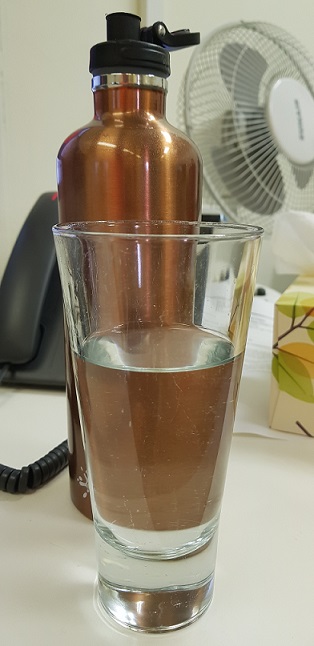
At my desk job I am good. As soon as I arrive in the office, I fill this water container. it is 900 mls and I finish it by lunch time. Refill, repeat.

When working out I am good! I may be a little too pink, but I’m good.

OK, you got me, two of those are protein shakers, but the shot does illustrate maybe I should try a change of colour next time. I DO have a dark blue water bottle as well. I’m not exactly short of water bottles: one permanently in the office, one permanently in my gym pack and a third floating about.

It is when I am home I find I am very slack. Why can’t I do the same thing at home as I do meticulously in the office and the gym, even at the pool? I do not know. I am working very hard on establishing better personal hydration habits.

It seems at home the water bottle is just never where I am. If I’m in the lounge, the water bottle is in the kitchen. If I’m in the kitchen, the water bottle is in the bedroom. Plus I have a tendency not to use a water bottle at home: I have a tap and glasses right there, after all!

It is spring in Australia, at least it is spring in the states that have four seasons! The blossoms are everywhere in Melbourne. In parts of Australia we are having a terrible drought, nothing is growing, in fact much is not surviving, let alone growing.

Like plants, we don’t do well without adequate and appropriate hydration. The Australian Government National Health and Medical Research Council has good detail about our need for water. Please click on that link and read the detail. Emphasis added in the quotation below.

Dehydration of as little as 2% loss of body weight results in impaired physiological responses and performance. The reported health effects of chronic mild dehydration and poor fluid intake include increased risk of kidney stones (Borghi et al 1996, Hughes & Norman 1992, Iguchi et al 1990, Embon et al 1990), urinary tract cancers (Bitterman et al 1991, Wilkens et al 1996, Michaud et al1999), colon cancer (Shannon et al 1996) and mitral valve prolapse (Lax et al 1992) as well as diminished physical and mental performance (Armstrong et al 1985, Brooks & Fahey 1984, Brouns et al 1992, Cheung et al 1998, Kristel-Boneh et al 1988, Torranin et al 1979, Sawka & Pandolf 1990).

If you feel thirsty, you are probably already dehydrated. If you have a medical issue that compromises your ability to recognise thirst, you need to be extra vigilant.

Adult men need about 2.6 litres of fluid a day and adult women about 2.1 litres. This is over and above the fluid intake from food. More may be required depending on activity levels, climate and body weight. Medibank has a handy calculator based on age and gender, but it does not take into account climate extremes, exertion or body weight.

Around 50-80% of our body weight is water. The higher our lean mass, the higher the water content. We need water for most body processes including digestion, absorbing and transporting nutrients, disposing of waste products and keeping our body temperature stable.

Source: Medibank

It is said our skin looks better if we are properly hydrated. From my personal experience, I totally agree. Dehydration can add years to the face and who wants that? Not me!

Those of us with health challenges need to make sure we give our bodies all the help we can: hydration is important.

How are your hydration habits? Please share in the comments.

Spring has Sprung! Annual Sun Protection Warning!

Yes, folks, it is finally spring. Days are getting longer, the sun is getting stronger. Time to revisit the need for sun protection, if you let your routines lapse in the colder months.

As I prepared to hit the gym today, I checked the UV rating for today. Yes, we need protection.

Despite the fact it is raining today, clouds are not protection. Start your good sun habits now so you’ll be on automatic pilot for the rest of summer.

Last year I wrote about the additional challenges those on medications may face – quite a few medications result in photosensitivity – we have to be extra vigilant with our protection. If you have recently started on new medications, I recommend you talk to your doctor or pharmacist about this topic.

I was speaking with someone recently who believed you could not get skin damage through car windows or glass. Yes, you may do, depending on the circumstances. Refer to this article on Skincancer.org for more details.

The Sun Smart website has a wealth of information to help you stay protected, including a reminder to check the use-by date of your sun cream.

One tip I learnt last year – you will find warnings on some sun protection brands re the risk of staining clothing. Trust me on this – those ones DO stain clothing! Because I wear sun protection all the time, not just at the beach, this is important. I now have two stained white tops I really liked. I can attest the Cancer Council brand did NOT stain my clothing, so I stick to that one these days!

Source: SunSmart.com.au

11 Tips for Dealing With Major Disruptions to Your Routine

I’ve been very quiet of late. There IS a good reason! Sometimes, despite the best laid plans of mice and men and women, our lives, our carefully planned routines, are disrupted.

A quick recap of the situation prior to the disruption. In 2016 I started part-time employment in a location that was a LONG way away from home. Relocating close to work was one of the lifestyle adjustments I made as discussed in Beat the Boom Bust Cycle.

This year, I had to move. As it turns out, this has been a GREAT change, but all of a sudden I was faced with home hunting, packing, organising the move, the paper warfare relocation involves and all the other bits and pieces that go along with moving. All on top of my normal daily commitments. Clearly, PACING was paramount if I was to come out the other side relatively unscathed!

I knew I just could not do it all without risking an arthritis flare or some other health set back. Writing was put on the back burner: it was one of the things that was, in reality, not a “Must Do” on the “To Do” list. Packing certainly was! Getting utilities connected certainly was!

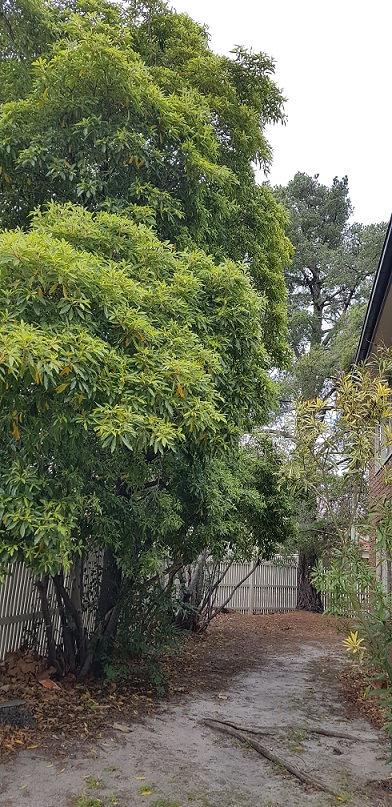
The benefits? Beautiful leafy block (pictured above), quiet suburban street, cheaper and (best of all) GROUND FLOOR!

I didn’t come through it totally unscathed. Clearly moving is stressful at the best of times plus my rheumatoid arthritis medication is a immune suppressant. PLUS it IS winter! So I caught a virus about two weeks after moving day. I try to avoid catching bugs, but I think the body was ripe for invasion given the aforementioned circumstances! I was out for the count for several days!

Other life events that can be physically challenging include weddings (our own, or a family member), family holidays, community events we may be involved in organising, school fetes; the list is endless.

If it is a wedding and you are mother or father of either of the happy couple, the lead up is full of additional activities and you want to be in the best shape possible on the day.

Here are my tips for keeping our body healthy when we face a complete disruption to our physical routine that has the potential to cause us pain or a condition flare.

  1. Plan, start preparations early. Stop what you are doing if pain starts. Build rest periods into your plan.
  2. Accept help! My daughter and son-in-law helped me pack. A friend helped me unpack at the other end. If you are involved in the organisational stages as well as “on the day” or post-event clean up, make sure you do not say, “Oh, no I can manage”.
  3. Take annual leave if possible. I took a week.
  4. DO NOT be tempted to “help” the removalists on the day (if you are moving, otherwise adapt this tip to suit your situation). You organised help for a reason: whether they are paid experts or volunteers, resist the urge to throw yourself into the physical fray.
  5. Maintain your daily stretching regime. It can be easy to let such things slip when faced with exciting things going on. Your stretches are even more important now to counteract the pressure you are putting on your body.
  6. You may also have prescribed remedial exercises to do – maintain those too, for the same reasons.
  7. Ensure you get adequate sleep.
  8. Pay attention to your posture. With all the bending I was doing, I was diligent about hinging at the hip to ensure I minimised pressure on my spine.
  9. Do something appropriate to support your body during this time. For example, I booked a massage the second day after the move to iron out the niggles.
  10. Eat well, ensure you consume enough protein. Stay hydrated.
  11. If this is a big social event (rather than moving home), I strongly recommend continuing to wear your usual shoes on the day (in my case kyBoot shoes). While you might get away with “pretty” shoes or heels for an hour or so, any longer could well result in pain which could be very unpleasant on the day.

Every person is different, every person’s objectives and capabilities are different. If you are father of one of the bridal couple, your one burning desire for the day may be to walk your child down the aisle and maybe walking is your personal challenge. Plan ahead, practice, seek advice from your allied health providers well in advance. If necessary, consider adaptations: for example, at the recent royal wedding Prince Charles didn’t walk the full length of the aisle with Meghan.

Yes, I did resort to Panadol and a heat pack on my back the actual day of the move, but I have even impressed myself with how well my body coped (apart from the darn virus). The annual leave certainly helped, as I was not under pressure to rush. I could work unpacking for an hour, rest for an hour, do my stretches, get my exercises done; all without feeling as if I needed to hurry or as if I should be somewhere else.

Get back to your normal exercise routine as soon as possible. I took a day off from organising the new place to have that massage and go for a long walk.

My main objective, aside from a successful move, was to ensure I did not undo all the good work I have done to date. I did not want a rheumatoid arthritis flare. I was confident if I made sure I took my physical limitations into account, accepted or asked for help as necessary and took my time, I would be fine. Was my back a little stiff? Yes, a little, but at no time was I in excruciating pain or taking strong pain medication. I didn’t expect to come through it without my back grumbling a little, given the degenerative damage.

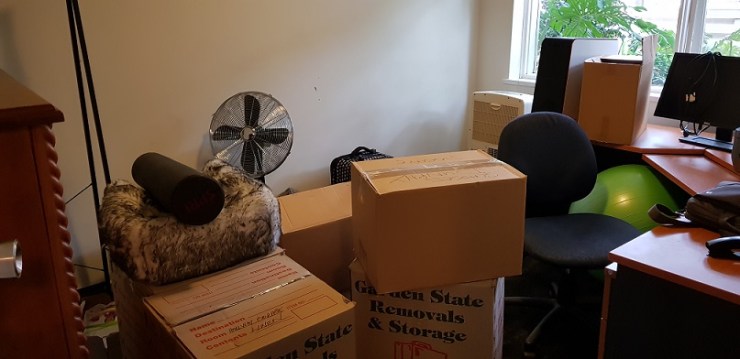
I have boxes that need lifting to the top shelf in the wardrobes: they are not hurting anyone sitting on the floor and that is where they are staying until someone better able to do it visits! Yes, it is tempting, but I’m NOT doing that to myself! Stick to your rules! Some of us are all too susceptible to striving to be “normal” and do what we used to be able to do. That is not a good idea! My study looked like this for several days (don’t tell anyone, but it still looks very similar) but it isn’t hurting anyone and I stay in one piece physically.

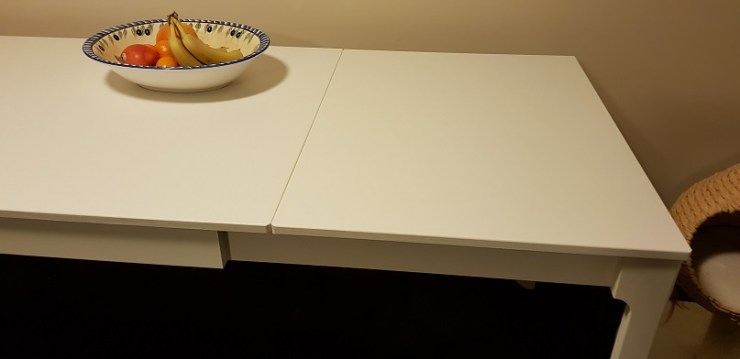
I ventured, for the first time EVER to Ikea and bought a small dining table and chairs that I assembled all by myself! This is a terrible photo, but I am proud I survived the move well enough to do this! It is an extension table, ideal for apartment living, so was more complicated than a straight table.

While unpacking, I came across this poem. Some days, like moving day itself, stuff just has to be done. But afterwards? Keep this in mind!

“Dust if You Must” ~ Rose Milligan

I painted my nails instead of dusting!

Last thought – amazing the things you find when you unpack stuff.

Here is me in a Melbourne publication in 1998.

If You Don’t Have Cancer, YOU Can Help Fight Cancer

Most of us know someone touched by cancer. I personally know four: two of my best friends, one of my sister’s best friends, and a former work colleague. All are cancer survivors due to the dedicated work of researchers.

The Cancer Council is undertaking a major study and needs your participation. Help your family and friends by helping the Cancer Council. I’ve participated. It is really easy.

Please consider helping.

I am very pleased to be granted permission to publish the Cancer Council’s invitation letter.

You don’t have to have cancer to fight cancer!

Cancer Council’s Australian Breakthrough Cancer Study aims to recruit one of the largest Australian research groups ever to help scientists uncover new risk factors for cancer and other diseases.

We need 50,000 Australians to help us to investigate how our genes, lifestyle and environment affect the development and treatment of cancer and other diseases. We will build a large set of health related information essential for making breakthroughs in disease prevention and treatment.

You can take part if you are:

The study has been designed so that you can take part at your convenience. Questionnaires are completed online. As we will need a sample of your saliva for genetic analyses, a saliva collection kit will be mailed to you, which you return to us by free post.

Please go to our website to sign up: https://www.abcstudy.com.au

For assistance, contact us on 1800 688 419 or info@abcstudy.com.au.

Please pass this information on to friends and family who might be interested.
Thanks for your support,

The ABC Study Team

Cancer3

Doctors and Exercise

I last wrote about incidental exercise, but what about a more structured approach to exercise? Many of us with chronic conditions would benefit from exercise. Most of us also probably have doctors in our lives, either general practitioners or specialists (called consultants in some countries) such as a rheumatologist.

Over the Easter weekend an interesting report appeared in the Medical Journal of Australia, “Exercise: an essential evidence-based medicine”. Naturally, I was excited to see exercise receiving coverage in the medical media!

Regular physical activity is highly beneficial for the primary, secondary and tertiary management of many common chronic conditions. There is considerable evidence for the benefits of physical activity for cardiovascular disease, diabetes, obesity, musculoskeletal conditions, some cancers, mental health and dementia. Yet there remains a large evidence–practice gap between physicians’ knowledge of the contribution of physical inactivity to chronic disease and routine effective assessment and prescription of physical activity.

There was a similar report last year out of the UK, “GPs in England ‘unconfident’ discussing physical activity with patients – report”.

Now a nationwide study has revealed that 80% of GPs in England say they are unfamiliar with the national guidelines, and more than one in seven doctors say they are not confident raising the issue of physical activity with their patients.

“Many people have described [physical activity] as the most cost-effective drug we have, yet we are not implementing it properly,” said Justin Varney, co-author of the research from Public Health England (PHE). “This is as appropriate as having a conversation about smoking,” he added.

The medical advice I was given when I became sick was, literally, “Get some exercise.” Not how, what, when, frequency, intensity – just “Get some exercise”. As we know, I did better than that, I went and got an exercise qualification. After that, I asked my rheumatologist what weight he thought it would be safe for me to lift on the leg press, without negatively impacting my condition. His response? “I have confidence in you, you’ll work it out”. Which, in my case given my qualifications and experience, is fair enough. To a patient that is an exercise novice, I know my doctor would not have said that particular phrase. He and I have known each other quite some time now and have a very good patient/doctor relationship. I wouldn’t be writing this article if he had not set me on the exercise path in the first place. I share these conversations to provide real world examples of the above two articles.

Exercise is not a discipline many doctors are trained in, which is fair enough – they can’t be experts in everything and I need my rheumatologist to be an expert in rheumatology! Apart from anything else, a medical specialist would be a very expensive personal trainer. I really do not want to pay his medical charge rate for exercise advice. Look at it this way: a specialist or general practitioner may also send you to a physiotherapist, but do you expect that doctor to BE a physiotherapist? No, you don’t. So we should not expect our doctors to be able to write us a tailored exercise program either.

A member of a chronic illness support group today shared a similar experience, having essentially been told to “figure it out” by one of her doctors.

I recently wrote an article titled “Preventing Tomorrow’s Pain”. I didn’t really write it – I recorded a video. NOW, some time later, when I look back at that video, I can clearly see the improvement in my demeanour/attitude before I walk (after sitting in a conference all day) and while I am walking. Yes, I was pain free the next day and I swam 1,000 metres.

If your doctors don’t mention exercise, raise the topic with them. Really, your doctors don’t need to be exercise trainers, they just need to reassure you and encourage you that exercise will help you manage your conditions. They need to give you a medical clearance to undertake exercise. People like me can do the rest.

The above two articles, from opposite sides of the world, provide clear evidence that just because your doctor may not have mentioned exercise does not mean exercise should be ignored. Exercise may be the best medicine for you, just not mentioned by your doctor. Another contact told me when she offered to do exercise, her doctor was so surprised and said “You’re prepared to do that?” giving my contact the impression maybe he’d just given up over time trying to get patients to exercise. Doctor was very excited, patient exercises and her body does not “turn to concrete”. On a side note, I love that phrase, as it explains so well how many of us can feel if we don’t MOVE!

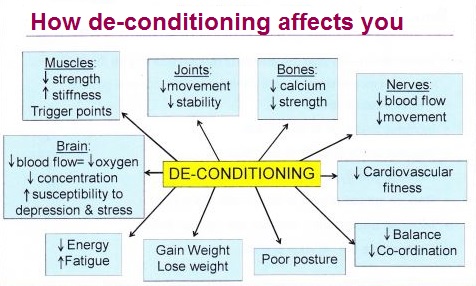
I use this graphic often: this is what happens if you don’t move. No, you don’t have to be lifting weights, start with simple stretches. Just MOVE it!

de-conditioning

Patients can be reluctant to try exercise as medicine. After all, instinctively we know pain is a warning signal and we believe rest will make it better even though science shows the opposite is true more often than not. We may fear those first few painful steps. A friend said the other day, “the cave you fear to enter holds the treasure you seek”. This, I feel, applies to exercise for so many people. We want the treasure: minimal pain, to be free of opioids, regain functional movement and retain quality of life. The cave is exercise and movement.

You may be reading this because you are searching for a solution. You are researching, perhaps. Do not be afraid to enter the cave. Ask your doctors, raise the topic of exercise with them. If they raise it with you, listen to them. Bear in mind the “how to” of exercise is not their specialty.

If you are ready and willing to try movement as medicine, call me or send me an email.

This article constitutes general advice only and may not be suitable in all situations. You should always seek a medical clearance to undertake exercise if you have medical conditions. Always apply the pain management principles of pacing when starting an exercise program.

Incidental Exercise

Never underestimate the value of incidental exercise. For many years 10,000 steps a day has been considered a desirable minimal level of daily activity for health. I’ve shared the video below in other articles, about the dramatic drop in activity from our active past to our now relatively passive present. Here it is again as a reminder!

I love that video because it illustrates so well the change in how we live. Our bodies were designed for the active past lifestyle but too many of us live the passive present depicted.

Back in 2014 I participated in the Global Challenge. Looking at the website for the 2018 event, I see it has changed since 2014, but the objectives remain the same. This is an annual event to encourage office workers particularly to get out and about and moving. I am proud to say I won all the trophies available, despite some challenges such as ending up on crutches due to a very, very grumpy knee.

2014 was the year I found out I was sick. Looking back, what I find interesting was my actual steps per day in early 2014, compared to that recommended steps a day number of 10,000. We received our pedometers well before the event started and several of us started wearing them to see how much of an improvement was needed. I found I was walking approximately 2,500 steps a day. I was shocked, as I had a history of being active, but, as they say, “life happened” and I had found myself in a very inactive phase.

To paint the picture of my life at the time, I was a senior manager with a company car. In the morning, I would walk out my back door, jump in my car, drive to work, park in the basement, take the elevator up to my floor, sit in my office or meeting rooms all day, at the end of the day repeat the journey in reverse. At home I was helping children with homework, cooking dinner – there was little time for me to take care of myself. I should have made the time!

Now I deliberately use every opportunity to clock up a few extra steps: my kyBoot shoes definitely help. Without the heels I can decide, weather permitting, to walk an extra 1,000 steps down the road from my office before catching the tram.

The photo at the top of this page was taken on just such a day recently. It was a beautifully sunny end of the day, not too hot, the trees provided such a pretty filtered sunlight effect and the evening birdsong was a lovely musical accompaniment: I really enjoyed just de-stressing from the office by stretching my legs.

I am extremely lucky in that the tram line goes directly from my work location to my home location with many stops along the way. I can easily walk part way, tram part way. Not everyone has such a convenient transport situation.

If you drive to work, is it possible to park a little further away from work? That isn’t possible for me, on the days I do drive to work my only parking option is the staff car park. This is one of the reasons I prefer to take the tram as it gives me more options for incidental exercise.

Cycling to work is great exercise already: my knees don’t like cycling, so it is not an option for me. Luckily my body doesn’t object to walking in any way, which is one of the reasons incidental exercise is so important to my welfare and the management of my rheumatoid arthritis and damage in my lumbar spine.

How many of us travel to the gym or the pool, to diligently undertake exercise, in our car? My swimming pool is only 1.5 kms from my home. I have reached the point now where walking 1.5 kms is easy. One issue I have to be careful of is exposure to the sun, so I can only do that walk weather permitting. I also need to be careful not to overdo it. I am well aware that a three kilometre walk and a swim may send me into the #spoonie Boom/Bust cycle if I am not careful. Pacing is paramount. My gym is located at work: I do the same incidental steps as on a normal work day.

I walk to my general practitioner’s clinic rather than drive.

As I am a person with chronic health conditions, I don’t get to 10,000 steps on a daily basis due to the energy/lethargy issues that go with my conditions. Yet. I am slowly building up and each month I am more active that the previous month.

Look at your daily routine and determine what adjustments you might be able to make to increase your level of daily activity. I am a firm believer that frequent movement is better for our bodies and our health than being stationary all of most days then working out like mad in the gym for 45 minutes maybe three days a week. I was very happy to have my belief confirmed when I did the Pain Management Program! The reality was brough home to me more recently when I spent a day in the Emergency Department (why is a story for another day) – my body almost turned to concrete through not moving. I was very stiff after lying on a hospital bed all day.

Yes, I certainly do work out in the gym because resistance training is very important, especially as we mature, but moving as much as possible is perhaps even more important, yet so difficult for many of us to achieve.

I know from my own experience with my conditions, the days I am not working in the office and move a lot more I get to the end of the day with no stiffness or little niggles anywhere. Days when I am more stationary I will end the day in discomfort. Not pain, but discomfort. Move more. Movement is medicine has become my mantra.

This is an edited version of an article I first wrote for Kybun.

Four Simple Tips

Sunglasses

I wear glasses. I also have prescription sunglasses. Eye protection is important and the Cancer Council has eye protection advice.

One problem with prescription sunglasses is situations where the ambient light changes instantly. Such as driving into an undercover car-park (work, supermarket). I go from protecting my eyes from the sun to not being able to see and risking poor Benji’s front guard.

I have found transitions lens are not ideal as they don’t actually go dark enough while driving, due to the windscreen reducing activation.

Very annoying. I found a solution. Sunglasses that go over one’s vision glasses.

Just like this.

No, not as much of a fashion statement as my prescription sunnies, but I can whip them off as the car-park boom gate opens. No fumbling around badly/madly to actually change glasses while also trying to change gears.

Opening Jars

Many people with chronic conditions find they lose grip strength. Grip strength is actually an interesting health metric.

Grip strength is related to and predictive of other health conditions, although the relationship is not stated to be causative [4,8]. Normal hand grip strength is positively related to normal bone mineral density in postmenopausal women, [9] with some researchers suggesting that grip strength be a screening tool for women at risk of osteoporosis [10]. Longitudinal studies suggest that poor grip strength is predictive of increased mortality from cardiovascular disease and from cancer in men, even when factors of muscle mass and body mass index are adjusted for [11,12]. Hand grip strength is negatively associated with physical frailty even when the effects of body mass index (BMI) and arm muscle circumference are removed [13]. Researchers have suggested that the factor related to frailty and disability in later life is the manner in which muscles are used, and this can be measured by hand dynamometry [13].

Source: NCBI

The scientific community, while clearly finding grip strength interesting to investigate, are not around when I need to open a new jar of marmalade. This wonderful little gadget is a life saver.

Can opener

As much as I resisted buying it because doing so made me feel old and decrepit, it is a marvelous little aid in the kitchen. I got it from one of those kitchen shops, I don’t remember which one. I can confirm these work brilliantly and I have yet to find a top that didn’t fit.

Vacuuming

Bending, technically flexion of my lower spine, is not something my back likes. My back reminds me of this in no uncertain terms every time I change the linen on the bed. Vacuuming is something that can result in us looking more like a cashew than correctly hinging at the hip.

I got myself an upright vacuum cleaner.

Upright the top of the handle almost reaches my armpit, maybe 5 cm short of my armpit. I’d measure it, if I had a measuring tape! Suffice to say it is much easier to stay upright when using this style of vacuum cleaner. Mine is a Shark, but I am sure there are other brands around. It also has fantastic suction, good for all the cat hair I invariably have to vacuum up every two days. Best of all, it wasn’t prohibitively expensive.

It has just occurred to me how to solve my linen changing problem – get a bed I can raise up to a height that allows me to stand upright! Not a lot of those around that don’t look like hospital beds though. But it is a thought! Seriously, I am going to focus on hip hinging when I do the bed.

Scalp Health

As I described in EXTRA Slip, Slop, Slap Needed, medications have resulted in skin issues for me. I know others suffer similarly. My situation does not exclude my scalp and I have a prescription lotion to apply. Entirely unrelated, my hairdresser sold me some leave-in spray to provide protection to my hair from the heat of hot rollers and hairdryers. It was suggested I could just use this as conditioner.

Interestingly, now that I no longer use conditioner in the shower, which of course actually gets on the scalp, I am using the prescription lotion far less frequently. Maybe once a month. It seems that in my case, even though I rinsed to the nth degree, conditioner may have been an irritant. Now using a product that only goes on the actual hair, I have seen a marked improvement. This may not be a solution for anyone other than me, but I thought it worth mentioning.

Yes, I know – my reflection is in picture of the bottle. I’m a personal trainer, not a photographer!

What simple tips can you share from your experiences?

pancakes

The Nutrition Conundrum

“We are what we eat”, is a saying we have all heard, probably told ourselves or others the odd time or two over the years.

We have a plethora of diets in the marketplace. I say marketplace because generally someone is making money out of the various diets. Over the last month or so I have been astounded at the COMPLETE opposites out there.

I watched a couple of videos of lectures where it was “proven” (?) we are herbivores. We should never eat meat.

Then I have read and watched other qualified people swear we are carnivores, just live on meat.

Both sides all very convincing presentations, I have to say, in isolation.

We have LCHF (low carb, healthy fat), Atkin’s, Dukan, Paleo – the list goes on. Although not my usual reference material, Wikipedia does have a LONG list of diets.

It is 2018 – you’d think by now we’d have a consensus on what we should be eating! We’ve been to the Moon, we can do heart/lung transplants, but we can’t decide what to eat?

Then I came across this article, “The Last Conversation You’ll Ever Need to Have About Eating Right“. The opening paragraph echoed my thoughts beautifully.

It’s beyond strange that so many humans are clueless about how they should feed themselves. Every wild species on the planet knows how to do it; presumably ours did, too, before our oversized brains found new ways to complicate things. Now, we’re the only species that can be baffled about the “right” way to eat.

Well, we don’t see lions or sheep or elephants debating about what to eat, do we?

Time recently published “There’s No Such Thing as a Single ‘Best’ Diet“, a roundup of recent findings.

The estimated 45 million Americans who embark on one of these eating plans each year often do so to lose weight — a highly personal process that can lead to various results. One person finds success cutting carbs. Another swears by going vegan. A third fills up on healthy fats. Each one believes she’s they’ve found the elusive secret to weight loss.

An ever-growing body of evidence, however, suggests there’s no such thing as a single “best” diet — and that nutrition is a whole lot simpler than our fascination with fads would suggest.

The edit above is mine – removing gendered pronoun! Basically, the core of a lot of the diets is the same – the proponents tinker around the edges and give it a new, attractive, (dare we suggest profitable?) name.

Yes, too much sugar is bad for our health – here’s what the science says” is the final article in a very good series about sugar from The Conversation.

The World Health Organisation recommends limiting “free sugars” to less than 10% of our total energy intake. This equates to around 12 teaspoons a day for an average adult.

But more than half of Australian adults exceed this limit, often without knowing. “Free sugars” don’t just come from us sweetening coffees and teas or home-cooked dinners; they are added by manufacturers during processing.

It’s often a surprise to learn just how many teaspoons of sugar are added to popular foods and drinks: (My note: check out the graphic – scary stuff).

I’m not even going to address the current war of words about the sugar lobby in the old days putting all the blame on fat, or the debate about the cereal lobby essentially “controlling” the establishment of government dietary guidelines. Google it, there is plenty of content relating to those debates online.

There is no doubting there is money being made in trying to encourage people to eat a specific way. One particular high profile diet promoter appeared in my Twitter feed yesterday, complaining that a criticism of his diet “… threatens my business model“. Not a skerrick of concern expressed about client HEALTH, or actually addressing the criticism in any constructive manner. Nope, “business model”, I.E. MONEY, was the expressed concern. Interestingly both tweets were deleted shortly after: very disappointing as I wanted a screen grab!

As I followed that black line up and down the pool yesterday, I tried to put myself back in the earliest days of human existence. I didn’t want to be influenced by the massive amounts of “EAT THIS WAY” media reports and yes, I know the Australian Dietary Guidelines inside out. I wanted a blank slate.

I live in a cave, which my little wandering band of humans was lucky enough to find. Do I have hunting weapons yet? Painting my mental picture, spears appeared leaning against the front door rock. Yes, we had a front door rock! How do you think we kept the bears out at night? Are we pre or post fire? I couldn’t remember, while swimming, if spears came before or after fire in the history of mankind’s development. If I’m pre-fire, that means raw meat, something I’m not a great fan of. Oh, well.

Looking out of my cave, what do I think I am likely to see that I can EASILY feed on? Fruit probably (seasonal of course). Green, leafy plants definitely. Think wild spinach and silverbeet type plants.

BUGS! Oh, yes, plenty of bugs! “To feed two billion more people, the world needs a bug diet“. Mind you, that’s if there are any bugs left – humans dislike bugs, we spend a lot of time, money and energy trying to eradicate bugs. Cockroach or centipede for dinner, dear? Of course, there is always “Soylent Green” for the future. If you haven’t seen that movie, get it. No spoilers here.

Meat would actually have been quite hard for my family to get; probably highly prized. We are a small band, including women and children. Wild animals are faster than our little legs, moving in large herds. They are very good at dodging our spears too. Fish aren’t much easier to get and birds? OMG, those darn things FLY! Roast wild turkey is not on the menu this week! Oh, I forget – have I got fire yet? Maybe not roast.

Venison

I have read research showing ancient societies ate a lot of meat but that little evidence of meat eating was found in the analysed remains of different peoples in a different location. Could this be a question of timing? Herds of animals move – maybe these second group of people had no access to meat for a time before their untimely demise? Was it an area not well populated by animals? Lots of questions.

So what do I think I am eating in my cave days? ANYTHING I can get my hands on that keeps me alive! There is no bread, ice-cream or pastry. I am probably gathering nuts and grains when in season. Just because we wouldn’t eat raw grains NOW doesn’t mean we didn’t then. Maybe we soaked them to soften them, I have no idea. But if I am hungry and there is a patch of grains ripening, I’m likely going to eat them.

Yes, if I can get meat or fish or birds, you bet I’m going to eat meat.

What about food storage? Squirrels store nuts, why would humans not store nuts. Depending on location, perhaps fruits could be sun dried or dehydrated for storage.

I’m an omnivore. I’m a human. I eat whatever I can get my hands on to stay alive.

The National Geographic has a lengthy but interesting article about research into the evolution of the human diet, “The Evolution of Diet“.

These examples suggest a twist on “You are what you eat.” More accurately, you are what your ancestors ate. There is tremendous variation in what foods humans can thrive on, depending on genetic inheritance. Traditional diets today include the vegetarian regimen of India’s Jains, the meat-intensive fare of Inuit, and the fish-heavy diet of Malaysia’s Bajau people. The Nochmani of the Nicobar Islands off the coast of India get by on protein from insects. “What makes us human is our ability to find a meal in virtually any environment,” says the Tsimane study co-leader Leonard.

Scientists slam the caveman diet – and say early humans just ate whatever they could to survive and reproduce” is another article highlighting the hit and miss nature of stone age eating.

It said hunter-gatherers in cold northern climes would have had an almost exclusive animal-derived diet but those living near the equator would have eaten more plants and fruits.

While early hominids were not great hunters, and their teeth was not great for exploiting many specific categories of plant food, they were most likely dietary ‘jacks-of-all-trades.’

That article points out we’ve changed the nutritional value of the plants and fruits we do eat based on what we deem is “desirable” rather than nutritious.

Yet modern strawberries have been selected to be large and sweet adding: ‘The foods that we’re eating today, even in the case of fruits and vegetables, have been selected for desirable properties and would differ from what our ancestors were eating.’

The other obvious variable is VARIETY (see what I did there?). Due to seasonality and mobility I suggest the variety in our diet would have been far greater than it is now. We ate what was available, when it was available, to stay alive and reproduce. Sure, today we still have some produce seasonality, but generally speaking we can go to the local supermarket and get the same things week in and week out.

Supermarket

So where does all that leave you and I, us sufferers of various medical conditions? Are we what we ate? Maybe partly. What should we eat now that we are sick, trying to get well and/or manage our conditions?

There are medical diets. If you are on one, stay on it.

If you are like me and have calorie challenges as I describe in “Lighten Up to Limber Up“, we have to get the best value nutrition within our NET calorie allowance (given our reduced fuel burn rate). Remember to fuel your exercise, so it is NET calories as described in that article.

I’m not telling you what to eat. I am asking you to THINK about what you are eating. Are you eating what you know you should be eating, or are you eating quick, easy, sweet, fatty, processed foods with little nutritional value? Are you getting adequate iron, protein and other nutrients you need?

Give your body what it needs to help fight whatever condition it is you are fighting. Bugs are optional menu items at this time.

PS: Yes, I enjoyed the pancakes VERY much!

If you need guidance with exercise or nutrition to help you manage your conditions, please Contact me.

Additional References:

Carbohydrates & Cardiovascular disease – by Dr Zoë Harcombe, awarded a Ph.D. in public health nutrition in 2016.

Preventing Tomorrow’s Pain

What I am doing in this video must NOT be confused with pacing up activity levels. I am not starting activity, I have my conditions under control. I irritated my body today, therefore I needed to “stretch it out” in layperson’s terms. I know this isn’t all about my arthritis today either: my lumbar spine damage was certainly reminding me it exists.

Speaking of stretches, yes, I did those too.

Do I feel 100% now? No, I don’t. I’m still a bit tender, but I know I will wake up pain free in the morning.

I am not suggesting this is the right solution for everyone. Part of managing our conditions is about learning what works for us as individuals.