You Look So Healthy!

Yesterday a fellow chronic illness patient shared she was in tears. A friend had told her she looked “so healthy”. So why was she crying? Even she was not quite sure, but several of us put our heads together and discussed the situation.

Tell us we look stunning, beautiful, handsome (men are chronic illness patients too), a fashionista even. Please be careful using the word healthy. If you have a friend or family member who has a terminal or chronic condition, perhaps reach out and ask them what compliments are safe. You want to compliment your relative or friend without using a word that can trigger sad feelings. For some it is the word “healthy”, for other patients there may be other words. Perhaps for a man “strong” maybe a trigger. Men – feel free to chime in with suggestions in the comments section!

If I put myself in another’s shoes, a healthy person’s shoes, imagining I know nothing about being sick, I possibly could think, “What would a sick person like to be? Healthy, that is what my sick friend would like to be“. I can see this imaginary healthy me thinking I am giving positive vibes to my sick friend. When I say “you look so healthy” I think I am being complementary. I am hoping to cheer my sick friend up.

However, for many of us sickies (also known as #spoonies), healthy is a bridge too far – yes some of us MAY go into remission or get close to it, but someone saying we look healthy can be a strong reminder we aren’t – and in many cases never will be again. It can hurt.

The word healthy can play tricks on us too. We can feel like you are doubting whether we are actually sick: that can feel as if our illnesses are being invalidated. One thing we need so much is the understanding of our loved ones. If we feel doubt from you, even though you don’t mean it, it hurts emotionally.

You look SO healthy” can make us cry because we want what we can’t have. No matter how hard we work at accepting our situation psychologically, no matter how hard we work physically at strengthening our bodies to manage the pain (if we can – I am lucky, I can, some can’t), most of us DO NOT like being “sick”. We don’t like not having the energy or mobility we used to have. We don’t like the side effects of the medications we take, or the myriad of potions and lotions we may have to apply. We don’t like having to cancel social events because of a condition flare. I could go on.

In a support group I am a member of I often feel a bit of a fraud – many of the members are much, much sicker than I am. To put that in perspective, this is my list:

  • psoriatic arthritis
  • hyperactive thyroid, multi-nodular goitre, Graves disease (autoimmune)
  • diverticular disease (most of us have some degree of this, by the way)
  • sliding hernia
  • bulging disc, lumbar spine
  • herniated disc, lumber spine
  • arthropathy and hypertrophy of various facet joints
  • scoliosis lumber spine
  • psoriasis

That’s after I’d already lost all the “optional extras” (as one professor put it): tonsils, appendix, uterus, gall bladder.

HEALTHY people will read that list and probably have a reaction along the lines of “OMG, how are you still alive?” Easy, actually, but I’ll get to that! I am one of the healthiest sick people you’ll likely meet and I am well aware of that. That is MY list of conditions – yet compared to many other members of the group, I am in fact “healthy”. I do strength training (I can leg press 160 kg), I swim, I am on NO pain medication. Yet I cannot work full-time, changing the bed linen flattens me, I have mysterious losses of energy unexpectedly, I struggle psychologically to accept I am “sick”. So many chronic illness patients have so much more to contend with than I do.

One member of the group, Sam, suffers spontaneous bone fractures. Can you image that? You are just sitting there, doing nothing, and your pelvis fractures. Or the bones in your feet. That patient cannot go and do what I do, it is just not physically possible for her. Does she look healthy in pictures? Sure – she looks stunningly healthy! Is she how she looks? No.

A new hairdo, a manicure and great makeup can make us feel better, just as it can for a healthy person, yet many of us have a nagging thought in the back of our mind of how long can we manage it? For example, I am losing fine motor control in my hands. My manicured nails are one of my “pick-me-up” techniques.

nail polish

Yet it is taking me longer and longer to do them, trying to keep my hands steady. What will I do when I can’t do it any more? Pay to have it done? Maybe not – there are all those hidden, unrecognised costs of being sick, you see. One of the reasons I have a partial plate rather than dental implants is even healthy people have difficulty with manual dexterity as they age. Manual dexterity is important in caring for dental implants. With psoriatic arthritis I wasn’t going to take the risk.

I’ve mentioned before the time a co-worker told me not to worry about the calories in a mini-muffin, I’d work it off in no time – ummmm – no, I can’t. Yes, I exercise, but I can’t do the level of exercise I LOOK as if I can do!

I asked two members of the support group if they would permit me to use photos of them looking absolutely stunning to illustrate this article. Both declined because the state of their health is not public knowledge – they are concerned about the impact being on a public website such as this may have on their jobs. One in particular is striving for remission and may be able to put all this behind her. I mention this to illustrate how society’s expectations can lead us to hide our conditions, keep it secret. Yet in doing so, we may exert ourselves more than we should and hamper our efforts to get well (or slow/halt disease progression), where that is possible.

Michele Lent Hirsch has written a book about being young, sick and female, “Invisible: How Young Women with Serious Health Issues Navigate Work, Relationships, and the Pressure to Seem Just Fine,” which came out late last month.

The following is an extract from an interview with Hirsch:

MW: Right. In the book you talk about a job where your boss told you to “leave your cancer at the door.”

MLH: There couldn’t be really a worse reaction. And a lot of the women I’ve interviewed have talked about how they work, just like I did in that job, harder and longer hours just to compensate for what seems like people treating them like they’re not a worthy employee anymore.

And what’s especially horrible about that is, again, women are already getting paid less, getting treated more poorly at many workplaces across this country.

That kind of behavior is only going to enforce women trying to hold it all in.

Patients working longer hours, as Hirsch describes, to “prove” they can cope, are NOT going to be spending the time required to keep their bodies healthy and their conditions under control. They are going to be exhausting a body likely already energy depleted. Remember how I said I am one of the healthiest sick people? But I don’t work full-time, let alone work extra hours because I put my health first.

To my chronic illness readers, please share other phrases you find distressing in the comments. I especially invite men to share, as I don’t have much experience of being a man.

EDIT: A reader mentioned to me “Oh, but you’re fine now!” is something they describe as “That’s the killer”. I agree. No, we are not fine. Even if we are lucky enough to go into remission, we can never stop monitoring, never stop doing all the things that got us to that point without risking a relapse.

A friend of mine is this weekend taking part in a huge walk for Oxfam. Seven or eight years ago she could barely walk to the end of the street. With the right medical treatment her condition is now under control to the point, like me, she looks perfectly normal and does lots of perfectly normal things – like walk for Oxfam. But no, neither of us are “fine now”. We are forever vigilant and can never stop our self-care.

October 28, 2021: Updated with current information.

Codeine or Movement? Which Will You Choose?

There are patients whose conditions have progressed in ways many of us cannot imagine, despite their best efforts and the efforts of their medical teams. One such patient is Sam Moss. In 2010 Sam was diagnosed with rheumatoid arthritis, but that was just the start of her medical journey: she has since been diagnosed with other conditions.

12 months after my leg broke, my right femur was also showing signs of disease on MRI with bone marrow involvement so a rod had to be placed in that to prevent an imminent break and repeat medical emergency like we had with my femur break in 2014. I am constantly dealing with multiple foot fractures and none of my broken bones in my legs or feet will heal.

Source: My Medical Musings

Sam now runs a support group for those facing medical challenges, Medical Musings With Friends. It is a closed group, very supportive. If you would like to join, click the link. Membership of the group is also a rapid introduction to how severely some conditions can progress, even with the best medical care and patient tenacity in the world.

My objective, for myself and my clients, is to slow condition progression and manage pain where possible. Yes, sometimes our medical conditions do take control as described above, but many of us, in collaboration with our medical teams, can control our conditions, be the master of our medical destiny. We, as patients, want to ensure we don’t give those medical conditions any head start if we can help it. If, like me, you are lucky enough to have a choice, don’t waste that opportunity – there are many out there who would be very grateful to be in our situation. Chronic condition severity is a spectrum and we are all somewhere along that spectrum trying to do the best we can.

I support the recent rescheduling of codeine. I definitely think the change over could have been better planned, as it seems many where left without codeine OR any alternative. Those who ensured they had prescriptions found there was no stock available in pharmacies.

In the past I have used Panadeine Forte after having teeth extracted. I’ve used Tramadol (another opioid) about three times a year. I’m not against codeine per se, it has a place in medicine. Taken under medical supervision when appropriate it is a useful drug. Self-medicating with over-the-counter supplies regularly can lead to problems.

There is a reason why morphine and its equivalents feature on the World Health Organization (WHO) list of essential medicines, along with oxygen, steroids and penicillin. These are virtually irreplaceable in certain situations, including severe burns, postoperative recovery, cancer pain and palliative care. But there is no additional benefit of opioids over simple drugs like paracetamol and ibuprofen when taken for toothache, back pain, migraines, asymptomatic kidney stones, muscle sprain, fractures and many other conditions associated with chronic pain. Here, opioids are not just unhelpful but they can also worsen pain, apart from the fact that they are addictive and fatal. Therefore, it’s best to avoid them for all but a narrow range of conditions that you should discuss at length with your doctor.

Source: Ranjana Srivastava, The Guardian

Early in my journey, one of my problems was I was VERY stiff and sore when I got out of bed in the morning. I had two choices, A) try a pain killer of some sort or B) move. Back then I really had no idea what I was doing, I was on a learning curve. I found very quickly if I walked, even as little as a few dozen steps, the pain and stiffness subsided. Clearly, for me at least, moving worked.

Now, some years later and professionally trained, I am much better at linking my discomfort levels to what I have, or have not, been doing. This last week has been a classic. For whatever reason I had several days when by six o’clock at night I was out of energy. I mean totally out of energy. I’d arrive home from work and flop on the couch and be unable to move. Which, for me (and many others) is a very bad plan. The stiffness and pain returns. Just getting up of the couch, I was stiff and had to straighten my back. Not how I like to be. As anyone with chronic conditions knows, sometimes there are no obvious reasons for “flares” they just arrive unannounced. I had my thyroid function and iron levels checked, they were fine. I had again had a change to my routine, which my conditions do not seem to like very much, so that may have been the trigger. While understanding why is helpful to prevent future flares, I haven’t managed to detect a pattern (flares are rare for me), I just needed to get back on the horse.

Kyboot

When I ensure I move enough and keep my strength up I am pain free and have very little, if any, stiffness. A little discomfort every now and then if my lumbar spine reminds me “Hey, I’m here, don’t forget I’m here”. I reassure my facet joints I haven’t forgotten them, do some stretches and core strength work and they settle down.

Best-practice recommendations now are focused on self-management and self-support: moving away from opioids, prescription or otherwise, and focusing more on allied healthcare and other non-drug methods to minimise pain. Pain Australia has launched a campaign called RealRelief to help people move beyond codeine and take control of their pain. Their foundational idea is that most people with chronic pain can improve their lives without opioids or surgery as long as they are appropriately supported to do it.

The caveat there is the support. Hard to move beyond pain when you are by yourself and suffering.

Source: Making codeine prescription-only was right. Where do we go from here? – The Guardian

No, I do not take painkillers in these situations. I have an edge, of course: I did the PACT program. I know and understand the science behind the recommendations. I recognise it can be difficult for someone without that knowledge and support to resist reaching for the pill packet, which MAY give them some relief in about twenty minutes. I can walk 500 steps and be pain free a lot faster than the twenty minutes it takes the pills to work, without the associated health risks of codeine. I also stress the MAY (give relief). Anyone with chronic pain will attest to the fact sometimes the pain meds just do not even touch the sides.

What if I took Option A and reached for the pain killers instead of moving? What would happen? I’d get worse, that is what would happen. That is the cold, hard truth of it.

de-conditioningIf I reached for the painkillers, I’d then have a foggy head, so I’d lie (or maybe sit) down. I’d be doing nothing to actually strengthen or stretch my muscles or counter any of the negative affects shown above. I would progressively deteriorate over time and be on a downward spiral. Then my quality of life would suffer. Josh, another chronic condition patient, has written a very amusing story about having a couple of beers. Now, Josh is one of those patients I referred to in my opening paragraphs, he has done everything possible yet because of his medical situation he is on some pretty strong stuff. I may ultimately end up in a similar situation, but I’m going to do everything in my power to delay such a situation. I also do NOT see getting worse as inevitable for me. I like being able to have a nice wine or two over dinner or with co-workers on a Friday night without sounding smashed (to quote Josh’s wife).
I like driving, dining out, dancing and swimming. I want to keep my body as functional as possible for as long as possible. Don’t you?

driving

Once we start on that downward spiral, we find we have so many restrictions. Such restrictions may include:

  • Limited driving ability (no drugged driving, for example)
  • No alcohol
  • Progressive physical deterioration due to inactivity
  • Loss of social interaction
  • Reduced working hours or incapacity to work
  • Depression and/or anxiety

No, it is NOT easy to start the movement momentum. Sometimes it is not easy to keep it going. Yes, it does require willpower and resilience. Yes, it requires mental strength to take those first steps in the morning or after sitting for too long.

Yes, as a community we need more support. Refer again to the above article: “as long as they are appropriately supported to do it“. I was lucky enough to be accepted into the PACT program but there are not enough of those programs available yet and there are waiting lists.

Think about where you want to be in five years time. Do you want to have a body that can support the quality of life you desire or do you want to be staring down that spiral?

Talk to your doctors, ask them if movement as medicine is an option for you.

“It’s [resilience] vital to the process,” he explains. “I’ve seen patients who, under the circumstances, might want to just give up, but they don’t. In fact, they thrive. Their resilience helps them cope and keep moving forward to find a solution. They say, ‘I’m going to make it no matter what.’”

“We used to put patients on bed rest for pain. Not anymore,” says Dr. Tom. “Staying physically active is critical for pain management, as it releases endorphins which can improve your mood and even ease pain.” People who don’t move can get tight muscles, joint pain, muscle strain and spasms, which can worsen existing pain.

Source: 4 Resilient Ways To Cope With Chronic Pain

If you’d like to give moving a try, click on Contact and send me an email.

And the winner is…..

In compliance with the terms and conditions of my recent competition, today is the day I am required to announce the winner. Sadly, I will not be announcing the winner.

Earlier this week I did have an initial consultation with the winner of the competition. During the health evaluation I took her blood pressure: it was higher than I would have liked. My winner has an autoimmune condition, antiphospholipid syndrome also known as Hughes syndrome. Exercising regularly is one of the treatment recommendations but this is also a condition that results in thickening of the circulating blood and carries a risk of blood clots.

As a result of our consultation and discussion, my winner made an appointment to see her GP and is now undergoing tests. Clearance to exercise has been revoked pending the medical investigations.

While on one hand I feel a little dejected that the situation has turned out this way, on the other hand I am very glad the competition led to the winner seeking the medical attention required.

Due to the situation and the timing, I will hold any further action until the medical investigations are completed and the winner has had time to consider what she would like to do. In my view this is the appropriate course of action given the unusual circumstances.

Chronic Illness Writings by Other Authors Plus a Book

While I strongly advocate exercise where at all possible, there are many other aspects to suffering from chronic conditions. Today I am sharing some of the non-exercise related writings I have been reading recently that I hope readers may find interesting and helpful. We are all on a road, treading a path – sharing our journeys can be very worthwhile. Also –  you deserve a break from my lengthy ramblings!

Sam Moss is a fellow Australian experiencing far greater disability than I am – we are at opposite ends of a very wide spectrum. Sam had a very successful, award-winning career until she was unexpectedly forced to medically retire.

Sam recently wrote a terrific article I highly recommend, Is Acceptance Just Resignation? Readers may remember the ‘A’ in the PACT pain management program I attended. The ‘A’ was for Acceptance. Sam draws a lovely distinction between acceptance and resignation. Sam builds on that article in a follow-up, Loves and Losses. I do like the 5 G Change Model.

The second piece of writing I am highlighting today is They’re called liars and malingerers because they face pain you can’t see by reporter Julie Power about a longtime Twitter co-follower. Andrew did not fall sick or inherit a condition like so many, he was the victim of a car accident. While many of us are able to at least produce blood tests, MRIs or other diagnostic test results to substantiate our situations, Andrew cannot and has suffered as the headline indicates. Some chronic condition patients suffer similarly, such as fibromyalgia patients. Chronic Fatigue Syndrome (Myalgic Encephalomyelitis) used to be similar – I have a very dear friend who had CFS/ME back in the days when many still thought it was “all in the head”. Now research is proving it is very definitely real. Andrew’s experience has been complicated by the legal issues surrounding seeking compensation for his injuries, but the negativity he faces is something many with chronic diseases face.

Harmoni Raie is another Australian chronic illness patient who really struggled with the mental health aspects of learning to live this new spoonie life. Harmonie recently wrote, Change Begins With Us – Be A World Changer! which is uplifting.

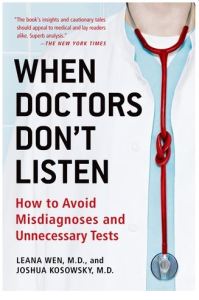
When Doctors Don't Listen

Lastly, there is a book I spotted in the work library one day, When Doctors Don’t Listen: How to Avoid Misdiagnoses and Unnecessary Tests. I am in the process of reading it and I am finding it extremely interesting. Although written in the context of the USA health system, there are lessons for Australian patients and Australia’s health system. It is written by doctors, expressing concern about the modern cookie-cutter, recipe approach to medicine. My doctors are all great, very good listeners. The fact I am reading this book must NOT be taken as a criticism of my own doctors, I am reading it out of interest!

Don’t give up on the exercise though! Call, text or email if you’d like to discuss how exercise may help you.

Radioactive Iodine – Three Months In

Three months ago I swallowed a little radioactive iodine pill. I did this because my hyperactive thyroid would not behave. Time to share a progress update!

I had no negative initial responses to the treatment at all, which was great (refer to the first link above for details). I did have a bit of a roller-coaster time though for a few weeks, as between the time I stopped my usual medication and the point where the radioactive iodine started to do it’s job, my thyroid took the attitude of “Free at last! Now I can do as I like!”. And it did. I do stress, every case is different – this is my personal experience and may not apply to anyone else.

Initial Reactions

Initially, I was pretty OK. By the time I had been off my usual medication for three weeks, though, I was not so physically fit! Remembering too, that my thyroid was already being naughty before I went off the medication, which I had delayed because I was attending the Pain Management Centre – so Ms Thyroid was already champing at the bit to let loose!

Prior to this change of treatment I had been building up my weights, slowly but surely. My target at the time for my leg press was 160 kg, I was sitting on 140 kg. No, not 1RM (one repetition max), that was sets. An amusing aside: a co-worker half my age and as healthy as had recently started a new training regime. We were chatting and I happened to mention the 140 kg. Knowing my medical challenges and age and gender he stared at me.

“That’s your 1RM, you mean?”

“No, three sets, ten reps. My normal. I’m aiming for 160 kg”, I replied.

“I’m lifting 140 kg”, he said, sounding somewhat demoralised.

He took that situation as inspiration and I believe his 1RM is now 275 kg. I don’t train him (he is healthy, doesn’t qualify!) but I’m glad I had a small part in spurring him on to greater heights!

Up to Two Months

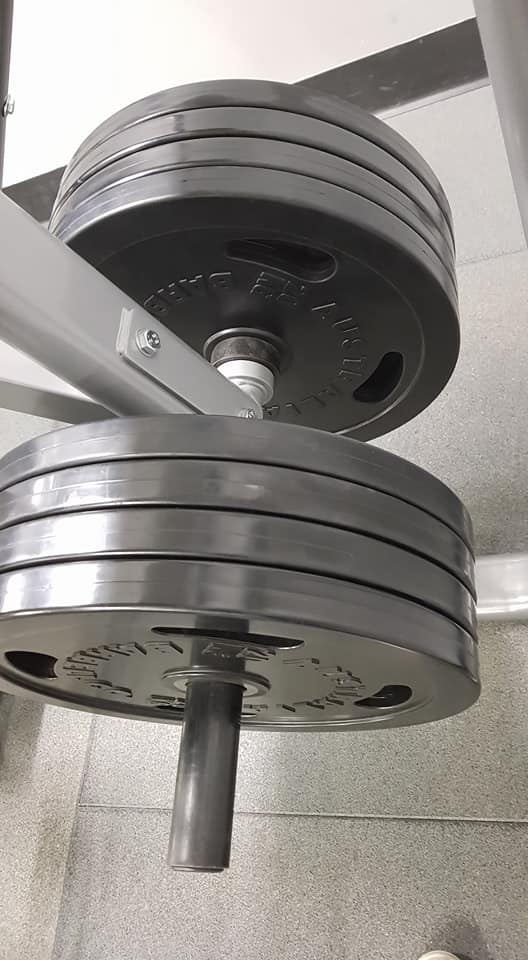
Back to the topic at hand, my Ms Thyroid. My epsiodes of feeling I was going to pass out and having to lie down were becoming more frequent. I felt unwell all the time. A call to my endocrinologist and I was put back on my medication at half strength for seven weeks. Even so, when I hit the gym, I was made acutely aware my muscles were suffering. I did my usual, loading 100 kg onto the leg press for a warm-up set. I could not move the plate. Not an inch. Took 20 kg off (which meant simply removing the 10 kg weights, I clearly wasn’t going to be adding any more). 80 kg I could lift. That was a 60 kg loss. We won’t even talk about leg extensions – that was equally depressing.

It wasn’t just the weights. I had been swimming 1 km sessions. No, for healthy people that isn’t a lot, but I have to watch my shoulders. I had to stop at 500 metres. Just no oomph to keep going and I am very, very cognisant of the Boom/Bust cycle – to be avoided at all costs!

Third Month – 70% increase!

Never fear! All is not lost! It gets better!

At the two month mark I had the usual follow-up blood tests and consultation with my endocrinologist. Bloods were in the normal range and I stopped taking the medication at that point.

Shortly after that, so within the last four weeks, I got back up to my 140 kg leg press. For the last two weeks I have done 160 kg. so I have recovered my 60 kg regression and gained extra!

After that I celebrated. Yes, I had a protein shake as well, but the fresh fruit salad tasted wonderful!

My swim is also not a problem.

At this particular point I have increased my overall activity levels by 70% from where I was prior to the radioactive iodine treatment.

Before the radioactive treatment, working in an office three days and then one whole body strength workout a week and one swim, plus stretching and walking daily, was the limit of my physical activity without heading into a boom/bust cycle.

For the last three weeks I have done two strength workouts and two swims per week. I’ve dropped the duration of each session and am slowly building each back up. My aim is to double what I was doing. 30% to go!

My pre-treatment strength session was 60 minutes. I dropped it to 40 minutes, but did two sessions. I’m now up to two session of 50 minutes. I dropped my swimming to 700 metres, but did two a week instead of one session of 1 km. Now I am at one session of 900 metres and one of 800 metres.

My hair isn’t falling out and I am sleeping better. All great stuff!

I’m a very happy little Vegemite. For overseas readers, Vegemite is something we eat. Americans all hate it!


Prognosis

Some patients who undergo radioactive iodine treatment for hyperactive thyroid ultimately become under active – i.e. hypothyroidism. That is not expected to happen with me, which I am very happy about, but equally I am aware it could happen.

The full effects of radioactive iodine treatment materialise, generally, between the three and six month mark of swallowing that little pill. Therefore I don’t know if I can expect more improvements or if I’m maxed out at this point. I am feeling great, so if this is it, I’m happy.

I am finding I have to watch my weight more carefully. Then again, I have been socialising more than I used to because I feel so much better and have more energy. Also given my increase in strength training, there will be some body composition changes happening. I’m monitoring, not panicking. Yet. My clothes still fit!

Summary

I am very happy with the results. Apart from the short crappy period described above, the whole process was relatively straightforward, painless and easy.

If your endocrinologist recommends radioactive iodine treatment for you, based on my personal experience it is a good treatment option.

Every case is different and you should always listen carefully to your medical professionals.

too much chocolate is not self-care

We Need Mental Health as well as Physical Health

As a movement/exercise trainer I write a lot about benefits of physical movement for chronic illness. It is my area of expertise. I am well aware that mental health will affect clients’ motivation to enhance their physical health. Recently I wrote about the financial aspects. As I am a CPA, I’m qualified to write about dollars too.

Today I take a look at mental health. I am not qualified in the mental health field, therefore I refer to those who are. My own experiences may put the advice into context and help you consider whether some support may be helpful or life adjustments may be necessary for your situation.

Queensland Health published 5 steps for making your mental health a priority in 2018 (and beyond) earlier this month. I’m going to talk about those 5 steps in the context of having a chronic condition.

Understand what mental health actually is

This is important. If we don’t have an understanding of what mental health actually is, we won’t recognise when we need support. We already have a physical condition: diabetes, lupus, fibromyalgia, inflammatory arthritis…..the list is very long. Maybe we have more than one condition to manage. Our life may have slowly or suddenly changed and those changes can bring with them depression or anxiety. There can be a sense of loss if a patient has to reduce working hours or give up work entirely. The financial concerns resulting from that life change can bring considerable stress. There are times, especially in the early days, when it can feel like a downward spiral.

I remember what it was like in the early days, when I was not yet on medication as the specialists investigated and the diagnostic process chugged along. It. Was. Tough. I did have faith there was light at the end of the tunnel, but that light seemed to be a tiny speck in the distance at times. Now I can leg press 160 kg – that is a long way from the days when I walked five minutes, three times a day. Not only am I physically healthier, I am also mentally stronger. I feel in control, which I certainly didn’t in late 2014.

Just as our physical health can affect our mental health, the reverse is also true: our mental health can affect our physical health. If we reach a point where we feel there is no hope, then we may stop doing the very physical things that would give us hope and a better quality of life. Sometimes it really is the old chicken or the egg question.

Being mentally well doesn’t mean you don’t experience ‘negative’ emotions or reactions, like sadness, anger, grief or frustration. Similarly, being mentally unwell doesn’t necessarily mean that you can’t experience emotions like happiness or excitement, go to work or school, or have relationships.

Having mental wellbeing means being able to experience all the ups and downs of life and cope with them in a psychologically and emotionally healthy way.

Please read the full article for the clinical definitions and a broader explanation of what constitutes mental wellness.

Cultivate mental wellness

For physically healthy people, this may not be something they have to think about too much. There are mountains of research showing that physical exercise helps maintain mental health. Healthy people are out there playing tennis, running, cycling, gyming and swimming with gusto. Us? Maybe not so much, at least not at first.

We can usually eat right. Sleeping right may be affected by pain.

Another important aspect is finding our purpose – but this may just have been taken away from us: we have to find a new one. If we loved our job, for example, and can no longer do that job, this may affect our sense of purposefulness.

You can find more resources about looking after your mental health on the Head to Health website. This Australian Government website focuses on four broad aspects of life that can impact your mental wellbeing: physical healthconnectednesspurposeful activity, and feeling safe, stable and secure.

Find ways to decrease stress

This is something I have written about in the past.

Queensland Health says:

Stress can impact anyone and can affect your mental and physical wellbeing. While a little bit of stress can be a good thing, helping you to focus and perform well under pressure, ongoing stress is not healthy for your body or mind.

Let’s not beat around the bush – finding out we have a chronic disease IS STRESSFUL! Apart from the medical advice that stress may cause condition flares, which we don’t want, stress can impact our mental health and the vicious cycle starts. It is important for physically healthy people to manage their stress: it is absolutely vital for chronic disease patients to manage stress.

Take time out

Strongly recommend this one. With caution. For anyone with a chronic condition, self-care is critical. Brianna Wiest covers this well in This Is What ‘Self-Care’ REALLY Means, Because It’s Not All Salt Baths And Chocolate Cake. For me, I might want it to be all hair appointments and manicures. Although I did have 20 grams of Lindt chocolate today.

True self-care is not salt baths and chocolate cake, it is making the choice to build a life you don’t need to regularly escape from.

And that often takes doing the thing you least want to do.

So while we do need to take time out (have that manicure, watch a favourite TV program or enjoy a nice glass of wine), because we have to avoid the Boom Bust cycle, we need to be careful not to take so much time out that we sacrifice our very necessary self-care. We can no longer do as much in any given day as we could in the past. We can’t catch up tomorrow, necessarily.

Get help when needed

YES YES YES!!! From my personal experience I recommend talking to your GP early if you feel you are experiencing difficulty coping. Support such as Mental Health Care Plans are available under certain circumstances to help with the costs. Don’t keep soldiering on, support is out there, use it. I find just being able to vent in a safe environment immensely beneficial. Being proactive about our mental wellness is very important at any time: once we are a chronic disease patient it is absolutely critical.

Signs it’s time to seek professional help include:

  • you’ve been feeling sad, down, angry, depressed, numb or generally ‘not yourself’ all the time, for two weeks or more
  • the way you’re feeling is affecting your ability to cope at work, school or in your relationships.

You can start by talking to your GP, a trusted friend or family member who is a good listener, or by calling a helpline like beyondblue or Lifeline. If it’s an emergency and you think your life or someone else’s life is in danger, always call Triple Zero (000) for an ambulance.

Remember that only a trained health professional can diagnose you with a mental illness and offer treatment services.

Other Resources

“You can’t stop the waves
But you can learn to surf.” ~ Jon Kabat-Zinn

The Daily Manic – corporate change consultant and advisor Jayne was diagnosed with life changing illness at the age of 44. She now uses her change management skills to help people slow down their lives, whether that be for reasons of illness or simply because they want to slow down.

The Costs of Chronic Conditions

A Croakey article, “Out of Pocket Costs: a Critical Health Issue to Watch in 2018” floated past my Twitter stream this week.

It is clear that out of pocket costs are a significant health equity and public health concern; a 2014 report by the Grattan Institute stated that:

“High and rising out-of-pocket costs are one reason that a sizeable minority of people avoid health care. The impact is greater for people on low incomes, in rural areas and who have poorer health status and disabilities.”

The article also links to an online survey launched by the Consumers Health Forum of Australia, of which I am a member, “to find out more about the impact of out of pocket costs  to help inform its work on a new Ministerial advisory committee.” I encourage readers to complete the survey.

I completed the survey from a personal perspective. One of the first questions was were the out-of-pocket expenses incurred in or out of hospital and the survey branched based on your response. I made the comment (in the appropriate box) that this was not representative of the ever increasing number of the population suffering chronic conditions. We have out-of-pocket expenses ALL the time, on a weekly, if not daily basis. We have those out-of-pocket expenses in and out of hospital. I am one of the healthiest chronic condition people around, but I often joke I work (my reduced hours) merely to pay my medical team and related costs. Those who are severely affected by their condition or conditions will have higher care needs and less ability to work: it becomes a vicious cycle. Can’t work, can’t afford to get well, not well, can’t work. Condition progression and the downward spiral continues.

Please note, overseas readers, I am writing ONLY of the Australian situation.

If a patient is in the public system and has a concession card (disability, pension, etc) they either see specialists through the public system or MAY be bulk-billed by private specialists if they are lucky (I was, one of my lovely doctors bulk-billed while I was unemployed and studying). Prescriptions for medications are filled at (current rate) $6.30 instead of the full PBS price. Woe betide you if you need anything not on the PBS, which I have at times. Most of my “standard” prescriptions run between $21.65 and around $32.00. As I have reduced my dosages, the ‘scripts last longer. For example, I started on 400 mg (two tablets) a day of one medication. I am now on half that. My thyroid medication has now been completely eliminated due to the radioactive iodine treatment, so that is a saving!

But there are other things we need that are not covered by anything. When I was first diagnosed back in late 2014, my Vitamin D level was “undetectable”. I must take a Vitamin D supplement every day, as ordered by my specialist. I am not allowed out of the house without sun protection, I have sun screen in my desk drawer, my gym bag, my swimming bag. A special one for my face. I am not allowed to use soap, I must moisturise – dermatologist specified products. These are out-of-pocket expenses that just get ignored by the powers that be, both medical and political.

Given I have chronic conditions, why do I stay in the private system? I have developed trusting and valued relationships with my treating specialists and I want to maintain that continuity of treatment. I do not want to see a different consultant every time I turn up at a public hospital consulting room. Yes, that is my choice: a choice I make for the benefit of my health. I believe anyone with a chronic condition should be assured of continuity of treating specialist, whether public or private. The peace of mind that comes with continuity is a massive psychological support.

I have endoscopies almost every year, sometimes more than once. My hospital excess is $500 a year, paid on the first admission. I’ve rarely paid anything else for hospital treatment: $117 once, I believe. I get the procedures done at a time that suits my schedule, usually within a week of the procedure being deemed necessary. To me, personally, that is worth $500 a year. Having said that, health insurance is about to go up, by twice as much as wages. I don’t know if I can continue to justify the expense. But if I drop it, not only do I lose the benefits I’ve just outlined, the tax man will hit me for not having private health insurance. We can’t win.

The Medicare Safety Net threshold helps with doctors’ bills, once I hit the threshold each year (and with seven specialists, I do). There is a PBS Safety Net too, but I never hit that as the medications I am on (luckily) are not horrendously expensive. I have a friend who, some years ago, was on a drug that was NOT on the PBS at that time. It cost her $3,600 every six weeks. She fought to have the drug placed on the PBS schedule. Like me, she has chronic conditions and reduced working hours. Her savings were somewhat depleted by trying to stay alive at the time.

Once you have a chronic condition you qualify for Health Care Plans. This can be physiotherapy, psychology etc. Speak to your GP to see what you may qualify for. Once on a Health Care Plan, a Medicare rebate is available for a limited number of services a year. While this is great, it certainly doesn’t cover the number of services that may be needed to stay well at an optimal level. Chronic conditions are DAMN HARD WORK to manage and, if you are really lucky, defeat. Also expensive.

Thankfully, MOST blood tests are also bulk-billed, although I have had blood tests that are not covered and have incurred out-of-pocket costs for blood tests. Most x-rays, CT scans, ultrasounds, MRIs etc are also covered, but again, not all.

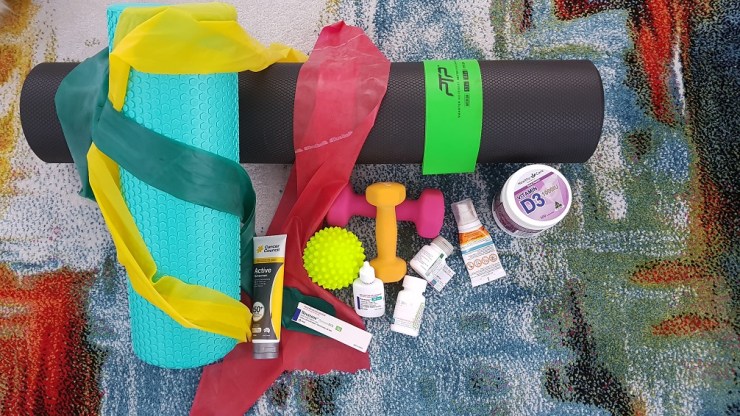
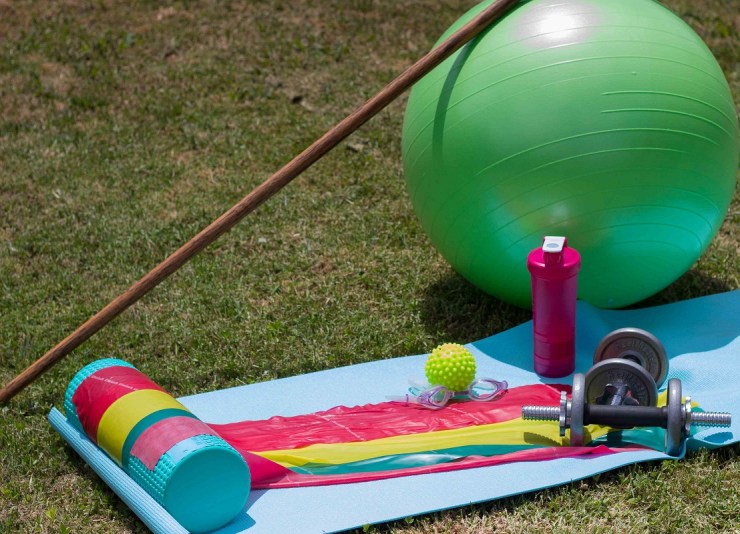
None of the above takes into consideration the other costs of being healthy. Move, they say; get exercise, they say. Yes, I agree. I am a living, breathing advocate of exercise, for Movement As Medicine: Limber Up to Live Life. But you know what? I don’t come free, because I have my own medical costs to meet (plus I do like to eat). The gym costs money, swimming costs money – not just the fees, but the equipment as well. The pool staff are not overly impressed by naked swimmers. Then I have a variety of equipment at home:

  • two foam rollers
  • small hand weights
  • swiss ball
  • resistance bands
  • thera-bands
  • spikey massage balls.

None of those were free.

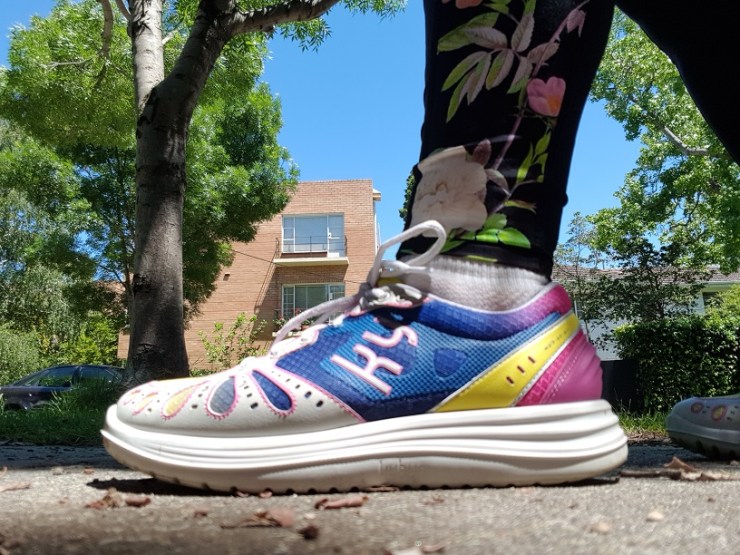
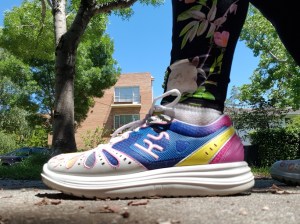
I also have my special kyBun shoes which I swear by. I believe they have contributed to the improvement in my back, allowing me to avoid radiofrequency facet joint denervation recently. I also think getting my thyroid under control, resulting in muscle strength returning, was another contributing factor. These shoes are not cheap, yet they are a vital part of my personal “get well, stay well” program. They are also better than my needing a walker or wheelchair.

kyBoot shoes

Food costs are not considered medical either, but if we want to get and stay healthy, we need to ensure we are eating the right balance of nutrients. Junk food is out. Lots of fresh green leafy vegetables and lean meat in most cases (there are exceptions). Fresh fruit. We have to watch the nutritional labels on everything and sometimes what is best for us is far from the cheapest.

If we do get ourselves healthy we are not a drain on the “public purse”. We stay off the Disability Pension, we use less medical services (prescriptions, x-rays, scans, Medicare rebate, hospital admissions, etc etc etc).

In my view it is definitely in the public interest to financially assist chronically ill patients to be the healthiest they can possibly be. That includes, if necessary, supporting their access to appropriate exercise, healthy foods, dietary supplements as recommended (e.g. my Vitamin D and fish oil). Get patients to a point where they able to regain quality of life and suitable employment, enable independence and self-sufficiency. Much cheaper to the community in the long run than a life on a pension AND, MORE IMPORTANTLY, so much more rewarding for the patient.

Out-of-pocket health costs are NOT just the difference between the doctors’ bills and the Medicare rebate or the prescription costs. There are so many other aspects to fighting chronic illness and winning.

Early intervention, early treatment, is paramount. Yet if people put off going to the doctor for a year or two, the disease can be merrily progressing. Some patients, if things are deteriorating slowly, tend to just get used to it until one day we reach a point of loss of functionality or pain that forces us to an emergency room or our GP. If the patient is in a rural area or is a low income patient, that delay is more likely. How much damage to our body has happened in that time? We may even put functional changes down to the aging process, as I did initially. Guess what, I was wrong.

I hope the new Ministerial advisory committee referred to above considers more than just the obvious. Will they?

How expensive is staying well for you? Are you prevented from doing what you need to by the cost? Please share.

EDIT Jan 28, 2018: Two other non-medical costs of chronic illness are:

  • the need for additional heating and or cooling – e.g. I am severely heat intolerant, symptom of one of my conditions, my air-con costs are therefore elevated AND as I have reduced working hours, I am home more often than a healthy person;
  • transport costs to and from the various service providers we all attend on a regular basis (physio, gym, pool, doctors, pharmacy, pain clinic – the list is extensive). This may be public transport fares or fuel for our car.

Yes, these are costs everyone has, but for those with chronic illness the costs can be increased considerably, thereby reducing the patient’s ability to afford other support that would assist them in condition management.

Competition: Free Training to LIMBER UP!

ENTRIES NOW CLOSED!

To welcome in this brand New Year and celebrate whipping my thyroid into submission with some radioactive iodine, I have an offer for readers! I am now ready and able to re-launch my Limberation activities: giving a lucky winner eight weeks free training seems a good way to start the year. As of this week, my thyroid function is rated as normal: I am definitely feeling the almost three month enforced hiatus was worth it!

Would you like to Limber Up to Live Life? To Move More? To start using Movement As Medicine? Reduce/manage pain? I’ve done it, so can you. 

There are rules! There are always rules! This might seem like a lot of rules for a competition, but we are talking about your health here, so precautions are appropriate!

Rules and entrant criteria

  • Have a medically diagnosed condition that will benefit from exercise (that is most of them – check with your doctor if in doubt). Please provide brief details of your condition/(s) with your entry.
  • Be taking any medications prescribed for your condition as scheduled (i.e. not skipping doses).
  • Have or be willing to obtain a medical clearance to exercise. This should include any restrictions recommended by your medical team (e.g. at one point I was not allowed to do shoulder presses).
  • Be committed to undertaking a personalised program for eight weeks. This will involve eight personal one hour consultation sessions over a two month period and completion of unsupervised exercises as prescribed on other days of the week (frequency to be determined at initial consultation).
  • Live within a 40 kilometre radius of postcode 3181 OR be prepared/able to meet within a 40 kilometre radius.
  • Be available Saturday through to Tuesday, one day per week for eight weeks.
  • Give permission to be interviewed for this website and have photos published.
  • Undergo standard fitness industry pre-exercise screening.
  • Complete initial consultation questionnaires and agreement to undertake exercise as applicable.
  • In 30 words or less tell me why you want to undertake exercise.
  • Entries close Saturday, February 10, 2018.
  • The winner will be announced February 24, 2018. The winner will be contacted personally and announced on this website. The prize is non-transferable.
  • Submit your entry via email to enquiries@limberation.com including your name, address and contact phone number. The subject line should be Limber Up.
  • The winner’s initial consultation will take place between February 24, 2018 and March 10, 2018 but can be subject to negotiation, within reason, if required.

If this page is your first visit to this website, please read my About page to understand why I offer a different training experience. I’m in the same boat as you: multiple chronic conditions, was losing quality of life, wanted to stay off pain medications.

Your contact details will not be used for any purposes other than your competition entry. All contact details of entrants other than the winner will be destroyed after the winner accepts the offer (unless the entrant indicates otherwise). If the winner is unable to accept the offer for any reason, the runner-up will be made the offer.

The winner will be chosen by me based on suitability for an exercise program and the authenticity of the 30 word outline specified above. I reserve the right to contact entrants if I determine clarification of entry details is required prior to determining the winner. This is for your protection.

Take that first step to a better quality of life today.

Make 2018 YOUR Year for SMART Goals

Seasons Greetings to all! Christmas is 30 or so hours away as I write (for those of us in the southern hemisphere). As the sun sets on 2017, we have an opportunity to re-evaluate our health progress and polish up our plans to get stronger, more active, more mobile and have less pain, less lethargy, better sleep: culminating in a better quality of life in 2018.

If you are still in “I’m thinking about it” mode, take stock over Christmas. What invitations did you turn down because you didn’t feel you could summon the energy required? Would you like to accept those invitations next year? Were you able to do the shopping you wanted to do without crashing in a heap for two days afterwards? Make 2018 the year you make the choice to include moving more into your treatment plans.

Talk to your doctors, get a clear understanding of what benefits you may expect from moving more.

SMART Goals

Now that my recent treatment change is behind me, I’m making more ambitious plans for myself and setting new goals for the new year. SMART goals. SMART goals are used in many walks of life: I’ve seen various wordings used depending on the context. For our purposes, I like the following definitions.

S = Specific. The goal needs to be something specific, not a nebulous idea.

M = Measurable. If we can’t measure our achievements against the goal, we won’t know if we are getting anywhere.

A = Achievable. It has to be achievable. If I set myself a goal of climbing Mt Everest, while both specific and measurable, for me it is not achievable. Swimming a two kilometre session – THAT is achievable.

R = Relevant. You will see realistic often used in this spot, but for our purposes I prefer relevant. We have limitations on our energy, our strength and our time. There is no point in setting goals that are not relevant to what we wish to achieve, which is better quality of life.

T = Timeboxed. There needs to be a time period within which you will achieve this goal. This helps to hold you to account and stay on target.

Let’s give it a try. “My goal is to swim two kilometres.” Is this a SMART goal?

No, it isn’t. While it is specific, measurable, relevant and (I hope) achievable, I have set no time target. “I want to walk more”, while relevant and achievable, is not a measurable goal – “more” could be anything. Walk longer distances or walk more often? Nor is it timeboxed. Walk more by when? 

Let’s have another go at this. “My goal is to swim a two kilometre session by 30 June 2018”. Now I have a SMART goal. I will need a progress plan to reach that goal, so I will need shorter term goals to get there: “My goal is to swim 1.2 kilometres once a week by 28 February 2018”.

That is one of my goals. Yours may well be something along the lines of “I will do my stretches every day for the month of January.” This is specific, measurable, achievable, relevant, timeboxed AND will set you up for the next step in establishing a movement as medicine strategy.

A walking more SMART goal could be very simple. “I will walk for three minutes, five times a day for one week”. At the end of the week a new SMART goal can be set. Remember when setting goals to pace yourself, always pace yourself.

Kyboot

For context, I was on crutches for much of 2014. I was diagnosed at the end of 2014. You can read how I started back to moving more on How tough is it to get moving?. My major goals for 2018 are:

  • Swim a two kilometre session by 30 June 2018.
  • Increase my daily step count to 10,000 steps a day by 30 September 2018.
  • Increase my leg press to 160 kilograms by 30 June 2018. (I was at 140 kg before my treatment change – I have to work back up after dropping back).

As I achieve those, I will set new goals during the year.

Of course, I have one other goal: help others get moving! I am back to normal availability after my recent hiatus, so reach out. It costs nothing to investigate the possibility.

Have a great time over the break! Stay safe!

You CAN do it!

These last few weeks have reminded me of my early days. A quick summary of the process: I stopped my hyperthyroid medication on November 5 in preparation for the radioactive iodine treatment, the radioactive dose was administered on November 17, I restarted my medication on November 27 at half the previous dose. The radioactive iodine doesn’t work for about three months, maybe even six months.

I am starting to feel much better now, one month and one day after after having the radioactive iodine. Today I managed a 50 minute strength workout but I am still 60 kilograms down on my leg press from where I was. I could not complete the final set of hammer curls. The lats and hamstrings seem to have held up reasonably well.

The nausea attacks have been quite frequent and the heat intolerance has been through the roof. Sleep disruption has again been an issue, resulting in more than the usual level of brain fog and certainly increased fatigue.

Overall, similar to when I was diagnosed back in 2014. Even the emotions resurfaced. As I struggled to finish that final set of hammer curls today I felt the tears building. Using the mindfulness techniques we learnt at the Pain Management Program I sat and reminded myself this is NOT a permanent situation. With the principles of pacing in mind, I did not push myself given the circumstances. I let the frustration go.

Normally I walk about a kilometre after my strength session to cool down, but today it was 33 Celsius and I am heat intolerant! So the walking went by the board too. I thought to myself how easy it can be to just give up. The feelings of being physically restricted are not something I like. I was glad it was not a busy time in the gym today – no-one to witness my meagre efforts. Meagre? No, the truth is my workout wasn’t meagre given the circumstances. There are many patients who can’t yet achieve what I have achieved with my medical conditions. There is that mental battle to accept the limitations AND feel satisfaction, a little pride even, for achieving sufficient physicality to regain quality of life.

Today reminded me of those old emotional battles. You CAN do it! If I, a “senior” can do it (yes, I’m playing the “old” card to motivate YOU), you can too!

The difference is I am not newly diagnosed. I know from my own practical experience that exercise is so very beneficial. Those who are newly diagnosed or who have never tried movement as medicine do not have that experience to motivate them.

I know I will get back to the levels I was at prior to this little bump in the road. I will then continue to improve as I was before. I understand what is happening in my body at this time. Not completely understand because we do not yet have an explanation for my iron levels, but we are dealing with one thing at a time. The colorectal investigations were all clear (thankfully) so that isn’t the reason. Once the thyroid function is normal, we’ll revisit the iron question having already eliminated the worst case scenario.

I also know not to go at this like a bull at a gate (something my father always accused me of doing). I’ll keep working out, I’ll keep swimming, stretching and working on VMO activation! I will just listen to my body at this time, noting what small improvements I achieve over the next two months.

All of this has delayed me opening bookings again, for which I apologise. It is also a learning experience which will be of benefit to my clients.

Limber Up to Live Life!  Check with your doctors whether exercise will help you regain quality of life. Then call me. More than happy to have no-obligation discussions if you are interested in investigating adding exercise to your treatment plan.