I don’t always win!

I get told many of my audience see me as an inspiration. This is a lovely compliment and I really appreciate it. The recognition actually helps keep me motivated to keep doing movement as medicine to manage my own medical condition/(s).

Having said that, not everything goes according to plan. I think it is appropriate I share the dippy things I do as well as the things that go well!

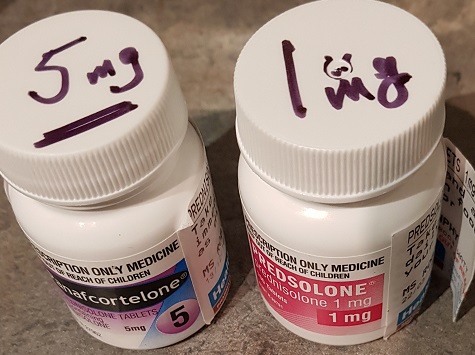
Today was a dippy day. I had a plan for the day. Around 10 am have two sets of bloods done. For the curious among you, one set was for thyroid function as I recently started Thyroxine. Some years ago I swallowed radioactive iodine and as a consequence, sooner or later I was going to go hypoactive. I was lucky, I got a few years before that happened! The time has come. The second test was to meet the PBS regulatory requirements for the authority necessary to continue a biologic treatment for my psoriatic arthritis.

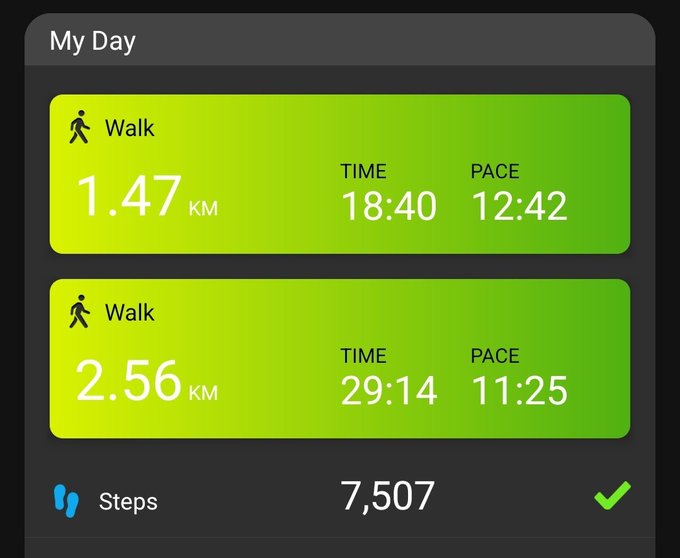
At 10:30 I had a GP appointment scheduled. Then my plan was off to the gym for weights. Saturday was weights, Sunday was swimming, yesterday (Monday) was an active rest day (walked 4 kms and hit goal of 7,500 steps). So back to weights today. Then I realised that was not a great plan as I was having blood tests – and that means no lifting heavy things afterwards. Hmmmm. OK, compromise, I’ll do just lower body stuff, I thought to myself. Yes, if you are wondering, I wear a mask when doing weights.

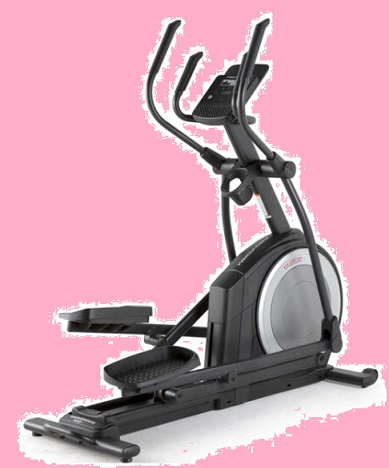
Warmed up on the treadmill. Did leg press, leg extensions, back extensions, hamstring curls, single leg push back. Couldn’t do the seated row, of course, or get on the rowing machine. Did not feel as if I’d done enough and wasn’t keen on getting back on the treadmill. Stationary bike? Nuh, not today. The elliptical machines were standing there looking rather unloved so I decided, not having been on an elliptical machine for WELL OVER 10 YEARS (and I was never a fan of them in the first place), I decided I’d just do five minutes to “top up” my workout.

At the 1 minute 30 second mark (this is me we are talking about, I time EVERYTHING for pacing purposes) my quads were telling me they were not at all impressed with this sudden change to their routine. At this point I thought, “OK, three minutes will do this time”.

At two minutes I hit the stop button. Of course, what has happened NOW is I have decided I must pace up on the elliptical machine, haven’t I? I have no desire to become an Olympic candidate by any means, I’ll be happy with five minutes!

After my recent experience with the screwing of 48 screws with a manual screwdriver, where I subsequently needed to resort to Prednisolone (brief, one day only needed – phew) and a wrist brace, I wasn’t about to overdo the elliptical machine (after a more than 10 year sabbatical). I’d learnt my lesson. Now, why I never applied the pacing logic to screwing things, I have no idea. I know better: excitement at building stuff overrode my thought processes! It happens! But really, *rolls eyes at self* I know full well my wrists are involved in my psoriatic arthritis. I have a special mouse, for that very reason!

I also fitted in my second ‘flu vaccine for the year – one of the joys of being immunosuppressed. Just thought I should finish on a positive note!

Never forget to pace.

Movement! Exercise! Mobility!

As we know I retired in order to concentrate on managing my psoriatic arthritis condition. The obvious question is “So how is it going?”

Very well, thank you for asking!

I thought a short update was in order. After all, while I do delve into other chronic illness related topics from time to time, this website IS primarily about #MovementIsMedicine. About pacing activity to maintain or, even better, improve our mobility and reduce pain and the incidence of flares. Avoid the boom/bust cycle so many chronic illness people are familiar with.

As I type it is 9:20 am. I have already walked a kilometre this morning. Yay me! Yesterday I hit the gym for weights – well, at my age and in my condition, resistance training would be a more accurate description. I am not going into the gym and lifting to failure, after all, so I feel a little guilty describing what I do as weight lifting. I am lifting weights though, just smaller ones than in my 40s!

To paint the picture, I had not been to the gym while the Covid-19 Reff was above 0.80. Saturday was my first day back for a while. Yesterday, Tuesday, was my second day. Saturday I took it gently, probably a step back from where I had been before the latest Covid-19 wave. I did the same with swimming on Sunday – a step back.

Tuesday I was pleasantly surprised to discover I had quite an easy improvement in my leg extensions. I increased my bicep curls by a kilogram with no trouble. Very good.

The best part was at the end, when I reached that point I recognised as “That’s enough for today” and stopped the timer. I’d done 27 minutes! Now, to healthy readers who wouldn’t dream of doing less that an hour, let me tell you for me that was a 5 minute improvement over Saturday. Also, please note I superset my workouts. That means I don’t do three sets of a specific exercise with a break in between sets. Supersetting is like this: a set of leg extensions, followed immediately by a set of chest press, then back to the leg extensions, rinse and repeat until the three sets of each are completed. I tend to combine things like lat pulldown and back extensions, tripcep pulldowns and the wood chop.

Benefits of supersetting are more weights done in less time, obviously. Moves the blood around the body by alternating upper body and lower body exercises. I also use the weight machines more than I used to in my pre-psoriatic arthritis days: I find I can keep my technique correct more easily than with free weights. I’m lifting to keep my body working, I don’t need to accidentally injure myself through poor technique.

I’ve set myself some retirement fitness goals:

  1. Weights sessions x 3 a week
  2. Swims/hydrotherapy x 2 a week
  3. Steps per day 7,500
  4. Increase speed to 6 kms per hour

The last one, increase speed, is related to preventing (or delaying) the onset of dementia. There have been studies that suggest slowing walking pace may be an indicator. I have slowed in recent years. I’ve also been participating in a Monash trial, Better Brains. More on this topic another day – just explaining why that goal is there! My GP rolls her eyes at me, given my ortho surgeries (and recovery times involved) and my arthritis – she thinks my pace currently is acceptable. I am not deterred!

I will still drop my step count on the days I do weights – it’s all about the pacing, folks, all about the pacing! No point in doing weights AND 7,500 steps today if I can’t do anything tomorrow.

As for more specific goals, as in swim how far, leg press of how many kilograms, etc: at this point I’m not fussed. as long as I see progress I’ll be happy. Essentially I’ll stick to the pacing principles of 10%, but I’m not going to rush it.

I am definitely seeing retiring was the right decision for my body and my health.

(Edited to correct the cited day! I had Wednesday instead of Tuesday).

I Have Retired. Should You?

I’ve been very quiet on Limberation because I’ve been extremely busy. I’ve retired and moved. BIG life change it is too!

My plan was to keep working until I was 70. My body has been saying, “Maybe not”. Not that I am in constant pain, I’m not. And I want to stay that way. Regular readers will have noticed my articles about energy use and pacing. Two very important aspects to managing my condition and retaining my mobility, function and independence.

By April of this year I had reached the point where I was seriously considering how long I could keep working. It seemed I didn’t have enough energy to work AND exercise enough: #MovementIsMedicine. Of course, simply getting older plays a part in this as well and there is not a lot I can do about the passage of time.

When my name came up on the right list for retirement housing (yes, I had been planning ahead, I was on waiting lists) I made the decision. Retirement was the way to go. The decision involved a lot of work though – energy I really was struggling to find. Writing was definitely put on the backburner. Working through phasing me out of my position in a job I love. Organising the actual move – and the move date got moved twice, just to complicate matters. The move also meant downsizing and that was work. I am typing this on my dining table, not my very large corner desk with a return on each side that I used to have! Packing took more energy. To top it off I got a temperature that hung around for six weeks and towards the end of that six weeks, a tooth infection. The temperature involved a lot of blood tests, some CT scans and several doctors visits. More energy needed. We now think the temperature and the tooth were connected, but initially I didn’t have any tooth pain, therefore we didn’t realise.

It wasn’t just me either. My brother-in-law was diagnosed with an aggressive cancer, my nephew needed stents and my daughter and her husband got Covid-19. There was an attempted identity theft/fraud on an account of mine which had to be sorted as well – I caught it as it was happening, so no losses. Everything was happening at once.

Back to why I retired. I used to be able to walk before work, walk at lunch time and walk after work. I was struggling to find the energy to get dressed before work, let alone walk before work. This wasn’t good for the management of my psoriatic arthritis. I wasn’t being consistent in my exercise either. My weight training had dropped to once a week – I was not happy about that. As a result I was experiencing an increasing number of minor flares and I didn’t want any major flares! I had already cut my working hours from 30 hours per week to 24 hours per week, but the days I worked I was still struggling to do the movement I need, therefore I was losing the consistency.

It seemed if I did the exercise and physical therapy I need to do, I was too tired to work, and if I worked, I was too tired to maintain my exercise regime. Maintaining my health as best as I possibly can is critical to quality of life. I love working, but it reached the point where I could no longer have my cake and eat it too.

Should those of us with chronic conditions make this decision earlier if we can? It is a huge decision. There are the financial implications of course. There may be housing implications as well. The age pension age keeps getting further and further away……. The disability pension (for younger patients) is almost unattainable these days. Women around my age may not have a lot of super (if any) due to the particular decades we worked through, there was no paid maternity leave for many of us and so on.

Yet more and more of the population live with chronic conditions of some sort. We have to make hard decisions about how we manage our lives. I became eligible for the age pension the year before I finally bit the bullet and retired. I am still working as a casual for my employer but minimal hours.

I believe I have made the right decision for my health. Without health, other aspects of our life may suffer: relationships, work, mental health to name just three. Do we try to “keep going” too long, or longer than we should? I’m thinking not just of now, but in ten years time. I want to give myself the best chance of minimising deterioration NOW so I can maintain quality of life in my seventies and eighties. We need to look ahead, not just at tomorrow or next week. Our modern medications, as fantastic as they are, don’t solve everything.

What am I going to do with all this “spare” time? Naturally, I’ve set myself some physical goals: swimming, weight training, walking goals. I will pace up to those goals. Find more unusual flowers!

I will write more. I will get back to my parking permit project. I will finish unpacking, cull my shoe collection.

Paint my nails! Of course!

This first week of full retirement has been psychologically challenging. I hadn’t had time to really prepare myself for the change of lifestyle and then there it was, happening. My advice would be if you can plan ahead, do so.

So that is it. I am retired. A different phase of life.

Bring it on!

chronic conditions care courage consistency coaching

Use It (Consistently), or Lose It

Modern medicines do many things. Some cure conditions. Many do not (yet) cure, but help in other ways: medications may slow disease progression or manage condition expression (e.g. control/reduce inflammation).

Medication alone is not a silver bullet – it often isn’t enough on its own to retain or regain functional movement and quality of life.

I’m going to share my own practical experience as an illustration. Shoulders are only the example here – the concept is the important bit. Interestingly I had a conversation with my eighty-something year old neighbour this morning who concurs! He told me he has FINALLY learnt to do his rehabilitation exercises religiously, every day. But Jack (not his real name) no longer works: this is where my consistency can suffer!

As per my earlier article, I Sat in My Car and I Cried, 2021 was a bad year for me. I went through a period where everything hurt. Consequently, as I was battling so many bits of my body, my shoulder care slipped. That’s on me, my fault.

My shoulders had first played up in 2016 and with the help of a great physiotherapist and lots of CONSISTENT exercises I’d rehabilitated them. With my usual swimming and weight training, the shoulders had stayed good without the need for specific exercises daily. However, during 2021 because the rest of my body went into meltdown, I was limited in my swimming and weight training. The shoulders progressively worsened to the point I had an ultrasound-guided steroid shot in each shoulder in late October 2021. There was at the time fluid in both shoulders. Not good. I should mention at this point the shoulders may not be exclusively psoriatic arthritis, there is likely some osteoarthritis going on in there too, plus the constant irritation of mouse and keyboard work. Yes, I have a fantastic vertical mouse, but that is more for the wrist than the shoulder. The right shoulder (mouse shoulder) is worse than the left.

It wasn’t until after my new medication started working in January 2022 that I was capable of being consistent with my exercises again. But how consistent was I being? As it turns out, not very.

The last couple of weeks are good examples. Saturday I head to the gym and yes, my shoulders hurt for the first couple of reps, but I do the usual upper body routine: lat pull-downs, chest press, seated row, bicep curls etc. By the time I leave the gym I have no shoulder pain. Movement Is Medicine (point 3 in that article). Sunday I head off to the hydrotherapy pool and do more gentle exercises, some involving the shoulders. As of last week I’ve added a few swimming laps (slowly increasing as shoulders toughen up). Monday, back to the gym, but less upper body work as I did the workout on Saturday. By Monday afternoon, my shoulders are singing!

Then comes Tuesday. My first work day of the week. I’m busy. I make sure I get my step count in. No gym today. My shoulders, feeling fine, do not remind me to do my rehab exercises and I slip. Bad me.

Wednesday I might feel a twinge or two when I get up and think to myself, “Robyn, make sure you do your exercises today, you know what happened last week!” Do I? Maybe, maybe not. Depends how exhausted I am at the end of the work day. Note to self: do them before breakfast, you idiot.

By Friday I’m back where I started, with sore shoulders. Again, I kick myself (figuratively speaking).

According to my myotherapist, I am pronating my shoulders. Not surprising as a desk jockey, we have to be so careful and it gets harder as we get older. To counteract the pronation, I bought myself a PostureMedic which I wear under my clothes, not over as shown on the marketing materials! Ran it past my myotherapist for his approval. I don’t wear it all the time, as while it encourages the wearer to hold their shoulders correctly, wearing it isn’t strengthening the muscles required to hold the shoulders in position naturally. I use it as a prevention tool as I first start work to help me develop/maintain correct sitting posture at the desk when I am deeply engrossed in work and can forget about my body.

If you have ever had your shoulders taped by a physiotherapist, it is a bit like that, but something you can put on and take off yourself without the issue of wet tape on your back after a shower!

My goal this week is to be CONSISTENT! To follow my own advice to other people! To do my exercises every day and not lose the gains I make over Saturday, Sunday, Monday.

Modern medications are fantastic, but they don’t do everything. Often, there is no way of medications repairing past damage, for example. If there were, I wouldn’t have needed a total knee replacement! I need to take the time and put in the effort to get my shoulder muscles working properly again. Yes, age is also a factor. In three months I will be three years away from three score and ten – what used to be considered the nominal span of a human life.

I hope by sharing my failures at being CONSISTENT I may have encouraged you to be more consistent than I have managed recently.

Movement IS Medicine.

(Mostly) No Pain is FANTASTIC!

A few of my recent articles have been quite serious, so it is time to celebrate progress! After starting my new medication on January 14, 2022 I am happy to report I’m functional again! Friday I started Week 7 of my new medication and I very pleased with progress. Let’s hope it keeps working!

Readers may recall my list of painful bits from I Sat in My Care and I Cried. It was a pretty long list.

What was painful?

  • Shoulders
  • Ankles
  • All Toes
  • Left hip
  • Elbows
  • Wrists
  • Most fingers
  • Hands
  • Knees (yes, even the operated knee felt swollen, but not painful, the right was painful)
  • Neck
  • TMJ (jaw joint)
  • Left Achilles Tendon
  • I also had some plantar fasciitis

Today I can happily report all of that list has resolved except the shoulders and the plantar fasciitis. While I was on Prednisolone and the new medication together, the shoulders and the plantar fasciitis were barely noticeable, but as I tapered off the Prednisolone both reappeared. The plantar fasciitis is minor, only noticeable when I first get out of bed in the morning and hopefully will continue to improve the longer I am on the new medication.

The shoulders I am not so sure about. At my age and with prior injuries, I suspect the root cause of the shoulders may not be psoriatic arthritis (although it is undoubtedly not helping). The right shoulder is the worst of the two and that is the shoulder that has in the past suffered a torn rotator cuff. I’m doing lots of remedial exercises which will hopefully improve the situation (I’ll admit to letting those lapse while I was battling everything else). It is time to focus.

Other than that it is great to be able to do all these things again, pain free:

  • Fasten my bra (shoulders are at least allowing that)
  • Hold my full coffee cup in one hand (wrists)
  • Get out of bed without mobility aids (crutches or walking stick)
  • Sit down and stand up without immense difficulty (quads & glutes weren’t firing)
  • Be able to clench my fists (no, I’m not planning on using my fists!)
  • Turn taps on and off without pain (fingers & wrists)
  • WALK!!!!! (mainly ankles, although right knee & left hip had spasmodically interrupted)

That is not an exhaustive list, of course, but hopefully sufficiently illustrative! Functionally, I am almost back to (my version of) normal. I’ve been to the gym and done some hydrotherapy.

The only downside seems to be lethargy. I am quite tired. This may be temporary and may be due to my body adjusting to the new medication, the (tapered) cessation of Prednisolone and quite simply normal life things such as work-related stress. In order to give my body the best chance I have negotiated with my employer to drop my working hours to 24 hours per week. Initially this is for a temporary period of six months and then we will reassess.

The tiredness could possibly be my thyroid firing back up, although based on my last ultrasound we doubt that. Even so, that fact I do have an unhealthy thyroid cannot be overlooked. I’m due for monitoring checks again in April. I was, I gather, a little unusual as a radioactive iodine recipient. Many patients’ thyroid function becomes hypoactive after the treatment but mine never (not yet anyway) did. Both hypoactive (underactive) and hyperactive (overactive) thyroid conditions can result in tiredness/lethargy. Mine, theoretically, could go either way!

I am very concerned about the lack of strength training I have done over recent months as retaining muscle strength really is very important with this and many other arthritic conditions. However, I can’t rush back, I need to pace up again. That is part of the reason for reducing my working hours.

The shoulders, particularly the right one, may be being exacerbated by typing and mouse use. This is something that will also be reduced by reducing my working hours. Of course my bank account is NOT going to like less income, but that is simply a fact of life for those of us with chronic conditions: we have to make our bodies a higher priority than our finances, otherwise we end up with no finances at all as we lose the ability to work.

Overall, pretty darn happy! Of course, there are no guarantees. I’ll just enjoy the improvements while I have them! This gives me space to concentrate on rehabilitating the grumpy shoulders. I’m seeing my myotherapist regularly at the moment to assist.

Concurrent objective is to rid myself of the weight gain from the Prednisolone – there’s always something!

If you are interested in the fascia of the body, this is a great video! This is related to my seeking myotherapy treatment at the moment. More on this another day.

Underlying Conditions

In 2017 I wrote Why Do Our Bodies Attack Us? Like many of us, I wondered WHY did I have a chronic condition (otherwise often known as an underlying condition). Most of my working life has been about root cause analysis – naturally I apply that to myself! It is a bad move, I don’t recommend it, you can drive yourself nuts!

More recently, December 2021, I wrote Will Society Adapt? When? How? looking at society’s lack of acceptance of chronically ill people. I specifically noted I wasn’t looking at environmental impacts in that article, but we can’t ignore the impacts we ourselves, as a species, have created in the same span of the last 100 years or so. In that article I proposed society has yet to adapt to this new chronic state of health, and I referred to my generation as being the first generation of chronic people in any great number. I essentially attributed our survival to improvements in medical science keeping us alive, but why do we fall sick in the first place, in ever increasing numbers?

Regular readers will know I am a big supporter of the work of Julian Cribb, an Australian author and fantastic science communicator. He has recently released Earth Detox – How and Why We Must Clean Up Our Planet.

Every person on our home planet is affected by a worldwide deluge of man-made chemicals and pollutants – most of which have never been tested for safety. Our chemical emissions are six times larger than our total greenhouse gas emissions. They are in our food, our water, the air we breathe, our homes and workplaces, the things we use each day. This universal poisoning affects our minds, our bodies, our genes, our grandkids, and all life on Earth. 

https://www.cambridge.org/us/academic/subjects/earth-and-environmental-science/environmental-science/earth-detox-how-and-why-we-must-clean-our-planet?format=PB

I did refer to chemicals in my 2017 article cited above. I’ve also looked at plastics in Packaging Our Pills in Plastic which includes some videos – visit that article if you are interested.

So while some science is keeping us alive, our tendency as a species to misuse other science for selfish reasons is potentially, at the same time, making us sick. Why did I choose selfish in that sentence? Let’s take plastic as a classic example. When I was a child plastic was not really a thing. Shopping bags weren’t plastic. You didn’t put your fruit and vegetables in plastic at the shops. Glad Wrap? I do remember plastic bags for freezing meat. Pills were still in glass bottles.

But plastic was convenient and we started using it for EVERYTHING! Our wild life has been paying the price for years, but it seems we have too. We just didn’t want to acknowledge that fact because that would be inconvenient and if there is one thing the human species hates, it is being inconvenienced.

Of course, all of this ties in with our population growth: if there were less of us, we’d use less of all the “stuff”. Less MIGHT be manageable. That is a big “might”.

I’m going to turn 67 this year. In my first ten years of life I lived on a farm in the middle of nowhere, BUT I was still exposed to many chemicals. Sheep dip. Top dressing. Weed killers. All before the many safety tests and regulations of today were in place.

Later I moved to the city: car fumes, plastics.

“It would be naïve to believe there is plastic everywhere but just not in us,” said Rolf Halden at Arizona State University. “We are now providing a research platform that will allow us and others to look for what is invisible – these particles too small for the naked eye to see. The risk [to health] really resides in the small particles.”

https://www.theguardian.com/environment/2020/aug/17/microplastic-particles-discovered-in-human-organs

Yes, I have psoriatic arthritis (PsA) and a wonky thyroid (plus a few other things) and yes, there is a genetic component to PsA. What triggered the expression of the condition? After all, genes or no genes, my disease hasn’t been active all my life. What triggers any number of the conditions now prevalent in the chronic illness community, even if there are genes playing a role (in many cases, not yet proven)?

We have to stop blaming our chronic illness patients for being chronically ill, when it is very likely it is the path humans have chosen that has created many of us in the first place.

In our current situation in 2022, chronic illness has suddenly risen to the surface as a “reason” people die of Covid-19, so more people are aware of our existence. I myself am in four Covid-19 risk categories, the most dangerous to me being that I have an underlying inflammatory condition (PsA). We know Covid-19 can cause lots of inflammation: I’ve already got that going on, so I have this image in my mind of Covid-19 entering my body, running into PsA and my PsA saying, “Mate! Great to see ya! Let’s party!”

According to Professor Jeremy Nicholson, there are only about 10% of people in Western society that are “really, genuinely healthy”. You can find that quotation at 31:40 in the second video on Better Health, Together: Living with COVID in 2022.

I’m not suggesting 90% of us are at high risk of imminent death from either our conditions alone or our conditions plus Covid-19. We DO need to know which underlying conditions place us at higher risk of severe Covid-19 in order to be able to adequately take whatever additional protections may be necessary. The fact we are at a higher risk cannot be ignored. I see many on social media particularly suggesting the underlying conditions are irrelevant. They are relevant. We can’t ignore reality because we find it unpalatable. I most certainly think the politicians could separate the sad news of deaths from the statistics relating to underlying conditions. This is where the 90% really comes in – as in, it is potentially most of us!

As I am known to do, I have digressed – or have I? Covid-19 is perhaps a wakeup call. As a species we have created a state of ill-health as “normal”. Because we want our pollution and our chemicals and our plastics – but as Julian writes, we are paying the price. We’ve been somewhat quietly paying the price for a while, now Covid-19 has highlighted our vulnerability.

I know I have a chronic illness – many people do not yet know they have one. Conditions can take a while to be evident enough for the person to seek medical help. I am quite sure my PsA was active at least two years before I was diagnosed. In other situations, many people struggle to get a diagnosis of various conditions for years.

I am NOT suggesting that had Covid-19 come along in 1819, or 1719 that we would have been in a overall healthier state as a species. There were other considerations back then. However, we have changed our world, our environment, our living conditions, massively in the last 100 years. We’ve solved old problems, but created new problems.

I am a massive fan of science generally and medical science in particular, however I am also very aware of the human tendency to misuse anything we can if we see a personal advantage in doing so. Covid-19 gave us a shock: we were the Gods brought to our knees by the invisible.

We are not just destroying the environment of the planet we inhabit. We are not just destroying other species. We are possibly also destroying ourselves.

I Sat in My Car and I Cried

2021 was not a good year for me health-wise and it is time to come clean. In our chronic illness life, things don’t always go according to plan. Before I get into the details, I want to make VERY clear I do not in any way regret participating in the clinical trial I was on. It was wonderful, the people were wonderful, I was very well cared for. I am no longer on the trial, as you shall read, but that doesn’t mean the medication isn’t a great medication. I was just unfortunate. It happens. Hopefully I will have contributed to scientific knowledge in some small way.

So let’s get into it.

For whatever reason, during 2021 my medication stopped working for me. This could have been due to a variety of different reasons, we will never be able to prove the reason specifically for me so I am not going to discuss the various possibilities. It is not unknown: medications can just stop working for particular people. Of course, so much happened in my life DURING 2021, we did have a tendency to think I was flaring because of “stuff” happening. To just do a quick recap:

  • February: I suffered a fall, injured left ankle, right wrist (but saved my knee!!)
  • March: First Covid-19 vaccine (can cause flares in people like me)
  • April: Preparing for foot surgery (training work replacement etc, super busy)
  • May: Bi-lateral foot surgery followed by six weeks of inactivity
  • June: Second Covid-19 vaccine (can cause flares in people like me), plus I resigned from my old job
  • July: Started new job

So basically, lots of quite stressful events. That’s without considering the lockdowns which resulted in a lack of access to the gym and swimming and the various other concerns we all dealt with in 2021.

I did not want to accept that my medication wasn’t working (and that’s on me, it was my decision to persevere longer than I should have), for it had been wonderful. Best part was I did not suffer any side effects. However, at the end of 2021 it got to the point I had to accept the advice. A change of medication was needed. However, by now we were getting towards the holiday season and so appointment scheduling became an issue.

I’m leaving some detail out, but on New Year’s Day I almost took myself to an Emergency Department (ED). I didn’t for two reasons: A) If I went to my closest public hospital, I risked Covid-19 exposure, B) If I went to my local private hospital the ED fee would be money I really did not want to spend and I knew that in reality they’d likely manage the pain and tell me to call my rheumatologist on Tuesday. I could do that myself. So I soldiered on.

By January 4 it would have been easier to tell you what didn’t hurt, rather than what did. Even the entheses of my left hip were painful and THAT was scary as hips were one part of my body that had not previously been involved. What was painful?

  • Shoulders
  • Ankles
  • All Toes
  • Left hip
  • Elbows
  • Wrists
  • Most fingers
  • Hands
  • Knees (yes, even the operated knee felt swollen, but not painful, the right was painful)
  • Neck
  • TMJ (jaw joint)
  • Left Achilles Tendon
  • I also had some plantar fasciitis

That may not be a full list, but you get the picture. In the past, like when my shoulders had misbehaved earlier in 2021 (had ultrasound guided steroid shots in both shoulders), at least I could still walk, so I could still exercise, still move. Movement is not only my physical condition management strategy, it is also beneficial for my psychological health. Suddenly my lower body was so sore I couldn’t walk more than 500 metres. I couldn’t do upper body at the gym because my wrists wouldn’t allow me to lift dumbbells. I was struggling both physically and emotionally/psychologically.

I struggled to use a petrol pump. I couldn’t hold a coffee mug in one hand first thing in the morning. Turning taps off and on was painful. Getting dressed was a struggle. I needed a walking stick to get out of bed and move first thing in the morning. I could go on.

On January 9 I took myself to the hydrotherapy pool. It was a struggle to get into my bathers as my hands, wrists and shoulders were hurting. But I managed. Packed my hydrotherapy gear. Drove to the swim centre.

It was closed for repairs.

I walked back out to my car, sat in my car and cried. It seemed there was NOTHING I could do, not even hydrotherapy.

Of course, I’d been in touch with my medical team and January 11 I was officially taken off the old medication. I also took the rest of the week off work. Taking the rest of the week off work filled me with guilt. I love my job and when I’d accepted the offer I believed my psoriatic arthritis was under control. I didn’t feel fantastic at the time, BUT I was still only seven weeks post the foot surgery, so at the time it was thought the body seeing surgery as an injury was the cause of my flare state and I’d go back to my normal. So I was horrified to be taking time off.

I mention this for newbies to the chronic life and friends, family or colleagues trying to understand and be supportive. We, the patient, can feel guilty about stuff we have absolutely no control over. I can’t predict the future, yet I felt responsible for the fact I couldn’t have predicted the future! So then not only do we feel unwell, we feel guilty on top of it. Not a good place to be.

Bottom line, I’m on a new medication. This is my sixth medication since the start of 2015. So six medications in seven years. Many medications for many conditions, including mine, do not work overnight. Some take six to twelve weeks to “kick in”. In the meantime the patient takes a bridging medication to hopefully control symptoms at a manageable level, such as in my case Prednisolone. We taper OFF the Prednisolone as the new medication (hopefully) ramps up. I’d just ALMOST tapered off my last Prednisolone series, now I’m back on. So the patient doesn’t necessarily know for several weeks if the new medication is going to work for them. Will there be side effects? How much weight will be gained on the Prednisolone?

It can be natural for people to think along the lines of, “Well, OK, you are on a medication now, shouldn’t you be feeling better?”. No, it can take a while.

Many of these conditions are resolutely unpredictable, and THAT alone can be hard for friends, family and colleagues to understand. I get that – it is hard for ME as the patient to understand. I’m sure it is hard for the medical professionals to manage too. No crystal balls in this business. I wish there were. My rheumatologist painted me this lovely future scientific state where we will be able to personalise treatments, but we are not there yet – and probably won’t be in my lifetime. I also suspect such treatments may be rather expensive, but that is a WHOLE other discussion!

Today I actually managed to walk two walks totalling just over two kilometres. My left ankle is complaining a bit, but my right is OK. It is the furthest I’ve walked for weeks. I was back at work today. I’m on the improve.

All I can hope is the improvements continue. Pace UP again almost from scratch, don’t overdo stuff.

So if you or someone you know is struggling through a setback – please know you are not alone. It sucks. All I can say is keep persevering.

In closing, I would like to thank my manager and colleagues for their wonderful support. I am so grateful.

I’m Not Lazy

Neither are YOU lazy. The title above is stolen, with permission, from a social media contact’s tweet.

We’re not lazy, nor are we responsible for other people’s expectations of what THEY think we should or shouldn’t be able to do. Sidenote: often those expectations are based on our appearance. Refer to You Look So Healthy! for more on that.

There are four other articles you may like to browse as background material to this article:

One of the challenges we face is helping people understand the whole energy availability thing many of us struggle with. In the conversation related to the above tweet, J told me she had mowed the lawns, done the edging, walked the dog and cooked dinner. J has the same disease I do, psoriatic arthritis (PsA). While I don’t know or understand the specific expressions of many other chronic conditions, this is one I do understand. J couldn’t see me, but if she could have, my eyes nearly popped out of their sockets.

Other conditions can be very similar, but I will stick with the disease I know for illustrative purposes today.

On a great note, for PsA management, J had certainly been moving. Movement is Medicine! However, J had probably used up more spoons or internal battery than she had available. All that in one day would cost her later, as she well knows from experience.

Society conditions us, well before we get sick, as we are growing up: doing our share, work ethic, earn our way. We then place expectations on ourselves. We don’t want to be sick, we don’t want to let others down by not doing our bit. In the first few years, of course, in the back of our minds we think it is temporary. To understand a bit more on that, you may like to read Will Society Adapt? When? How? Even we ourselves have to adapt to our new normal.

PsA is a very odd disease. At its worst for me, I can wake up in the morning with painful feet, ankles, knees, wrists, fingers; maybe even throw shoulders and neck in on a particularly bad day. I may have to use crutches to get around first thing in the morning. I’ll be unable to turn a tap on. Can’t lift the electric jug, struggle to open the coffee jar. Put on a bra? Are you kidding? Pull on tracksuit pants? Yeah, right. That sort of thing. About 11:30 am I’ll be fine. Virtually pain free. My body will have de-solidified. I’ll head out for a walk, go to the gym and do a weight training session. Sadly 160 kg leg presses aren’t happening any more, but maybe again one day…….. I am a completely different physical specimen at 4 pm than I am at 7 am. I saw my Plan B GP on Tuesday (Plan A was away), who hadn’t seen me for probably a year. She said “You look great!” This was 6:30 pm. I said to her, “You didn’t see me at 7 am!”

This can be VERY difficult for our friends, colleagues and family to understand. You need rest but you also need to go to the gym? That doesn’t make sense! Actually it does make sense and the reasons why are discussed in more detail in the above linked articles, so I won’t repeat myself.

We know, we can see it in their eyes. The doubt. The lack of comprehension of the situation.

We know people think we are just being lazy (at best) or hypochondriacs (at worst). J is right, it is VERY exhausting to be constantly explaining it to people, yet we know if we don’t explain it, if we don’t share the knowledge, social understanding and acceptance will never happen. We use analogies: spoons, internal batteries, even daisy petals. Over time our nearest and dearest do start to understand. If they want to.

If we live by the rules of pacing our activities and energy consumption, many of us can achieve a fantastic very nice quality of life, given our disease. The problem is, to OTHER people our rules can make us look lazy in their eyes – or at least that is how we can feel.

I work six hours a day. I have just entered my eighth year of having PsA, so I’ve had time and practice to build my personal pacing skills. Even so, I still feel guilty some days that I’m not “doing my fair share” at work. I have to lecture myself along the lines of this is what I MUST do or I won’t be able to work at all. I did try full-time for a while in 2019/2020 – it was WAY too much. Recently, we had a systems issue at work. That day I worked ten hours – I was petrified I was going to crash before we solved the problem. Thankfully, I didn’t, but those feelings and fears are what we live with every day. We don’t need to feel others are judging us because we MUST do less than they do in order to regain and retain quality of life and independence.

No, we do not have to vacuum the whole house in one day. A room a day would do!

No, we do not have to mow the whole lawn in one day. J, are you listening?

Spreading out those sort of tasks DOES NOT mean we are lazy. It means we are protecting our bodies, our internal battery and our quality of life.

Today I was going to go grocery shopping. But today is also weight training day. The grocery shopping can wait until tomorrow. Both on the same day would mean I wouldn’t be able to do what I have planned for tomorrow. Grocery shopping will fit with my plans for tomorrow as the overall intensity tomorrow is less.

We are not lazy. I am not lazy. Don’t let yourself be guilted into doing things that break your pacing rules, whatever they may be for you. The goal is to balance activity and energy so you achieve consistency in your state of health.

18 Months In – Thank You Science!

My clinical trial rocks! No other way to describe it! If you are unfamiliar with the backstory, there is a series of articles, the first of which is A Clinical Trial – Patient Journey – Part I, exploring how I came to be on a clinical trial and the initial phases. In summary, I am on a clinical drug trial for a medication for psoriatic arthritis (PsA), a condition that affects an estimated 24 in 10,000 people (0.24% of the population).

I am now 18 months down the track, so thought it time for an update on progress!

No sore entheses! This is fantastic. The enthesis is the connective tissue between tendons/ligaments and bone. PsA rather likes entheses, unfortunately.

At my last injections I had ONE, let me say that again ONE, toe joint that glowed faintly when all the toe joints were tested. That’s a major improvement from 20!

No sore finger/thumb joints. Not one. The base of my thumbs used to be really painful. I am also no longer splinting my fingers at night on a daily basis to prevent waking up with my hands locked into fists. I find I may have to splint them about a week out from my next injections, but not always.

Left and right index finger splints

My shoulders are fine. Admittedly I do a series of exercises to maintain my shoulders which have helped considerably, but the reduced inflammation is fantastic.

My wrists, which would flare regularly, have not flared for months. I can’t remember the last time.

There has been no progression to other joints. There was no hip or elbow involvement, for example, and there still is no hip or elbow involvement.

My skin in 100% clear. Yes, 100%, clinically assessed.

My finger nails are back to being perfect, although two toe nails persist in having white spots and and the tell-tale ridges across the nails. But they no longer crumble off.

No dactylitis (sausage fingers/toes) this year.

I have lost the 20 kilograms I’d gained with all the various medication changes prior to starting the trial.

Energy levels are much improved. I won’t say back to normal, but much better than previously. This is evidenced by the that fact I am back working full-time. No, I did not take on a senior management role, that would have been too much, but I’m working.

The dreaded brain fog is also much improved, as I have noted before. I don’t like the term brain fog, as readers may already know, but everyone is familiar with the term.

No adverse side effects! After my previous experiences, this is yet another fantastic aspect for me personally.

At my latest appointment, one of the staff commented, correctly, I was lucky I don’t have any joint deformities, especially of the hands. I put this down to early medical intervention – I was lucky to be diagnosed early in my journey.

I’m not cured. I am as close to being cured as I probably ever will be and that is a great thing. The medication, risankizumab, isn’t the only weapon in this war though. I am, as is well known, I firm advocate of Movement is Medicine. I keep my muscles strong. I still wear my “special” shoes to help my back. I had a total knee replacement this year, osteoarthritis – not something risankizumab can fix. Overall, I am very happy with progress.

A Clinical Trial – Patient Journey – Part V

Catching up?

Apart from draining trial participants of blood every visit, as I have mentioned before joints and entheses are assessed for improvement – or not.

For my first 26 weeks of the trial, the period we now suspect I was on placebo, there was no real change in my hands or feet. Other areas are assessed but for illustrative purposes, I am only going to talk about hands and feet. Many of the joints subject to assessment, such as hips and temporomandibular joints (TMJ), I have not had problems with, so not much point in talking about them!

Now if you don’t know how many joints are in your fingers and toes, let me tell you – quite a few! They test 28 total in the fingers and 20 total in the toes on my trial.

While my finger joints were never my major trouble spot, my feet were a different story. Every single joint would light up with pain when assessed. In some cases, big red siren type lights.

Four weeks ago there was certainly a reduction in the number of joints that lit up and most of the ones that did react to assessment, were as if the dimmer switch had been activated.

Today? Today only TWO toe joints lit up and even those were a faint glow. That is two out of 20!

The hands? Not one of the assessed joints lit up. NOT ONE! Yes, I am still splinting those two trigger fingers at night, but that is not a finger joint issue and they are also improving.

One of the other aspects I am very pleased about, given my past medication experiences, is NO SIDE EFFECTS! Obviously there can be clinical side effects from medications that I, as the patient, would not necessarily recognise, which is one of the reasons they take all that blood. Are my kidneys OK? Is my liver still happy? But from my day to day living experience I’m not having any side effects like I had with the four previous treatments I have been on.

From here on in, I only visit the research clinic once every twelve weeks. The hard part is over. I don’t expect to have any really news to share for the remainder of the trial, providing everything continues to go well. Yes, there is a possibility I could stop responding at some stage in the future, but I’ll cross that bridge if and when it happens.

That just leaves me with the problem knee, but there have been announcements this week surgery will be commencing again and joints are on the list so I am hopeful that will also be resolved ….. shortly. I’ve already been on the phone to my surgeon’s office, so I’m waiting for a date!

I am very happy with the results. I love the team at Emeritus Research, it really is like dropping in to see good friends. Very professional good friends: as a trial participant I feel very well cared for and valued. Great atmosphere. Just watch the coffee machine if you like flat whites, it can overflow!