Open Letter to VicRoads

I sent the email below to VicRoads on Monday March 7, 2022. As of today, I have not received a response. Some patient experience in the meantime. On Saturday I went to the gym. The closest park I could get was 300 metres from the gym. This was a suburban gym, not a large shopping centre as cited in the email below. That meant I had to cut my rehab work time short to allow for the extra energy required to walk an unplanned extra 600 metres (total). On the Sunday I went to the same location for hydrotherapy. Hydrotherapy means I am lugging an equipment bag and a swim bag. I knew if I was going to have to park as far away again, I would have to skip my hydrotherapy. Thankfully, I was able to get a park across the road. Even so, once I had finished my workout I had to sit and rest for ten minutes before walking back to my car. Energy.

I believe a week is sufficient time to allow for a response. When I do receive a response, I will do a follow-up article. This issue is going to be very important for many chronically ill people.

Dear VicRoads,

I recently renewed my accessible parking permit. This is the first time I have been through the VicRoads application/renewal process as in 2021 I renewed via City of Stonnington.

I had a total knee replacement in 2020 and bi-lateral foot surgery in 2021. Those are not the reasons for my concern. My concern relates to my chronic condition, psoriatic arthritis. As with many chronic conditions lethargy and fatigue are symptoms. A DT Permit is of very little benefit to me and the many patients like me. I hope that the decision makers and policy makers within VicRoads are aware of the prevalence of lethargy and fatigue. If not, there are many peer reviewed clinical reports I can refer to your organisation for their edification.

You may have heard of the spoon theory analogy. Personally I prefer the internal battery analogy. Most chronic illness patients have limited battery charge per day. I refer you to my own writing, “Personal Energy Use” for a deeper explanation.

The DT Permit provides no proximity benefit to the permit holder. For example, in a large shopping centre or university carpark I might have to walk a kilometre just to access the shops or lecture theatres and return to my car. That doesn’t take into account any walking required within the shopping centre or on the campus. Large hospitals could require similar. I know, because I’ve measured the distances.

For a person with a chronic condition, this extra energy use may prevent us being able to shop, receive health care or undertake education. Alternatively, it may leave us so depleted of energy we are unable to undertake the activities that are required to manage our condition on a daily basis or to perform our jobs effectively. I currently work from home, however when required to go into the office, in a very large organisation, getting a car park near a lift can be extremely challenging unless I have an ADP Permit.

Surely it would not be difficult to mark some standard width carparks within a reasonable proximity to appropriate entrances to the facilities in question.

The DT Permits do not allow for changing circumstances either. For example, psoriatic arthritis is notoriously unpredictable. While I’m not using any mobility aids at the moment due to a recent change in medication, two months ago I couldn’t get out of bed without using crutches. I am facing a second total knee replacement and two ankle replacement surgeries in the future. The ankle replacements require twelve weeks each of non-weight bearing on the operated leg (a knee scooter allows mobility). Obviously while on a knee scooter I will require one of the wider car spaces (no, I will not be driving myself). I understand temporary ADP Permits can be obtained for surgical reasons, yet this does not change the underlying issues of the DT Permits nor allow for unpredictable conditions.

The VicRoads website restricts the ADP Permit to issues with walking less than 100 metres: “you have an acute or chronic medical condition such that minimal walking (up to 100 metres) causes you to stop several times because of pain, extreme fatigue or imbalance which may endanger your health acutely in the long term“.

This is unrealistic for the reasons I have stated above. It isn’t the 100 metres that will be the issue for many of us, it is the energy expended walking the considerable distances given there is no proximity benefit with an DT Permit that may cause extreme fatigue which may endanger our health in the long term and impact our current quality of life in other ways as stated above.

I hope that VicRoads will give serious consideration to the requirements. My permits (expired and current) are attached for your reference.

I will be publishing this letter on my website in order to support the disability community but will await your response.

Kind regards

Addendum: For those wondering, yes, there are differences between states. There is an Australian Disability Parking Scheme, details of which can be found on that link. Note that the DT permit is NOT part of the federal scheme and therefore is not accepted in other states.

Update March 26, 2022 Please refer to Accessible Parking Permits – Part II for an update.

A Tale of Two Days

I had a typical chronic illness experience this week. I’m writing this article particularly for family, friends and colleagues of patients, to increase understanding in the community.

Edited to add: After publishing this I decided to add a personal thought. Other chronic illness patients may or may not agree with me, so check first! We are not looking for sympathy. We definitely aren’t looking to be told to try extra Vitamin C, D or K. We don’t want, “But have you tried….” because trust me when I say this, most of us have agreed our treatment plans WITH OUR MEDICAL PROFESSIONALS.

So what do we want? Just acceptance! Accept what we say at face value, don’t doubt us. We aren’t making it up. It is what it is and many of us are very used to it and just get on with life as best we can. We don’t want a fuss. I’m not saying we don’t welcome kind thoughts or offers of assistance. Yes, you can certainly make me a nice cup of coffee or tea, that would be lovely, thank you. But the most important support you can offer is acceptance and understanding without doubting what we say and without making a fuss as if you expect us to keel over in the next hour. This may not be your normal, but it is our normal.

We hear and talk a lot about chronic pain in relation to chronic illness, but as we know from my last article, I’m pretty much pain free on my new medication. That is very pleasing. Pain is not the only debilitating issue we face.

Wednesday night I did not sleep at all well. I had an intense two hour meeting and worked an extra hour on Wednesday – did that contribute to the bad sleep? No idea. Woke up Thursday morning feeling shit. There is no other word for it. While I do try to stay polite in my articles, the lovely medical word I like, malaise, didn’t quite cover it. Unwell didn’t cover it. Clinically, my experience would likely have been classified as malaise, but that is such a nice sounding word it didn’t cover how I would have described the feeling. I want to stress, no pain. Pain is NOT our only problem.

I doubted I could actually work, but we had a 9:30 meeting scheduled so I dressed, braved the world. When I say I braved the world, let’s not get too ambitious here! I work from home, so braving the world entailed throwing my hair in a bun, putting on some clothes and some lipstick and sitting in front of my laptop camera for a Teams meeting! I did warn my colleagues I felt crap and doubted I’d make it through the day but would work as long as I could. Stomach pains then arrived, along with a couple of trips to the bathroom – I think you get the picture.

However, by 1 pm I felt relatively normal and completed my work day (quite productively, as it turned out) although I was a little hyper, which made no sense either. Logged off at 4 pm, sat down in an armchair and a wave of nausea engulfed me. My stomach felt funny, just funny. I was a little dizzy. The unwellness was back with a vengeance. I had a 5 pm appointment with a girlfriend for iced coffee and cake. There was no way I was going to be able to drive or have cake. I cancelled. Dug deep in my medication supply and swallowed anti-nausea medication and took a Somac (Pantoprazole). By 6:30 pm I felt marginally better. Went to bed reasonably early (for me, that is).

Slept like a log! Best night of sleep for the last two years, I think. Woke up Friday morning all cylinders firing! Went for a 1 kilometre walk before work. Worked my usual hours without issue. Waited for the temperature to drop (the weather temperature, not mine, mine was fine) in the evening and walked another 1.3 kilometres at just after 7 pm, before the rain arrived.

This morning (Saturday) I am giving my body it’s usual Saturday morning recovery-from-the-work-week time and I will head to the gym this afternoon for a weight training session.

So what on earth happened Thursday? I have NO idea. I hadn’t eaten anything different, I hadn’t been out partying, I hadn’t overly exerted myself physically on the Wednesday. I suspect the bad sleep wasn’t the cause, but a symptom – of course I can’t prove that.

These episodes, while not painful, are very restrictive and affect quality of life. I’ve been trying to think of a way to describe the situation that healthy people may relate to. You see, most people have experienced an episode of pain in their life: a toothache, a twisted ankle, recovered from surgery, headaches, a broken bone, a sports injury, something. Although healthy people might struggle to really understand chronic pain, most do understand pain itself at some level and know it exists in different degrees of severity. Most people who have not experienced malaise have no similar experience to inform their understanding of what the patient is going through. We look fine, no bandages, stitches, crutches – so what’s wrong with us?

The closest I can come up with is imagine you have a case of influenza but without the temperature, runny nose and headache. You just feel shit. Throw in a bit of lightheadedness and nausea (but no throwing up) for good measure. Don’t confused malaise with fatigue or lethargy, although they can sometimes arrive hand-in-hand.

Healthy people (e.g. family, friends, colleagues) can find this difficult to comprehend. It arrives out of nowhere, lasts an indeterminate time, may fluctuate and is extremely annoying and quite debilitating. I don’t like cancelling coffee dates with friends. The patient literally may not be able to do anything. I couldn’t on Thursday afternoon/evening, I just sat until I went to bed. Feeling extremely annoyed, but there was little I could do about the situation. It may not happen again for six months. It might happen again tomorrow. We never know.

If someone you know has these episodes, be gentle and supportive, even if you don’t understand. Trust me, we don’t like it either.

(Mostly) No Pain is FANTASTIC!

A few of my recent articles have been quite serious, so it is time to celebrate progress! After starting my new medication on January 14, 2022 I am happy to report I’m functional again! Friday I started Week 7 of my new medication and I very pleased with progress. Let’s hope it keeps working!

Readers may recall my list of painful bits from I Sat in My Care and I Cried. It was a pretty long list.

What was painful?

  • Shoulders
  • Ankles
  • All Toes
  • Left hip
  • Elbows
  • Wrists
  • Most fingers
  • Hands
  • Knees (yes, even the operated knee felt swollen, but not painful, the right was painful)
  • Neck
  • TMJ (jaw joint)
  • Left Achilles Tendon
  • I also had some plantar fasciitis

Today I can happily report all of that list has resolved except the shoulders and the plantar fasciitis. While I was on Prednisolone and the new medication together, the shoulders and the plantar fasciitis were barely noticeable, but as I tapered off the Prednisolone both reappeared. The plantar fasciitis is minor, only noticeable when I first get out of bed in the morning and hopefully will continue to improve the longer I am on the new medication.

The shoulders I am not so sure about. At my age and with prior injuries, I suspect the root cause of the shoulders may not be psoriatic arthritis (although it is undoubtedly not helping). The right shoulder is the worst of the two and that is the shoulder that has in the past suffered a torn rotator cuff. I’m doing lots of remedial exercises which will hopefully improve the situation (I’ll admit to letting those lapse while I was battling everything else). It is time to focus.

Other than that it is great to be able to do all these things again, pain free:

  • Fasten my bra (shoulders are at least allowing that)
  • Hold my full coffee cup in one hand (wrists)
  • Get out of bed without mobility aids (crutches or walking stick)
  • Sit down and stand up without immense difficulty (quads & glutes weren’t firing)
  • Be able to clench my fists (no, I’m not planning on using my fists!)
  • Turn taps on and off without pain (fingers & wrists)
  • WALK!!!!! (mainly ankles, although right knee & left hip had spasmodically interrupted)

That is not an exhaustive list, of course, but hopefully sufficiently illustrative! Functionally, I am almost back to (my version of) normal. I’ve been to the gym and done some hydrotherapy.

The only downside seems to be lethargy. I am quite tired. This may be temporary and may be due to my body adjusting to the new medication, the (tapered) cessation of Prednisolone and quite simply normal life things such as work-related stress. In order to give my body the best chance I have negotiated with my employer to drop my working hours to 24 hours per week. Initially this is for a temporary period of six months and then we will reassess.

The tiredness could possibly be my thyroid firing back up, although based on my last ultrasound we doubt that. Even so, that fact I do have an unhealthy thyroid cannot be overlooked. I’m due for monitoring checks again in April. I was, I gather, a little unusual as a radioactive iodine recipient. Many patients’ thyroid function becomes hypoactive after the treatment but mine never (not yet anyway) did. Both hypoactive (underactive) and hyperactive (overactive) thyroid conditions can result in tiredness/lethargy. Mine, theoretically, could go either way!

I am very concerned about the lack of strength training I have done over recent months as retaining muscle strength really is very important with this and many other arthritic conditions. However, I can’t rush back, I need to pace up again. That is part of the reason for reducing my working hours.

The shoulders, particularly the right one, may be being exacerbated by typing and mouse use. This is something that will also be reduced by reducing my working hours. Of course my bank account is NOT going to like less income, but that is simply a fact of life for those of us with chronic conditions: we have to make our bodies a higher priority than our finances, otherwise we end up with no finances at all as we lose the ability to work.

Overall, pretty darn happy! Of course, there are no guarantees. I’ll just enjoy the improvements while I have them! This gives me space to concentrate on rehabilitating the grumpy shoulders. I’m seeing my myotherapist regularly at the moment to assist.

Concurrent objective is to rid myself of the weight gain from the Prednisolone – there’s always something!

If you are interested in the fascia of the body, this is a great video! This is related to my seeking myotherapy treatment at the moment. More on this another day.

The Right to Die at a Time of Our Own Choosing

I am aware some people may find this article confronting or disconcerting, so I caution readers to consider whether they are ready for this topic. If in doubt, perhaps revisit at a later date.

Western society in particular seems to have a very unrealistic approach to death. There is a tendency to avoid death at all costs. We have no choice about being born, at least grant us the dignity to control our end of life.

When I was about 12 I watched my grandmother spend the last years of her life bedridden and with dementia in a care facility. I thought this was a very sad ending to her life. When I was about 16, a partner in a local legal firm passed away at his desk, almost but not quite mid-conversation. By comparison to my grandmother’s suffering, I thought what a wonderful way to pass. He was doing what he loved, retained full mental capacity to the end, not a day in hospital. That was the sort of death I have envisaged for myself most of my life. I would be swimming or walking and the it would just happen. I suggest many of us do have similar thoughts, if we think about it at all in our younger years particularly. It is perhaps only when we have health challenges (which can be any age) or later in life that we think about the realities of what might happen.

In 2018 I read the best article I have ever read on this topic: The doctors who think it’s become too hard to die. It is a beautifully written article and while I do share some quotations herein, I highly recommend you read the article.

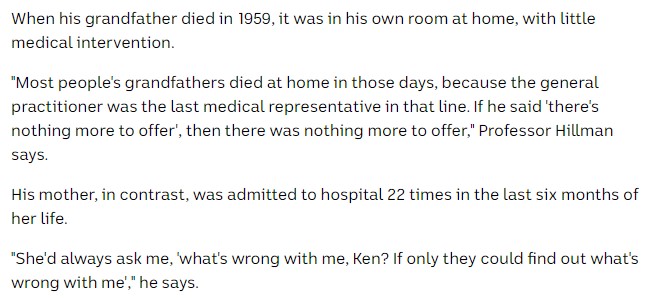
From the article linked above – Professor Hillman’s family experience

In some respects, this article has a connection to two other recent articles of mine.

In Victoria we have Voluntary Assisted Dying (VAD) legislation which was a wonderful innovation, long overdue, when introduced. HOWEVER it is very restrictive. The patient and ONLY the patient can request VAD at the time it is deemed appropriate. In addition the patient has to be terminal (within a specified timeframe) and experiencing unacceptable suffering.

You can only access the voluntary assisted dying medication if you meet the conditions set out in the law. These conditions are:

  1. You are in the late stages of an advanced disease and expected to die within weeks or months, but not more than six months (or 12 months if you have a neurodegenerative disease, such as motor neurone disease).
  2. You are experiencing suffering, which you consider unacceptable.
  3. You have the ability to make and communicate an informed decision about voluntary assisted dying.
  4. You are making a voluntary, continuing and fully informed decision about voluntary assisted dying.
  5. You are an adult, 18 years old or over.
  6. You are an Australian citizen or permanent resident.
  7. You live in Victoria and have lived in Victoria for the last 12 months.

If you do not think you will meet these conditions but are thinking about voluntary assisted dying, you can still discuss this with your doctor.

https://www.health.vic.gov.au/patient-care/do-i-meet-the-conditions-for-voluntary-assisted-dying

This means we cannot plan ahead. People, whether 100% healthy at the time or already patients, cannot put in place, in advance, instructions to be carried out under certain future circumstances. Our agency, our control of our own life, is denied us by social convention. Admittedly, people often don’t think of such circumstances in their younger years – it isn’t until the likelihood becomes apparent that any of us start thinking “what if….”.

The desire to keep sick people alive for as long as possible, he says, is reinforced by doctors who are “programmed to make you better”.

“Doctors hate saying, ‘I can’t do anything’. We’re curers, healers, miracle workers,” he says.

The outcome, he says, is that it’s hard for us to recognise when a life is better left to end.

https://www.abc.net.au/news/2018-07-28/rethinking-our-approach-to-death-and-having-a-plan-for-dying/10014582

Interestingly, the above quotation was paraphrased unprompted by one of my own doctors when I was talking to her about the topic I cover in my Will Society Adapt? When? How? article. She emphasised the same sentiments re “curers, healers, miracle workers” and “programmed to make you better” expressed above. At what point does “first, do no harm” become contradicted by trying to prevent death? Well, you see, that phrase actually isn’t in the Hippocratic Oath at all. If I have tweaked your curiosity, visit https://www.health.harvard.edu/blog/first-do-no-harm-201510138421 at Harvard for a discussion on the topic.

If (as I have) we appoint a Medical Treatment Decision-Maker, that person can request the cessation of treatment on our behalf, but they cannot request intervention to proactively end life.

Any number of medical situations could arise where I might be suffering but ALSO be deemed cognitively incompetent. Another quote from the VAD link above: “This means that you cannot request it in an advance care directive, because voluntary assisted dying is not available to you once you have lost the ability to make a decision about it“. The very situation I personally fear most, that of lying in a hospital or aged care home bed in pain from my arthritic conditions AND with severe dementia, being kept alive merely so I am not dead, cannot be dealt with in a manner that allows me agency over my death. I find this horrifically cruel. I was quite surprised when a psychologist said to me “but you won’t know”. No, I might not (are we 100% sure of that?) but personally I would rather the costs and health care resources involved be used to help a person with a more favourable prognosis.

Many of us have a family history of dementia. I’m participating in a study at the moment which is looking at ways to slow or even prevent the onset of dementia, but being part of a study doesn’t mean I won’t ultimately develop a form of dementia. Studies have recently indicted that those of us with underlying chronic health conditions in middle age (oh, yay, lucky me) are two and a half times more likely to develop dementia. Another ramification of us being able to keep people living longer, as discussed in previous articles.

Having two or more chronic health problems in middle age more than doubles the risk of dementia, according to a study that researchers say underscores the importance of good health earlier in life.

https://www.theguardian.com/society/2022/feb/02/two-chronic-health-problems-middle-age-double-dementia-risk-multimorbidity-study

Other life events could leave any of us declared to no longer have decision-making capacity. I could have a car accident, I could fall and suffer brain damage. I could catch a virus that leaves me with brain damage (looking at you, Covid-19). It may not be dementia.

Yet should such a situation arise, we are trapped. Literally trapped. For many conditions, if treatment is withheld the conditions may become terminal quite quickly. For many other conditions, however, that is unlikely: we could be lying there for years because we do not have conditions that are terminal in and of themselves. Ceasing treatment may simply mean higher pain levels – I’ve already had a taste of that in I Sat in My Car and I Cried. I can only imagine how bad that could get.

The media has been alive lately with horrifying stories of the state of care in privately run aged care homes, yet clearly if I were in the state described above I would be unable to be cared for at home by my offspring (my daughter is only 24 years younger than I) or via My Aged Care. Nor would I want to be – I would want to be allowed to say my time has come, I’m leaving now. Irrespective of the quality of any aged care home (a topic for a future article), many of us don’t want to spend our final months or years in insufferable pain or other circumstances and unable to “check out”. I do understand that doctors would manage the pain, but that seems rather pointless doesn’t it? Just managing the pain with no prospect of any quality of life, just so I’m not dead.

Under NO circumstances would we have let a farm animal suffer in such a state when I was growing up on the farm. My father would have been horrified at the thought of putting any of his animals though such a situation. Yet humans are happy to force other humans to suffer, simply so we can say they aren’t dead.

I understand completely the ultimate decision can be painful for relatives and for the doctors. I believe this can be traced back to our culture’s unwillingness to accept the simple fact that there is nothing guaranteed the day we are born – other than the fact we will die. That is the cycle of life. Other cultures view death quite differently.

Allowing us to legally set out clear, concise instructions ahead of time would be the compassionate approach. Not everyone will make the same choices. A contact on Twitter related the case of their parents the other day. The mother wanted to go when she considered the time was right given her health state, yet the father wanted to do anything possible to extend his life. It is an individual choice.

Dr Corke says medical practitioners also need to be honest with patients and their families when certain interventions might be futile.

“We’ve come to a point where there’s always something more that we can do and we can never stop,” he says.

https://www.abc.net.au/news/2018-07-28/rethinking-our-approach-to-death-and-having-a-plan-for-dying/10014582

Yes, there is always another medication we can try. Or another surgery. A friend of mine had pelvic exenteration surgery – this is very invasive surgery I have specifically stated in my Advanced Care Directive I will not have. That is my choice.

Even though I can’t currently ask for VAD ahead of time, I have done everything I can do to take the guess work out of my treatment, should such a time arise. I’ve expressly given examples of treatments I do not want. I’ve even mentioned VAD just in case the legislation changes. As the legislation currently stands, this is the best we can do. I hope, in time, we see more compassionate provisions in the legislation. We should be allowed to specify, well ahead of time, our choices.

There is a two episode documentary on ABC iView, Laura’s Choice, which you may find of interest and comfort. Laura travelled to Switzerland to avail herself of VAD.

Laura Henkel has decided she wants to end her life on her own terms, and describes why she has asked her daughter Cathy Henkel and granddaughter Sam Lara, both filmmakers, to make a film about it.

https://iview.abc.net.au/video/DC1917W001S00

I’ll leave you with Dr Corke’s empathetic words.

Photo credit M Bryson Photography

Underlying Conditions

In 2017 I wrote Why Do Our Bodies Attack Us? Like many of us, I wondered WHY did I have a chronic condition (otherwise often known as an underlying condition). Most of my working life has been about root cause analysis – naturally I apply that to myself! It is a bad move, I don’t recommend it, you can drive yourself nuts!

More recently, December 2021, I wrote Will Society Adapt? When? How? looking at society’s lack of acceptance of chronically ill people. I specifically noted I wasn’t looking at environmental impacts in that article, but we can’t ignore the impacts we ourselves, as a species, have created in the same span of the last 100 years or so. In that article I proposed society has yet to adapt to this new chronic state of health, and I referred to my generation as being the first generation of chronic people in any great number. I essentially attributed our survival to improvements in medical science keeping us alive, but why do we fall sick in the first place, in ever increasing numbers?

Regular readers will know I am a big supporter of the work of Julian Cribb, an Australian author and fantastic science communicator. He has recently released Earth Detox – How and Why We Must Clean Up Our Planet.

Every person on our home planet is affected by a worldwide deluge of man-made chemicals and pollutants – most of which have never been tested for safety. Our chemical emissions are six times larger than our total greenhouse gas emissions. They are in our food, our water, the air we breathe, our homes and workplaces, the things we use each day. This universal poisoning affects our minds, our bodies, our genes, our grandkids, and all life on Earth. 

https://www.cambridge.org/us/academic/subjects/earth-and-environmental-science/environmental-science/earth-detox-how-and-why-we-must-clean-our-planet?format=PB

I did refer to chemicals in my 2017 article cited above. I’ve also looked at plastics in Packaging Our Pills in Plastic which includes some videos – visit that article if you are interested.

So while some science is keeping us alive, our tendency as a species to misuse other science for selfish reasons is potentially, at the same time, making us sick. Why did I choose selfish in that sentence? Let’s take plastic as a classic example. When I was a child plastic was not really a thing. Shopping bags weren’t plastic. You didn’t put your fruit and vegetables in plastic at the shops. Glad Wrap? I do remember plastic bags for freezing meat. Pills were still in glass bottles.

But plastic was convenient and we started using it for EVERYTHING! Our wild life has been paying the price for years, but it seems we have too. We just didn’t want to acknowledge that fact because that would be inconvenient and if there is one thing the human species hates, it is being inconvenienced.

Of course, all of this ties in with our population growth: if there were less of us, we’d use less of all the “stuff”. Less MIGHT be manageable. That is a big “might”.

I’m going to turn 67 this year. In my first ten years of life I lived on a farm in the middle of nowhere, BUT I was still exposed to many chemicals. Sheep dip. Top dressing. Weed killers. All before the many safety tests and regulations of today were in place.

Later I moved to the city: car fumes, plastics.

“It would be naïve to believe there is plastic everywhere but just not in us,” said Rolf Halden at Arizona State University. “We are now providing a research platform that will allow us and others to look for what is invisible – these particles too small for the naked eye to see. The risk [to health] really resides in the small particles.”

https://www.theguardian.com/environment/2020/aug/17/microplastic-particles-discovered-in-human-organs

Yes, I have psoriatic arthritis (PsA) and a wonky thyroid (plus a few other things) and yes, there is a genetic component to PsA. What triggered the expression of the condition? After all, genes or no genes, my disease hasn’t been active all my life. What triggers any number of the conditions now prevalent in the chronic illness community, even if there are genes playing a role (in many cases, not yet proven)?

We have to stop blaming our chronic illness patients for being chronically ill, when it is very likely it is the path humans have chosen that has created many of us in the first place.

In our current situation in 2022, chronic illness has suddenly risen to the surface as a “reason” people die of Covid-19, so more people are aware of our existence. I myself am in four Covid-19 risk categories, the most dangerous to me being that I have an underlying inflammatory condition (PsA). We know Covid-19 can cause lots of inflammation: I’ve already got that going on, so I have this image in my mind of Covid-19 entering my body, running into PsA and my PsA saying, “Mate! Great to see ya! Let’s party!”

According to Professor Jeremy Nicholson, there are only about 10% of people in Western society that are “really, genuinely healthy”. You can find that quotation at 31:40 in the second video on Better Health, Together: Living with COVID in 2022.

I’m not suggesting 90% of us are at high risk of imminent death from either our conditions alone or our conditions plus Covid-19. We DO need to know which underlying conditions place us at higher risk of severe Covid-19 in order to be able to adequately take whatever additional protections may be necessary. The fact we are at a higher risk cannot be ignored. I see many on social media particularly suggesting the underlying conditions are irrelevant. They are relevant. We can’t ignore reality because we find it unpalatable. I most certainly think the politicians could separate the sad news of deaths from the statistics relating to underlying conditions. This is where the 90% really comes in – as in, it is potentially most of us!

As I am known to do, I have digressed – or have I? Covid-19 is perhaps a wakeup call. As a species we have created a state of ill-health as “normal”. Because we want our pollution and our chemicals and our plastics – but as Julian writes, we are paying the price. We’ve been somewhat quietly paying the price for a while, now Covid-19 has highlighted our vulnerability.

I know I have a chronic illness – many people do not yet know they have one. Conditions can take a while to be evident enough for the person to seek medical help. I am quite sure my PsA was active at least two years before I was diagnosed. In other situations, many people struggle to get a diagnosis of various conditions for years.

I am NOT suggesting that had Covid-19 come along in 1819, or 1719 that we would have been in a overall healthier state as a species. There were other considerations back then. However, we have changed our world, our environment, our living conditions, massively in the last 100 years. We’ve solved old problems, but created new problems.

I am a massive fan of science generally and medical science in particular, however I am also very aware of the human tendency to misuse anything we can if we see a personal advantage in doing so. Covid-19 gave us a shock: we were the Gods brought to our knees by the invisible.

We are not just destroying the environment of the planet we inhabit. We are not just destroying other species. We are possibly also destroying ourselves.

So, About the Safety Nets Thresholds

Introduction

Some years ago in Australia it was possible to claim a certain amount of out-of-pocket medical expenses on one’s tax return at the end of the year.

A few years ago, this changed. It was replaced with a system of higher rebates once a certain level of out-of-pocket expenses had been reached for the calendar year. This is beneficial, as the patients don’t have to wait for that money to be received once a year at tax time.

I have discerned some confusion about how this all works, so this article is an attempt to put “how it all works” in simple terms.

The one aspect I think is MOST important is registering as a family or couple, especially if you have a person in your family with a chronic or underlying condition. Watch out for that heading below!

Please note if you are reading this article after 2022, you may need to locate current links. The links given herein are current as at the time of writing, for 2022.

PBS and Medicare Thresholds

The Pharmaceutical Benefits Scheme (PBS) and Medicare Benefits Schedule (MBS) are managed differently and have different safety nets thresholds. It is important that both are understood.

Medicare is managed centrally and the details and your current status is easily accessed in your Medicare app if you have it installed on your phone or via MyGov/Medicare.

Pharmaceutical thresholds are tracked by your pharmacist, so if you get prescriptions from different pharmacies on a regular basis, you could be missing out.

Medicare Safety Nets Thresholds

The Medicare Safety Net Thresholds are set every year for the calendar year. Once you reach the threshold applicable to you, you get a higher rebate. What can this mean in dollars? Please note the below example is across two different years, so the rebates shown may have moved slightly. Also, different item numbers may attract the same consultation fee but have different rebates based on the item number. For example, a psychology consultation fee may also be charged at $210, but as it is a different item number than a GP consultation, the rebate will be different.

Given the above caveat, the below is sufficient for illustration purposes and the examples are actual transactions of mine.

StatusConsultation FeeRebateOut-of-pocket
Before I reach my threshold (from start 2022)210.0075.75134.25
After I reach my threshold (from end 2021)210.00183.0526.95

As you can see, after I reach my threshold, my out-of-pocket is reduced by $107.30 (for this consultation fee for this MBS item number).

https://www.servicesaustralia.gov.au/what-are-medicare-safety-nets-thresholds?context=22001

Note all of these refer to “out of hospital” services. If you receive a service in a private hospital as an inpatient, the out-of-pocket costs will not count towards reaching your threshold (although the graphic above doesn’t state that), nor will you receive the higher rebate for any services you receive as an inpatient. I know this from personal experience!

Remember imaging and pathology fall under this scope.

Verified & Unverified Costs

In most cases these days, you pay for a consultation at the time of the consultation and the practitioner’s staff submit your Medicare claim for you. In that case the cost is a verified cost. However, if this does not happen, be aware there will be extra steps.

Verified costs are when you pay your doctor’s fee before you make a claim from us. When this happens, your gap amount and out of pocket costs count towards your thresholds. 

Unverified costs are when you don’t pay your doctor’s fee before you claim from us. When this happens, your gap amount and out of pocket costs don’t count towards your thresholds.

https://www.servicesaustralia.gov.au/verified-and-unverified-costs?context=22001

Once you pay the doctor the balance and provide that receipt to Medicare, then the gap payment will be considered verified. Make sure you do that!

Registering as a Family or Couple

Why is this important? Let’s assume you are an Aged Pension couple. If you are not registered as a couple, you each, individually, have to reach that magic $717.90 out-of-pocket expenditure to receive the maximum increased rebates. That is, together you need to reach a total of $1,435.80 before you both get increased rebates. One of you may receive increased rebates before the other, if one of you has higher medical costs.

If you are registered as a couple, then you both contribute to a single threshold: $717.90.

Being on the same Medicare card does NOT mean you are registered as a couple or a family. I suspect this is a result of the transition from the old tax deduction method to the thresholds. You need to actually register.

If you’re part of a family or couple, you can register as a family to combine your costs. This means you’re more likely to reach the thresholds sooner. Even if all family members are on the same Medicare card, you’ll still need to register.

https://www.servicesaustralia.gov.au/how-to-register-for-medicare-safety-nets?context=22001

You can see if you are, perhaps, a family of five, especially if a family member has high medical costs, registering as a family for the Safety Net is a very sensible move. There is a BIG difference between reaching $2,249.80 per year for each of you, or for all of you combined.

Edited: This advice is predicated on the fact the couple or family are officially a couple or family for other purposes, such as the age pension.

Pharmaceutical Benefits Scheme Safety Net

Please note that the PBS Safety Net is a little more complex than the MBS. The thresholds for 2022 are $1,542.10 for General patients and $326.40 for Concessional patients. Note that if you have private scripts, these do not count towards the threshold. Private scripts are those where the patient doesn’t qualify for the Government Subsidy, but is still able to be prescribed the medication – this could, for example, be for “off-label” use. That link also has good “The Real Cost of Medicines” examples illustrating how it works.

The scheme requires pharmacists, on request by patients, to record the supply of PBS and RPBS items on prescription record forms. When a patient reaches the Safety Net threshold within a calendar year, they qualify to receive PBS or RPBS items at a cheaper price or free of charge for the rest of that year. Any applicable special patient contributions, brand premiums or therapeutic group premiums must still be met by the patient.

The Safety Net threshold is reached by accumulating eligible patient contributions for PBS prescriptions supplied through community pharmacies and private hospitals and for out-patient medication supplied by public hospitals.

Pharmaceutical benefits (including authority items) can only be counted towards the Safety Net threshold when prescribed and supplied according to PBS conditions. A medicine supplied by a pharmacist not approved to supply pharmaceutical benefits cannot count towards the Safety Net.

https://www.pbs.gov.au/info/healthpro/explanatory-notes/section1/Section_1_5_Explanatory_Notes

I strongly recommend if you or a family member has high medication costs, you ensure you are availing yourself of the benefits.

Summary

The confusion I have noticed among members of the general public is I suspect partly due to the transition from the tax deduction days. I don’t remember how well the “new system” was publicised at the time.

I recommend couples and families ensure they are registered because if someone suddenly does become unwell, the last thing anyone thinks of AT THAT TIME is registering with Medicare. With the risk of Long Covid currently, best to be prepared.

If you do have high pharmaceutical costs, please check with a pharmacist. I never hit the PBS Safety Net so I do not know nearly as much about how it works.

I Sat in My Car and I Cried

2021 was not a good year for me health-wise and it is time to come clean. In our chronic illness life, things don’t always go according to plan. Before I get into the details, I want to make VERY clear I do not in any way regret participating in the clinical trial I was on. It was wonderful, the people were wonderful, I was very well cared for. I am no longer on the trial, as you shall read, but that doesn’t mean the medication isn’t a great medication. I was just unfortunate. It happens. Hopefully I will have contributed to scientific knowledge in some small way.

So let’s get into it.

For whatever reason, during 2021 my medication stopped working for me. This could have been due to a variety of different reasons, we will never be able to prove the reason specifically for me so I am not going to discuss the various possibilities. It is not unknown: medications can just stop working for particular people. Of course, so much happened in my life DURING 2021, we did have a tendency to think I was flaring because of “stuff” happening. To just do a quick recap:

  • February: I suffered a fall, injured left ankle, right wrist (but saved my knee!!)
  • March: First Covid-19 vaccine (can cause flares in people like me)
  • April: Preparing for foot surgery (training work replacement etc, super busy)
  • May: Bi-lateral foot surgery followed by six weeks of inactivity
  • June: Second Covid-19 vaccine (can cause flares in people like me), plus I resigned from my old job
  • July: Started new job

So basically, lots of quite stressful events. That’s without considering the lockdowns which resulted in a lack of access to the gym and swimming and the various other concerns we all dealt with in 2021.

I did not want to accept that my medication wasn’t working (and that’s on me, it was my decision to persevere longer than I should have), for it had been wonderful. Best part was I did not suffer any side effects. However, at the end of 2021 it got to the point I had to accept the advice. A change of medication was needed. However, by now we were getting towards the holiday season and so appointment scheduling became an issue.

I’m leaving some detail out, but on New Year’s Day I almost took myself to an Emergency Department (ED). I didn’t for two reasons: A) If I went to my closest public hospital, I risked Covid-19 exposure, B) If I went to my local private hospital the ED fee would be money I really did not want to spend and I knew that in reality they’d likely manage the pain and tell me to call my rheumatologist on Tuesday. I could do that myself. So I soldiered on.

By January 4 it would have been easier to tell you what didn’t hurt, rather than what did. Even the entheses of my left hip were painful and THAT was scary as hips were one part of my body that had not previously been involved. What was painful?

  • Shoulders
  • Ankles
  • All Toes
  • Left hip
  • Elbows
  • Wrists
  • Most fingers
  • Hands
  • Knees (yes, even the operated knee felt swollen, but not painful, the right was painful)
  • Neck
  • TMJ (jaw joint)
  • Left Achilles Tendon
  • I also had some plantar fasciitis

That may not be a full list, but you get the picture. In the past, like when my shoulders had misbehaved earlier in 2021 (had ultrasound guided steroid shots in both shoulders), at least I could still walk, so I could still exercise, still move. Movement is not only my physical condition management strategy, it is also beneficial for my psychological health. Suddenly my lower body was so sore I couldn’t walk more than 500 metres. I couldn’t do upper body at the gym because my wrists wouldn’t allow me to lift dumbbells. I was struggling both physically and emotionally/psychologically.

I struggled to use a petrol pump. I couldn’t hold a coffee mug in one hand first thing in the morning. Turning taps off and on was painful. Getting dressed was a struggle. I needed a walking stick to get out of bed and move first thing in the morning. I could go on.

On January 9 I took myself to the hydrotherapy pool. It was a struggle to get into my bathers as my hands, wrists and shoulders were hurting. But I managed. Packed my hydrotherapy gear. Drove to the swim centre.

It was closed for repairs.

I walked back out to my car, sat in my car and cried. It seemed there was NOTHING I could do, not even hydrotherapy.

Of course, I’d been in touch with my medical team and January 11 I was officially taken off the old medication. I also took the rest of the week off work. Taking the rest of the week off work filled me with guilt. I love my job and when I’d accepted the offer I believed my psoriatic arthritis was under control. I didn’t feel fantastic at the time, BUT I was still only seven weeks post the foot surgery, so at the time it was thought the body seeing surgery as an injury was the cause of my flare state and I’d go back to my normal. So I was horrified to be taking time off.

I mention this for newbies to the chronic life and friends, family or colleagues trying to understand and be supportive. We, the patient, can feel guilty about stuff we have absolutely no control over. I can’t predict the future, yet I felt responsible for the fact I couldn’t have predicted the future! So then not only do we feel unwell, we feel guilty on top of it. Not a good place to be.

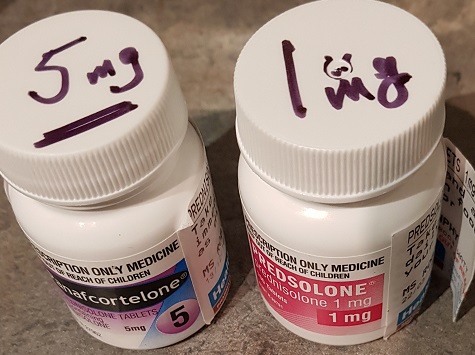
Bottom line, I’m on a new medication. This is my sixth medication since the start of 2015. So six medications in seven years. Many medications for many conditions, including mine, do not work overnight. Some take six to twelve weeks to “kick in”. In the meantime the patient takes a bridging medication to hopefully control symptoms at a manageable level, such as in my case Prednisolone. We taper OFF the Prednisolone as the new medication (hopefully) ramps up. I’d just ALMOST tapered off my last Prednisolone series, now I’m back on. So the patient doesn’t necessarily know for several weeks if the new medication is going to work for them. Will there be side effects? How much weight will be gained on the Prednisolone?

It can be natural for people to think along the lines of, “Well, OK, you are on a medication now, shouldn’t you be feeling better?”. No, it can take a while.

Many of these conditions are resolutely unpredictable, and THAT alone can be hard for friends, family and colleagues to understand. I get that – it is hard for ME as the patient to understand. I’m sure it is hard for the medical professionals to manage too. No crystal balls in this business. I wish there were. My rheumatologist painted me this lovely future scientific state where we will be able to personalise treatments, but we are not there yet – and probably won’t be in my lifetime. I also suspect such treatments may be rather expensive, but that is a WHOLE other discussion!

Today I actually managed to walk two walks totalling just over two kilometres. My left ankle is complaining a bit, but my right is OK. It is the furthest I’ve walked for weeks. I was back at work today. I’m on the improve.

All I can hope is the improvements continue. Pace UP again almost from scratch, don’t overdo stuff.

So if you or someone you know is struggling through a setback – please know you are not alone. It sucks. All I can say is keep persevering.

In closing, I would like to thank my manager and colleagues for their wonderful support. I am so grateful.

As Covid-19 Overwhelms Health Systems, What of Non-Covid patients?

While the Omicron variant may be less severe than Delta, the sheer numbers are seeing hospitals and related health services overwhelmed. Health care staff themselves are in isolation/quarantine.

The wait time for a hip or knee replacement in the UK has blown out dramatically. The situation was bad before the pandemic – now it is worsening.

Patients are facing five-year waits for hip replacements as backlogs reach crisis point, according to an orthopaedic surgeon who quit the NHS.

https://www.scotsman.com/health/patients-face-five-year-wait-for-hip-op-says-ex-consultant-3457505

Almost 6 million people are on waiting lists for hospital treatment in England.

I booked a mammogram here in Melbourne in early August – the appointment was in November. In some jurisdictions in Australia, mammograms were not being done at all during parts of 2021, due to Covid-19. How many cases were not detected early enough and this has impacted the outcome for the patient? Will we ever know? While Covid-19 has no direct effect on the performance of mammograms, the changes required to minimise spread of the disease do.

The term “elective surgery” SOUNDS, well, elective – as in not really necessary. Having been through a total knee replacement and watched my boss wait for his hip replacement (he was only fifty, by the way) I can assure you there is nothing “not necessary” about joint replacement surgery. The pain and loss of quality of life can be horrific. The difference is an excruciating knee won’t kill me, so it is considered non-urgent.

“Our health system is at a very different place than we were in previous surges,” emergency medicine professor Dr. Esther Choo said. “This strain is so infectious that I think all of us know many, many colleagues who are currently infected or have symptoms and are under quarantine,” said Choo, associate professor at Oregon Health and Science University. “We’ve lost at least 20% of our health care workforce — probably more.”

https://edition.cnn.com/2022/01/02/health/us-coronavirus-sunday/index.html

The above is the USA. Here in Australia we have changed our isolation guidelines for health workers due to the shortage of staff.

Doctors say a decision to exempt health workers in New South Wales from self-isolating if they are close contacts reflects an “extremely desperate situation”, with warnings the policy change will increase the Covid risk to hospital patients.

NSW Health announced late on Friday night that in “exceptional circumstances”, frontline workers who are asymptomatic close contacts will be exempt from having to self-isolate for seven days, to avoid disruption to key services.

https://www.theguardian.com/australia-news/2022/jan/01/decision-to-exempt-nsw-health-workers-from-covid-isolation-reflects-hospitals-desperate-situation

We have even suggested flying in nurses. Where from, I’ve got no idea as many countries are just as short of health care workers as we are. This is, after all, a GLOBAL pandemic: a point some of our politicians seem to conveniently overlook.

Critically understaffed public hospitals in New South Wales are planning to fly in nurses from overseas, a leaked memo reveals, as managers beg staff to cancel leave and take on extra shifts amid surging Covid cases.

https://www.theguardian.com/australia-news/2022/jan/01/nsw-hospitals-resort-to-flying-nurses-in-from-overseas-as-staff-are-begged-to-take-extra-shifts-amid-covid-crisis

Early in the pandemic, when the scientific and medical communities were still learning much about how to handle this new challenge, I had my own health case disrupted and affected by Covid-19. In early 2020 I was booked for a total knee replacement. That was cancelled due to an early lockdown. Thankfully, I was rescheduled for late May. While I waited I lived on non-steroidal anti-inflammatory drugs (NSAIDs) and Tramadol. Despite ramping up my Pantoprazole under medical advice, the sustained use of NSAIDs still saw me in hospital some time later for gut issues.

When I did end up in the emergency department some months later with excruciating left upper quadrant abdominal pain, due to Covid-19 restrictions gastroscopies were not allowed unless there was evidence of internal bleeding. I joke I was diagnosed the old-fashioned way!

Sara shares she is currently waiting, in extreme pain, for some of that elective surgery.

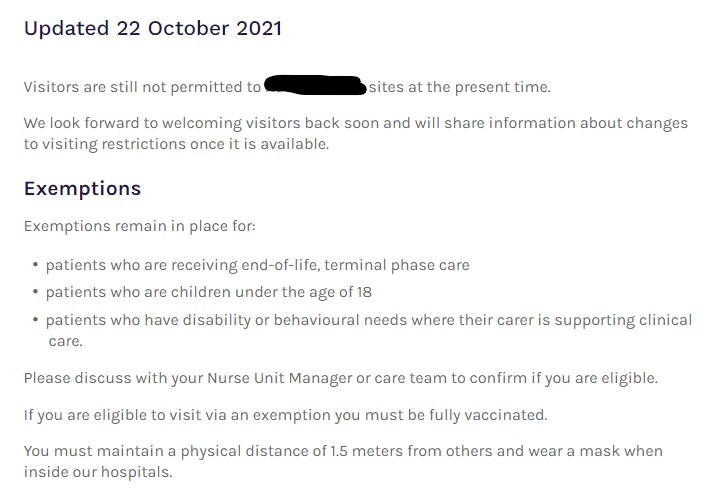
Non-Covid patients in many hospitals can’t have visitors, with some exemptions permitted.

From a Melbourne hospital web site

Being unable to have visitors can be traumatic for patients, especially if they are in hospital for a considerable length of time. This can affect their recovery.

We talk mostly about the Covid-19 patients themselves: do we have enough ICU beds, enough nursing staff, enough tests and medications to cope with the explosion in numbers. Yet the impacts on non-Covid cases are not being widely reported in the mainstream media at all. This links in with my earlier article where I discussed health systems are FINITE.

We, the people, yes us, we cry out for more doctors, more nurses. Where, exactly, are these health care workers supposed to miraculously appear from? It is not possible. There are limited trained health care workers in the world – not just here, in the world. Not enough to care for WAY too many sick people. We have to accept that as a fact.

https://limberation.com/2021/12/30/pandemic-practicalities/

The Covid-19 patients take priority everywhere as their need is certainly super urgent, but that means non-Covid cases have to be sidelined and a backlog develops (or existing backlogs worsen).

There are long term costs. The cases worsen, are therefore more expensive to “fix”. In some cases, unfortunately, death may ultimately result from delayed treatment.

On New Year’s Day I was in a lot of pain. Just about every enthesis in my body (except hips and TMJ) decided to go haywire. I thought about taking myself to the emergency department, but the concern of exposing myself to a hospital environment made me stay home. Now, my entheses aren’t going to kill me: but what of other cases, such as a suspected stroke or heart attack, where the patient stays home for similar reasons (avoiding possible Covid-19 exposure)?

Here is a thread on Twitter about a man who collapsed in a carpark, Type 1 diabetes. The closest ambulance was at least one hour away. While the ambulance delay may not have been directly attributable to Covid-19 use of resources, it is indicative that the extra load on the system places non-Covid patients at risk.

I don’t have a solution. After all (again), health systems are finite. I do expect to see better media coverage of the risks to all of us. What, if anything, is being done to manage the global crisis facing non-Covid patients?

Pandemic Practicalities

The Covid-19 Pandemic is horrible, frightening, life-threatening. Ignoring the very real practicalities does not solve the problems we face.

Health Systems Are Finite

Early in the pandemic we witnessed China build a hospital in ten days. I’m not aware of any Western nation that has even attempted similar. Even so, a hospital is bricks and mortar. No hospital runs without staff. While we can perhaps employ a secondment strategy to provide cleaning, food preparation and laundry staff, we cannot manufacture doctors, nurses, lab technicians, radiologists, pathologists and other health care staff overnight. Or, for that matter in ten days. It takes a good ten years to train a doctor and even then that doctor is not a specialist in pandemic related disciplines.

We, the people, yes us, we cry out for more doctors, more nurses. Where, exactly, are these health care workers supposed to miraculously appear from? It is not possible. There are limited trained health care workers in the world – not just here, in the world. Not enough to care for WAY too many sick people. We have to accept that as a fact.

Rapid Antigen Tests Need to be Manufactured/Distributed

We want more rapid antigen tests made available. Those have to be able to be manufactured in sufficient numbers. We don’t wave a magic wand and the tests just appear in pharmacies nationwide for purchase. The tests have to be manufactured under strict controls, packed, distributed. Staff are needed to run the production – do we have enough staff to run a 24/7 operation? Even if a 24/7 manufacturing process is running in existing production facilities, do we have enough of those? How long to build more?

Should the tests be free? I personally think so given the circumstances, but how is that managed?

There have been cases of price-gouging. Now it appears there is even more confusion, detailed well this afternoon by Luke Henriques-Gnomes in this thread on Twitter:

PCR Tests to be Collected and Processed

Again staffing issues apply when the sheer number of people needing testing are greater than ever anticipated. SHOULD the number have been anticipated? That’s a whole other question I’ll deal with later. At least the training requirements are not as onerous as for doctors and nurses. We could potentially increase testing capacity, but there will always be the physical constraint of staff availability. That is a fact we can’t change quickly.

More Infectious but Less Severe

The numbers game. Each variant comes with unique characteristics. The general population can be confused if the messaging isn’t clear. As the scientists reiterate, a small percentage of a larger number may be larger than a large percentage of a smaller number. The below quote is Dr. Abdul El-Sayed, epidemiologist and former Detroit Health Department executive director speaking to CNN.

“Just because the per-individual risk of severe illness may be lower, that doesn’t mean on a societal level Omicron doesn’t pose a real risk,” he said. “Even a small proportion of a relatively large number can be a relatively large number.”

https://edition.cnn.com/2021/12/28/health/is-it-cold-flu-or-covid-wellness/index.html

This is a simple example I whipped up to illustrate what this can mean. The percentages used therein are for ILLUSTRATIVE purposes only. As we can see, triple the cases with half the requirement for hospitalisation still results in MORE patients needing hospital care. The new case numbers jumped 30.78% from December 28 to December 29. Yes, there are reporting delays and all sorts of other variables to the reported numbers of cases on any given day, but they are indicative of what is happening. The most important variable is these are only the tested people: how many globally are not being tested? How many do we not know about at all?

I do note that as of December 30, 1.1% of active cases in Australia are hospitalised. I have been unable to confirm whether this includes Hospital In The Home numbers. Note the source below updates daily.

Edited January 8 to add: now some days later, compare the same data. We can see we now have three times the number of people in hospital, but that is a lower percentage of currently active cases.

The Science, NOT The Politics

Yes, the damn politics. The politics has got to stop and stop now. Right now. This is a global disaster and there is no place for politics. If you aren’t part of a SAFE solution, you’re part of the problem. Point scoring off the other side isn’t helpful: and that applies across the board. Personally, I’m not interested in what political colour you are, you are elected to represent us.

As for threats of war and similar “business as usual” inter-nation “disagreements”: THIS IS NOT THE TIME.

LISTEN TO THE SCIENCE. That’s all I ask you to do. Listen to the science.

There is also a simmering question of a particular religious ideology impacting political decision making. I am avoiding that topic today, other than noting yes, that question quite legitimately exists.

Like it or Not, it IS a Numbers Game

During the last pandemic, the 1918 Pandemic, the global population was less than 2 billion. Now it is 8 billion.

https://ourworldindata.org/world-population-growth

During the 1918 Pandemic one third of the world’s population was infected. It is estimated the population in 1918 was 1.8 billion. Everything is relative: in 1918 our population was much lower, but we also likely had less health care workers per head of population than we do now in 2021. It was also a different type of illness. Covid-19 puts people in hospital for long periods. People technically recovered from Covid-19 remain very unwell for long periods or are permanently disabled with Long Covid.

Back to the numbers. One third of our current population is 2.66 billion people. We already know people can catch Covid-19 more than once, that alone increases the numbers. Yes, we have vaccines and those vaccines have been shown to reduce the severity of the disease. On the other hand, Covid-19 has variants. Those variants may evade vaccines and be harder for current tests to detect.

Are we safe to assume that Covid-19 will not infect a greater proportion of the global population that the 1918 Pandemic did? I don’t think so. SO FAR we have been fortunate. In the two years of 2020 and 2021 our reported total cases are only 284,906,146 which for those into numbers is just over a quarter of 1 billion or 28.49% of 1 billion. That is a long way from 2.66 billion.

Oh, but we have better science now than in 1918? True, we do. Very much so. We managed to get vaccines up and running in basically 12 months, give or take. An astounding achievement. We have dramatically improved treatments of Covid-19 patients and continue to learn. However, there are far more of us, living far more densely and travelling far more widely than in 1918. Those factors work in Covid-19’s favour. Not to mention the anti-vaxxers who risk not only themselves, but society in general.

Then we loop back to the Health Systems are Finite aspect. The health care workers we do have cannot work 24/7, it is not possible, none of us can. If the number of cases requiring hospitalisation or Hospital In The Home or whatever care type might be developed in the future, exceed our health care system resources, we have a problem.

I’m not being alarmist but I see way too much lack of understanding of the numbers.

  • “Just get more health care workers!” – WHERE FROM?
  • “Triage the patients to another hospital.” – And when/if all the hospitals are in the same boat?
  • “Provide free tests now!” – Where is the supply coming from? It takes time…..
  • “Fix the overloaded PCR testing, stop the queues!” – How? Where are the staff coming from? Are there enough test kits?

What IS needed is an acknowledgement by politicians and understanding by the general public, globally, that in a worst case scenario we could be trying to treat an INORDINATE number of people. Australia’s population is 26 million in round numbers. One third of 26 million is 8.66 million people. Of that 8.66 million people, up to 37% could be left with some form of Long Covid. That equates to 3.2 million people.

I certainly hope we don’t reach the levels of the last pandemic – but I suggest it is a very dangerous assumption to assume we won’t.

Close Contact Definitions

I refer readers to the OzSage report linked below, where this point is discussed.

Today the Queensland Chief Health Officer stated the definition of close contacts had to change or the state would cease to function, everyone would be in quarantine.

Not much will function too well if too many people are sick, either. New South Wales discarding spread mitigations and protections when they did was grossly irresponsible.

Long Covid

Then there is Long Covid to consider. So much is as yet unknown, but the more I read, the more concerned I become. I’ve written other articles about chronic illness and society, so I’m not going to repeat myself here. Suffice to say the same problems will exist, but for more people. What are the politicians doing about modelling the social, health and economic costs?

A Guardian article today addresses the issue well: Long Covid is the elephant in the room, but it seems invisible to Australian politicians. The existing chronic illness cohort seem invisible to many politicians, so I’m not surprised they’d have to be dragged kicking and screaming to acknowledge what could be a major increase in numbers.

This UK Long Covid patient has detailed his struggles on Twitter. One of many.

The OzSage Report: 10 Key Points

I implore everyone to read the OzSage Report. Here is Point 5 to encourage you to click on the link below.

The rhetoric that case numbers ‘do not matter’ is incorrect – particularly in the face of the Omicron variant. Daily case numbers are now 10 times higher than during the Delta wave and may be 100 times higher in January. Even if hospitalisation rates are lower with Omicron compared to Delta, a halving of hospitalisation rates with a 10-fold or 100-fold increase in cases will still translate to a high burden on the health system. This is likely to overwhelm the health system, with regional services at particular risk.

The trajectory of observed data suggest that hospitalisation and ICU occupancy are on a steeply rising trend and anticipated to exceed earlier peaks quite soon. In other words, optimistic assumptions about the impact of the Omicron variant on hospital admissions are unrealistic.

https://www.theguardian.com/australia-news/2021/dec/30/the-ozsage-report-10-key-points-from-its-critique-of-australias-covid-response

Should We Have Seen This Coming?

The answer is yes, we should have. Humans got too wrapped up in The Economy and Growth (I wrote the below article in August, 2020) and forgot we are really just another species of animal on the planet.

Humans are Earth’s chronic condition. We destroy at will. We see our species as the pre-eminent beings on the planet. Although many believe in a God or Gods in the heavens, here on Earth the human species is all-powerful.

The Gods Brought to Their Knees by the Invisible

Scientists have been warning us for years, but we didn’t listen. We didn’t prepare. In fact, in some ways, we deliberately de-prepared: sold off the Fairfield Infectious Diseases Hospital, for example.

In many ways it would be impossible to plan for the sheer numbers. We can’t have excess trained health care workers sitting around idle for generations, or hospital buildings lying idle. Equipment becomes outdated, supplies pass their use-by dates. Vaccines and tests have to be developed specific to the pandemic. The logistics of it all are difficult to grasp.

But we should have seen it coming. For the politicians to act so surprised is ridiculous. We should, as a species, globally, have been prepared to some degree. Not perfectly prepared, for that would be impossible. Yes, in a pandemic there will be unavoidable loss of life, there will be economic losses, there will be disruptions to travel, education, trade, life as we knew it… Yet we could have been better prepared, not only by having plans at a macro level, also psychologically at an individual level, for the disaster that is still unfolding.

There are no miracles.

Hope for the Best, Plan for the Rest

While the Covid-19 variant Omicron may be clinically “mild” for many people (and the jury is still out on that), for some of the population it may not be. Many of us with chronic conditions may have conditions that make catching Covid-19, any variant, a riskier proposition for us. Talk to your general practitioner about your condition/(s) and your risks.

While Covid-19 is not the only driver for any of us to consider our legal documentation – it is particularly pertinent at this time and has certainly prompted me to get my affairs in order.

I am not a lawyer or a doctor: I am a rather experienced chronic illness patient. I am conversant with my risk profile. On that basis the last thing I want to do is leave my family with a medico/legal battle should I end up in difficulty. I want to make things as easy as I possibly can for those left to finalise my affairs.

While we don’t like to think of such things it is important to consider and prepare legal documents ahead of time. The links I am providing in this article relate to Victoria, Australia, however you will find similar in your location.

The details in this article are neither exhaustive nor comprehensive. This aim of this article is to list the documents that it may be appropriate to consider and information links.

Advanced Care Plan/Directive

This you organise with your doctor although lawyers will draft a document for you. Details can be found at advancecareplanning.org.au. Note there are differences between states. This is a document wherein you can detail your wishes about treatment under a range of possible medical or surgical situations.

Appointment of a Medical Decision Maker

Details of appointing a Medical Decision Maker can be found on the website of the Office of the Public Advocate. This can be in place of a Medical Power of Attorney.

You have the right to make your own medical treatment decisions.

However, if you experience an injury or illness that means you are unable to make decisions, either temporarily or permanently, If this happens to you, Victoria’s Medical Treatment Planning and Decisions Act 2016 specifies who has legal authority to make medical treatment decisions for you. This person is called your medical treatment decision maker.

You can choose your medical treatment decision maker by appointing someone to this role, providing you have decision-making capacity to do so.

https://www.publicadvocate.vic.gov.au/your-rights/your-healthcare/appointing-a-medical-treatment-decision-maker

Enduring Powers of Attorney for Financial, Medical Treatment & Personal Decisions

Details about Enduring Powers of Attorney can also be found on the Office of the Public Advocate.

These ensure that someone you trust can make decisions for you if and when you are unable to make decisions. Given the current studies around cognitive deficits and brain damage in Covid-19 patients, death is not the only concern.

Cognitive deficits in people who have recovered from COVID-19 is an article published by The Lancet.

The Mayo Clinic advises:

Although COVID-19 is seen as a disease that primarily affects the lungs, it can also damage many other organs, including the heart, kidneys and the brain. Organ damage may lead to health complications that linger after COVID-19 illness. 

https://www.mayoclinic.org/diseases-conditions/coronavirus/in-depth/coronavirus-long-term-effects/art-20490351

Voluntary Assisted Dying (Victoria)

Under current legislation in Victoria your appointed medical decision maker cannot request VAD on your behalf. The Victorian Government has a website detailing the legislation, Voluntary Assisted Dying. Note that this CANNOT be prepared in advance of any requirement. The criteria are very strict under the current legislation. I include it here only to highlight this is not something that can be prepared in advance, nor can you instruct your medical decision maker to request it, as that is not permitted.

Only you can start a discussion with your doctor or health practitioner about voluntary assisted dying. Your doctor or health practitioner cannot start the discussion. Your family member or friend can be with you when you ask about voluntary assisted dying, but they cannot ask for you. This helps to make sure your decision to seek voluntary assisted dying is voluntary.

https://www.health.vic.gov.au/patient-care/do-i-meet-the-conditions-for-voluntary-assisted-dying

Last Will & Testament

There are many available links. I have chosen the Australian Seniors Understanding a Last Will & Testament in Layman’s Terms as a the resource I am providing.

As many people remarry, please note the following:

Marrying (or remarrying) automatically cancels your Will, unless your Will clearly shows you were planning this marriage when you made it.

https://www.legalaid.vic.gov.au/find-legal-answers/wills-and-estates/changing-will

I mention that specifically because I had that exact discussion with friends of mine recently who actually couldn’t remember when they had made their last wills. Dying intestate is not a financially sensible option as there are fees for the state to administer the estate.

If someone dies without a will, they die intestate. Being intestate means that the laws of the state or territory they live in will decide how their estate is administered. An estate is made up of a person’s assets and liabilities.

https://www.statetrustees.com.au/executor-services/learn-more-about-executor-services/what-happens-if-someone-dies-without-a-will?gclid=Cj0KCQiA5aWOBhDMARIsAIXLlkcSG2I6utkyILW0VXnAdvm9SddjCIGePIRVIdnyUOT8-ltbXsxSJdQaArewEALw_wcB

Superannuation & Life Insurance

Superannuation and life insurance do not automatically form part of your estate. Superannuation particularly often requires a Binding Nomination form be submitted to the superannuation company and updated every three years (annoyingly).

I strongly suggest your check your specific situation with your life insurance and superannuation companies. The following is the HESTA website as an example.

It’s not the happiest subject – but it’s super important…who will get your super when you die? To be more certain it will go to the people you want, you can sign a binding death benefit nomination.

https://www.hesta.com.au/members/your-superannuation/accessing-your-super/binding-death-benefit-nominations

Take care, stay safe.

Edited to add: Since I wrote this article in December 2021, Four Corners have done a feature:

Some 50,000 Australians are currently under the control of Public Guardian and Trustee agencies around the country.

By law, these ‘clients’ are banned from speaking out about what happens to them, and journalists can be fined or jailed for reporting on them.

https://www.abc.net.au/4corners/state-control:-australians-trapped,-stripped-of/13795520

Although I alluded to this issue in the article above, I didn’t go into detail. If you have not seen this episode, I highly recommend you watch it.